
Grace and Mercy Foundation
 Public Reading of Scripture




Publisher DNA
What defines Grace and Mercy Foundation?
AI intelligence is not yet available for Grace and Mercy Foundation. The portfolio data below is up to date.
Portfolio
What does Grace and Mercy Foundation ship?
Apps
1 app analysed
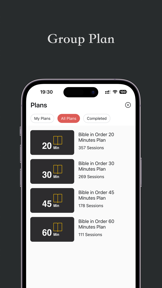
Structured group reading plans facilitate community-based spiritual growth
- Dramatized audio narration brings biblical texts to life and helps users visualize complex historical scenes
- Navigation and playback controls are difficult to access or hidden behind gestures that disrupt the user experience
Distributed across 6 markets, strongest in Americas.
Based on 1 of 1 app with localized market data · last scanned .
Americas (2)
- Mexico1 / 1
- United States1 / 1
Europe (2)
- France1 / 1
- Spain1 / 1
Asia-Pacific (2)
- Japan1 / 1
- South Korea1 / 1
Core markets (1/1 apps)
User Sentiment
How do users feel about their apps?
1
Positive apps
0
Neutral / mixed
0
Negative apps
65/100
Avg sentiment score
Rivals
Who does Grace and Mercy Foundation compete with?
The rivals identified
Nemeses(2)


Both applications target users seeking free Bible study tools, with both providing audio playback as a primary feature for daily spiritual engagement.


Both apps target Christian users with dramatized audio Bible content, competing directly for daily ritual engagement through free, audio-first experiences.
Contenders(12)


Both apps compete for daily spiritual engagement by providing structured Bible reading and audio content to users seeking consistent prayer habits.


Both apps target individuals seeking daily scripture study, but they diverge on monetization and engagement mechanics: Public Reading of Scripture provides free dramatized audio, while the rival gates core content behind a subscription.


Both apps target Bible study audiences, with the rival capturing users through offline audio and concordance tools that overlap with the core listening habit of Public Reading of Scripture.


Provides a broad multimedia experience including video that complements the audio-only focus of PRS.


Both apps compete for the daily spiritual study habit by providing scripture access and devotional content to the same user base.


Both apps target users seeking daily scripture engagement through audio and reading plans, creating direct competition for daily active usage.


Both apps target the same audience of Bible readers seeking audio content and structured reading plans to facilitate daily engagement.


Both applications compete for daily user attention by providing audio-based Bible engagement tools for individual and group study.


Both applications target users seeking audio-based scripture engagement and structured reading plans, competing directly for daily devotional time.


Both apps compete for the same daily scripture study audience, with KJV capturing users through a minimalist interface and notification-driven re-engagement that overlaps with the core habits of Public Reading of Scripture users.


Both apps compete for the same daily Bible study audience, with KJV offering text-based reading tools while Public Reading of Scripture focuses on audio-led group listening.


Combines daily prayer and scripture study with AI-assisted guidance for a comprehensive spiritual experience.
Same space(22)


Uses gamification to drive retention, offering a different engagement hook than the community-based plans in PRS.


Targets the same daily habit-forming audience but uses ad-supported monetization to sustain its prayer-reminder utility.


Serves serious students with deep theological tools that complement the dramatized audio focus of the source app.


Captures users seeking AI-driven spiritual guidance that complements the group-reading focus of PRS.


Bundles daily devotional widgets and audio scripture to capture the same daily-habit anchor.


Offers a minimalist, actionable habit-loop that contrasts with the broader community-reading focus of PRS.


Focuses on the audio-first habit, directly overlapping with the core dramatized audio feature of PRS.


Offers a chat-based interaction model for users who want to explore scripture beyond the audio-first experience of PRS.


Uses push notifications to drive daily habits, competing for the same user attention as PRS reading plans.


Provides a structured daily routine of prayer and reading to help users deepen their spiritual connection.


Serves the professional research segment that requires more technical depth than the devotional-focused PRS app.


Appeals to users needing deeper scholarly context than the community-focused PRS app provides.


Targets the premium audio-guided prayer market, competing for the same daily-habit time as PRS dramatized audio.


Acts as a reference utility for users who need comparative translations not emphasized in the PRS dramatized audio experience.


Delivers daily scripture and devotions to help users maintain a consistent spiritual habit.


Uses widgets to integrate scripture into the user's phone environment, a feature absent in the PRS app.


Uses a tactile, meditative UI to anchor daily spiritual habits for users seeking scripture encouragement.


Provides productivity-focused tools for sermon capture that extend beyond the reading-only focus of PRS.


Provides advanced technical research tools for users who find PRS insufficient for scholarly study.


Provides an ad-supported, simplified alternative for users who want quick scripture access without the group-reading overhead of PRS.


Adds thematic video content to the study experience, providing a multimedia layer beyond the audio-focused PRS.


Provides a broader reading-tracking utility that captures the habit-forming aspect of daily scripture study.
New entrants(3)


Provides a manual plan-building tool for users who want more customization than the structured plans in PRS.


Focuses on text-to-speech audio, providing a different audio experience than the professional dramatized audio in PRS.


Offers a quiet, dashboard-based experience for daily scripture reading and interactive prayer reflection.
