
iOverlander
For overlanders and long-distance travelers requiring offline-accessible navigation and resource mapping in remote regions.
 iOverlander
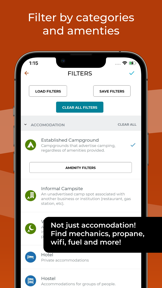


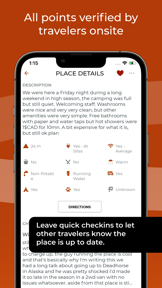
Snapshot
Who is iOverlander?
Providing overlanders and long-distance travelers with reliable, human-moderated mapping and essential service data for remote exploration.
Target audience


Portfolio
Free 1Last updated

iOverlander
v2.6.24
6mo ago
Publisher DNA
What defines iOverlander?
Publisher DNA
Primary focus
Crowdsourced mapping for remote travel
Scale
indie
Target audience
Overlanders and long-distance travelers requiring offline-accessible navigation and resource mapping in remote regions.
Signature Patterns
- •Exclusively human-moderated, crowdsourced points of interest
- •Prioritization of offline mapping functionality for remote areas
- •Single-app focus with high update frequency
- •Community-centric model avoiding sponsored or automated listings
Portfolio momentum
Maintains an active development cycle with 9 updates released for their flagship app in the last 6 months.
Portfolio
What does iOverlander ship?
Apps
1 app analysed


Distributed across 7 markets, strongest in Europe.
Based on 1 of 1 app with localized market data · last scanned .
Americas (3)
- Brazil1 / 1
- Mexico1 / 1
- United States1 / 1
Europe (4)
- France1 / 1
- Germany1 / 1
- Portugal1 / 1
- Spain1 / 1
Core markets (1/1 apps)
Rivals
Who does iOverlander compete with?
The rivals identified
Nemeses(1)

Both platforms compete for the same RV and overlanding audience by providing databases of overnight parking locations.
Contenders(3)


Both apps target the same outdoor travel demographic, competing for users who require offline-capable mapping and campsite discovery tools for remote navigation.


Both platforms target long-distance travelers and overlanders seeking dispersed camping locations, creating direct competition for user attention and location data.


Both apps target outdoor travelers, but iOverlander focuses on discovery and resource mapping for remote travel, while Campsite Tonight focuses on securing reservations at high-demand campgrounds.
Same space(20)


Targets the same road-trip audience but focuses on historical storytelling rather than service mapping.


Shares the offline-first navigation requirement for remote travel but uses OpenStreetMap data instead of crowdsourced POIs.


Targets the same travel-focused user base but provides aviation-specific situational awareness rather than ground-based navigation.


Targets the same travel-focused user base but provides real-time aviation monitoring rather than ground-based service mapping.


Serves the same remote-traveler demographic but provides location-triggered audio narration rather than service POIs.


Targets the same traveler demographic but focuses on booking transactions rather than remote navigation.


Serves the same traveler segment but focuses on loyalty-based hotel bookings rather than remote campsite discovery.


Serves the same road-traveler segment but focuses on specific fuel and amenity stops rather than general service discovery.


Shares the offline-first navigation requirement for remote travel but focuses on granular map control rather than crowdsourced POIs.


Targets the same outdoor-traveler segment but focuses on park-specific navigation rather than general service POIs.


Serves the same travel-focused user base but provides real-time aviation monitoring rather than ground-based service mapping.


Targets the same travel-planning demographic but focuses on converting social media content into maps rather than service discovery.


Targets the same road-trip audience but focuses on AI-driven route planning rather than crowdsourced service discovery.


Targets the same RV-specific audience but provides vehicle-safe routing rather than general service POIs.


Targets the same camping demographic but uses a subscription-gated model for public land data rather than free crowdsourcing.


Targets the same traveler segment but focuses on automated reservation aggregation rather than remote service discovery.


Targets the same organized traveler but focuses on reservation management rather than remote service discovery.


Provides vehicle access for the same traveler base but focuses on peer-to-peer car rentals.


Targets the same multi-stop traveler but focuses on itinerary collaboration rather than remote service mapping.


Serves the same road-trip audience but focuses on historical landmark storytelling rather than service POIs.
New entrants(1)


Targets the same RV-traveler segment but focuses on route organization rather than crowdsourced service POIs.
The Analyst's Read
The bottom line on iOverlander
Bottom line
iOverlander is a well-defended niche incumbent whose value lies in community-verified data that automated competitors cannot easily replicate. Their high update velocity suggests a strong commitment to maintaining utility for a dedicated, high-intent user base.
Frequently asked questions
How many apps does iOverlander publish?
What kind of apps does iOverlander make?
What is iOverlander's top app?
In how many countries are iOverlander's apps available?
What fed this analysis
- Apps analyzed:
- 1
- With full intel:
- 0
- With overview:
- 1
- Website scraped:
- yes
- Social presence:
- yes