


Iurii Filin
 AI Boyfriend Chat - Husby










Snapshot


Publisher DNA
What defines Iurii Filin?
AI intelligence is not yet available for Iurii Filin. The portfolio data below is up to date.
Portfolio
What does Iurii Filin ship?
Apps
10 apps analysed
Analysis in progress

Analysis in progress

Analysis in progress

Analysis in progress

Analysis in progress
Distributed across 9 markets, strongest in Europe.
Based on 2 of 10 apps with localized market data, more coverage rolling in as scans complete · last scanned .
Americas (3)
- United States2 / 2
- Brazil1 / 2
- Mexico1 / 2
Europe (5)
- France1 / 2
- Germany1 / 2
- Italy1 / 2
- Portugal1 / 2
- Spain1 / 2
Asia-Pacific (1)
- South Korea1 / 2
Core markets (2/2 apps)
User Sentiment
How do users feel about their apps?
1
Positive apps
0
Neutral / mixed
0
Negative apps
65/100
Avg sentiment score

Rivals
Who does Iurii Filin compete with?
The rivals identified
Nemeses(2)


Targets the same heavy-sleeper audience by focusing on persistent, high-volume audio alerts to ensure wakefulness.


This app competes directly by offering psychological support and goal-oriented frameworks for personal transformation, mirroring ExLock’s mission to help users navigate emotional recovery.
Contenders(10)


Both apps target users who struggle with morning wake-up habits by requiring physical tasks to disable alarms, directly competing for the same user segment.


Both applications target the same user segment by requiring specific tasks to silence alarms, directly competing for users who struggle with traditional snooze functionality.


Both applications target the mission alarm clock segment, requiring users to complete specific tasks to disable alarms and prevent oversleeping.


Both applications target the same user segment by requiring completion of specific tasks to disable morning alarms, directly competing for users who struggle with oversleeping.


Both apps target the same user base of chronic snoozers by requiring task completion to disable alarms, directly competing for the same morning-routine utility segment.


Both apps target users who struggle with oversleeping by requiring physical action to silence alarms, competing directly for the same morning-routine audience.


Both apps target users struggling with morning routines by requiring task completion to disable alarms, directly competing for the same mission-based alarm clock audience.


Both applications target chronic snoozers by requiring users to complete specific tasks to deactivate alarms, creating direct competition for the same morning-routine audience.


Both applications target users seeking to eliminate snoozing through mandatory wake-up missions, competing directly for the same morning-routine demographic.


Both applications target heavy sleepers by requiring physical movement to disable alarms, competing directly for users seeking to eliminate the snooze habit.
Same space(15)


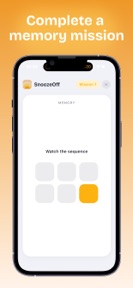
Integrates math-based wake-up tasks to force engagement, mirroring the core mission-based philosophy of SnoozeOff.


This app competes by using AI to provide psychological insights, offering a digital alternative to the coaching support found in ExLock.


Eliminates the snooze function entirely to force immediate action, serving the same goal of preventing oversleeping as SnoozeOff.


Targets the same heavy-sleeper demographic with forced-interaction mechanics that prioritize wake-up reliability over simple audio alerts.


Uses gamified mission systems to build discipline, directly overlapping with the core mission-based wake-up functionality of SnoozeOff.


Extends the mission-based wake-up concept into long-term habit tracking to maintain user engagement beyond the initial morning alarm.


Offers a speed-focused alternative for users who prefer simple configuration over the complex mission-based routines found in SnoozeOff.


This app overlaps with ExLock by providing safety check-ins and emotional regulation tools, targeting users who need structure during high-stress periods.


Combines bedside utility features with voice-controlled interactions to assist users who struggle with morning wake-up routines.


Provides a comprehensive suite of wake-up missions that directly challenge the user's ability to snooze, similar to SnoozeOff.


Chip Day competes by providing milestone tracking and data visualization, which serves as a functional alternative for users monitoring their 'no contact' progress.


Offers a gentle, soundscape-based alternative for users who prefer a gradual wake-up experience over the forced-mission approach of SnoozeOff.


Serves as a multi-functional bedside utility that competes for the same morning-routine screen time through broader feature sets.


Sanity and Self targets the same emotional recovery audience by providing motivational content and self-love practices to aid in moving on.


Provides a simple, high-contrast digital clock interface for users who prioritize readability and basic alarm reliability.
New entrants(4)


As a new utility-focused app, it competes for the same screen time by offering tools that may assist in personal organization or lifestyle management.


This newcomer targets the relationship space, potentially capturing users who are still in the 'pre-breakup' or 'reconciliation' phase of their journey.


Uses physical activity missions to ensure users are fully awake, aligning with the action-oriented morning routine mission of SnoozeOff.


Uses AI-driven personality-based motivation to address the same morning-habit issues as SnoozeOff but with a more aggressive, social-shaming approach.
