
NCP Tech
 ねこ勤怠 Track Time with Cats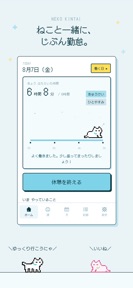



Publisher DNA
What defines NCP Tech?
AI intelligence is not yet available for NCP Tech. The portfolio data below is up to date.
Portfolio
What does NCP Tech ship?
Apps
1 app analysed
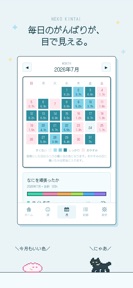
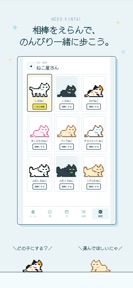
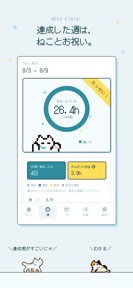
A time tracker to log work and study with 15 cats and background music.


Zero-friction onboarding due to no mandatory account registration
- The simple and well-designed user interface provides motivation without requiring complex account sign-up processes
Distributed across 12 markets, strongest in Europe.
Based on 1 of 1 app with localized market data · last scanned .
Americas (3)
- Brazil1 / 1
- Mexico1 / 1
- United States1 / 1
Europe (7)
- France1 / 1
- Germany1 / 1
- Italy1 / 1
- Netherlands1 / 1
- Portugal1 / 1
›+2 more europe markets
- Spain1 / 1
- Sweden1 / 1
Asia-Pacific (2)
- Japan1 / 1
- South Korea1 / 1
Core markets (1/1 apps)
User Sentiment
How do users feel about their apps?
1
Positive apps
0
Neutral / mixed
0
Negative apps
90/100
Avg sentiment score
Rivals
Who does NCP Tech compete with?
The rivals identified
Nemeses(1)

Both apps target freelancers managing work hours, but they diverge between professional payroll utility and personal habit motivation.
Contenders(10)


Both apps provide time tracking functionality, but they serve distinct user segments: personal productivity for freelancers versus professional payroll verification for hourly employees.


Both apps target freelancers managing work hours, but they diverge on core utility: WorkTime focuses on professional payroll calculation and reporting, while the source app prioritizes personal habit formation through gamification.


Both applications target individuals tracking work time, though they diverge between professional earnings management and personal goal-based habit formation.


Both apps provide time-tracking utilities for work and study, though they diverge between professional income reporting and gamified personal habit tracking.


Both applications target individual time tracking, though they serve distinct use cases: WorkHours focuses on professional hourly tracking and earnings, while the target app centers on personal, non-paid goal achievement.


Both applications target freelancers tracking work time, though they diverge between professional billing management and personal habit motivation.


Both applications target time tracking, but they diverge on user intent: Hours focuses on professional earnings and tax calculations, while Neko Kintai centers on personal goal gamification and privacy.


Both applications target freelancers and contractors managing work time, though they diverge between personal habit tracking and professional billing utility.


Both apps target time tracking, but they serve distinct use cases: Neko Kintai focuses on personal habit building through gamification, while Logger targets professional workflows involving pay calculation and timesheet reporting.


Both applications target freelancers managing time, but they diverge on the core utility: Neko Kintai focuses on personal habit gamification, while Work Log targets professional payroll and multi-job management.
Same space(20)


Loop Habit Tracker combines habit tracking with a Pomodoro timer, offering a hybrid utility that overlaps with the source app's functionality.


aTimeLogger offers a comprehensive suite of reporting tools for time tracking, contrasting with the source app's focus on simple daily accumulation.


Clocket provides professional billing features for freelancers, serving as a functional upgrade for users who outgrow the source app's simple logging.


Exocus uses pixel-art gamification to reward focus, aligning with the source app's visual style while adding a planet-building progression loop.


Clockify targets the professional side of the time-tracking market, offering team-based scalability that the source app's personal-only model lacks.


Evoday focuses on the same habit-tracking segment but differentiates through haptic feedback and widget-based insights.


FocusPomo provides a professional-grade alternative for users who want deep OS integration that the source app intentionally avoids.


Simple ToDo List targets the same minimalist user base as the source app but focuses on task management rather than time tracking.


gogh offers a 3D avatar-based workspace that expands on the source app's character-based motivation with immersive room customization.


Habit Rabbit uses a similar pet-based gamification loop to the source app but adds social leaderboards for competitive motivation.


Daily Planner provides a 24-hour pie chart visualization, offering a more analytical approach to time management than the source app's simple timer.


Productive serves the same habit-tracking audience but scales through structured programs and community challenges rather than the character-based motivation used by the source app.


Focus Keeper targets the same productivity-seeking demographic but relies on standard Pomodoro intervals rather than the character-driven narrative of the source app.


HabitKit competes for the privacy-conscious user base by using a local-only architecture similar to the source app's data-privacy stance.


Study Bunny shares the core gamified pet-care loop but targets students specifically with an in-app store economy that the source app lacks.


LockScreenNotes offers a utility-focused companion for task visibility that complements the source app's time-tracking focus.


Focus Traveller extends the gamified timer concept into social group expeditions, contrasting with the source app's solitary, cat-focused experience.


Study Time With Rain uses a thematic ghost character to motivate users, mirroring the source app's use of a mascot for productivity.


Flow provides a high-volume, standard Pomodoro utility that serves as a baseline for users who do not require the source app's gamification.


Focus timer offers a minimalist visual alternative to the source app, using a flip-clock aesthetic instead of a character-based progress tracker.
New entrants(1)


Time Logger Pro shares the source app's commitment to local-only data storage, appealing to users who prioritize privacy over cloud features.
