NOERDEN
For health-conscious individuals using smart wearables and social users interested in location-based, unfiltered content sharing.
 GenK: World General Knowledge




Snapshot
Who is NOERDEN?
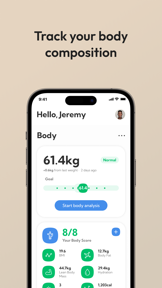
Integrating smart health hardware with digital fitness and social mapping tools. They bridge physical biometric tracking with community-driven location sharing.
Target audience


Portfolio
Free 6Last updated

GenK: World General Knowledge
v6.5
10mo ago
Publisher DNA
What defines NOERDEN?
Publisher DNA
Primary focus
Health & Fitness hardware integration and lifestyle applications
Scale
indie
Target audience
Health-conscious individuals using smart wearables and social users interested in location-based, unfiltered content sharing.
Origin
Founded in 2018, the publisher initially focused on smart health hardware before expanding into a broader mobile software ecosystem.
Signature Patterns
- •Integration of smart hardware metrics with mobile fitness tracking
- •Freemium monetization model across diverse categories
- •Focus on community-based features like social mapping and workout groups
- •High-frequency update cadence across all primary titles
Portfolio momentum
Released 14 updates across 5 apps in the last 6 months, indicating a high-frequency development cycle across their entire active portfolio.
Company profile
medium confidence- Founded
- 2018
Portfolio
What does NOERDEN ship?
Apps
6 apps analysed


2-minute lesson structure lowers the barrier to daily habit formation
- Apple Intelligence integration enables private, on-device quiz generation
- Frequent application crashes during the initial launch sequence prevent users from accessing the core content

Private group structure fosters high-trust social interactions
- Location-based pinning creates a unique visual diary experience

Distributed across 9 markets, strongest in Europe.
Based on 2 of 6 apps with localized market data, more coverage rolling in as scans complete · last scanned .
Americas (3)
- Mexico2 / 2
- United States2 / 2
- Brazil1 / 2
Europe (5)
- France2 / 2
- Spain2 / 2
- Germany1 / 2
- Italy1 / 2
- Portugal1 / 2
Asia-Pacific (1)
- South Korea1 / 2
Core markets (2/2 apps)
User Sentiment
How do users feel about their apps?
1
Positive apps
0
Neutral / mixed
1
Negative apps
48/100
Avg sentiment score
Unlock the app dragging this portfolio down.
Access the full report for freeRivals
Who does NOERDEN compete with?
The rivals identified
Nemeses(3)


Both apps target casual learners seeking bite-sized self-improvement through micro-learning formats, directly competing for the same daily habit window.


Both apps target users seeking to replace social media scrolling with structured microlearning, competing directly for the same daily habit-forming time slot.


Both apps compete for the same intimate social circle audience by prioritizing visual documentation over traditional feed-based social media.
Contenders(15)


Both apps target the same microlearning habit loop by offering 2-minute lessons designed to replace passive scrolling with structured knowledge.


Both apps target the microlearning segment by offering bite-sized educational content designed for short sessions, directly competing for the same user time during commutes or breaks.


Both apps target users seeking to replace passive habits with structured microlearning, competing directly for the same daily time-slot.


Blinkist serves the same audience of lifelong learners who prefer short-form summaries over long-form educational content.


Both apps target users seeking to replace passive social media scrolling with structured microlearning, competing directly for the same daily habit-building time slot.


Both applications target the microlearning market by replacing passive social media consumption with bite-sized educational content. They compete directly for the attention of users seeking structured knowledge in short, daily intervals.


Locket Widget competes for the same intimate social audience by using home screen widgets to drive daily interaction, whereas mapnow relies on manual location-based pinning.


LitNow competes for the same social discovery time budget by prioritizing spontaneous video interaction, whereas mapnow focuses on location-based visual documentation. Both target users seeking social connection, but LitNow captures a broader audience through interest-based matching.


Both apps target the microlearning segment by offering bite-sized, quiz-backed educational content designed to replace passive digital habits.


Both apps compete for the same location-based social networking audience by using map-centric interfaces to visualize user activity and social interactions.


Both apps target the microlearning market with quiz-backed lessons and streak-based habit loops, competing for the same time-constrained user base.


Both apps target social coordination via location, though Penlo focuses on safety tracking while mapnow prioritizes visual diary documentation.


Both apps target the intimate social networking niche by prioritizing authentic, real-time content sharing among close-knit groups.


Both apps target users looking to replace passive social media scrolling with microlearning content, competing directly for daily screen time through bite-sized educational formats.


Both apps compete for the same daily habit window by positioning themselves as alternatives to social media scrolling through structured microlearning. They share a core audience of users seeking to replace passive screen time with educational content.
Same space(34)


CountIt targets the same lifestyle-logging audience as mapnow, though it focuses on counters rather than map-based pins.


Curious Goat competes for the same daily habit-building audience, using social streaks to encourage consistent learning.


Learn Fast and Speak Fluently offers a free, personalized learning path that competes for the same casual user base.


Babbel competes for the same daily micro-learning time slot by offering structured language lessons backed by university research.


Headway competes for the same time-poor audience by converting non-fiction books into 15-minute audio and text summaries.


Findo functions as a real-time location utility, competing for the same user attention on location-based tracking.


Deepstash competes for the same 'doomscrolling' replacement habit by offering a curated feed of knowledge cards.


Cake captures the same casual learner demographic by using short-form video content to drive daily engagement.


RiseGuide provides a similar daily, expert-backed learning journey for users focused on professional development.


DW Learn German offers a comprehensive, ad-free curriculum that competes for the time of serious language learners.


Epop uses competitive leagues and game mechanics to maintain user retention during short daily study sessions.


STRATA targets the same self-directed learner segment by using AI to generate bespoke curricula on demand.


Flashka simplifies knowledge retention by converting study materials into interactive quizzes and flashcards.


Gauth serves the same STEM-focused student audience, offering step-by-step explanations that complement GenK's quiz-based learning.


Puff competes for the same social-sharing audience by focusing on real-time documentation of daily routines.


MyHistory targets the same daily habit-building audience as GenK, specifically focusing on history-based micro-learning.


Kahoot! competes for the same quiz-based engagement, though it focuses on live classroom hosting rather than solo learning.


Spark serves the same micro-learning audience by providing card-style, audio-narrated summaries of books and concepts.


Kharty serves the same quiz-based learning audience by focusing on diagram and map mastery through AI-generated games.


Nibble occupies the same micro-learning niche as GenK, offering a similar 10-minute lesson format for casual skill acquisition.


NeoStudy automates the study process for students, serving as a productivity tool for knowledge retention.


Mapillary provides a professional-grade alternative for street-level mapping, contrasting with the personal social documentation focus of mapnow.


Phase6 focuses on long-term vocabulary retention through integration with specific educational textbooks.


Powero uses a collectible card mechanic to gamify professional learning, competing for the same time-poor user base.


Imprint overlaps with GenK by providing visual, bite-sized knowledge sessions on diverse topics like psychology and finance.


Imprint targets the same visual-first micro-learning demographic as GenK, focusing on rapid mastery of complex topics.


Quizlet serves as a direct competitor for study-focused users, utilizing a massive UGC library to provide subject coverage GenK lacks.


Gizmo competes for the student segment by automating flashcard creation, a core utility for GenK's quiz-focused users.


SchoolMouv provides an academic alternative by using AI to generate study resources for students.


Seneca Learning targets the same academic revision market, using adaptive algorithms to optimize memory retention.


Speak targets users seeking active knowledge application, contrasting with passive quiz-based retention methods.


Spark provides a thematic, puzzle-based alternative to GenK's quiz-based learning, focusing on discovery.


Sophia targets the same general knowledge audience as GenK, offering short, dense lessons for daily self-improvement.


10 Minute Language aligns with the micro-learning format to build vocabulary through daily sessions.
New entrants(1)


General Knowledge Quiz Game targets the same casual trivia audience, offering a broad range of quiz categories.
The Analyst's Read
The bottom line on NOERDEN
Bottom line
NOERDEN is a versatile studio currently pivoting toward a broader lifestyle platform, though their portfolio lacks a singular, cohesive category focus. Their ability to maintain high update velocity across disparate verticals suggests strong operational agility, but long-term success depends on unifying their hardware and social user bases.
Frequently asked questions
How many apps does NOERDEN publish?
What kind of apps does NOERDEN make?
What is NOERDEN's top app?
In how many countries are NOERDEN's apps available?
What fed this analysis
- Apps analyzed:
- 5
- With full intel:
- 1
- With overview:
- 5
- Website scraped:
- yes
- Social presence:
- yes