

QUIN Technologies
 getquin - Portfolio Tracker







Publisher DNA
What defines QUIN Technologies?
AI intelligence is not yet available for QUIN Technologies. The portfolio data below is up to date.
Portfolio
What does QUIN Technologies ship?
Apps
2 apps analysed

Community-driven investment feed increases session frequency
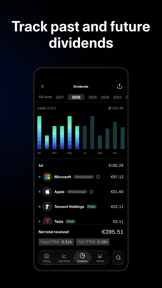
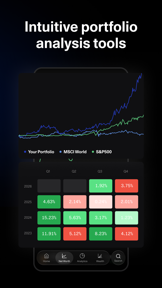
- Dividend tracking and portfolio analysis tools provide clear insights for long-term investment planning
- Aggressive paywall tactics and subscription requirements for basic features frustrate long-term users
Track stocks, dividends & ETF - monitor net worth & wealth w/ investment tracker


Analysis in progress
Distributed across 9 markets, strongest in Europe.
Based on 1 of 2 apps with localized market data, more coverage rolling in as scans complete · last scanned .
Americas (3)
- Brazil1 / 1
- Mexico1 / 1
- United States1 / 1
Europe (6)
- France1 / 1
- Germany1 / 1
- Italy1 / 1
- Netherlands1 / 1
- Portugal1 / 1
›+1 more europe market
- Spain1 / 1
Core markets (1/1 apps)
User Sentiment
How do users feel about their apps?
0
Positive apps
0
Neutral / mixed
1
Negative apps
25/100
Avg sentiment score
Rivals
Who does QUIN Technologies compete with?
The rivals identified
Nemeses(2)

Both apps target retail investors seeking financial oversight, with getquin focusing on personal portfolio aggregation while Investing.com provides broad market data and news.


Users report: Both platforms compete for the same retail investor audience by providing financial data and portfolio monitoring tools. Investing.com captures users through massive real-time data coverage, while getquin focuses on multi-asset aggregation.
Contenders(13)


Both apps target investors seeking portfolio management and market tracking, creating direct competition for users managing multi-asset holdings.


Both apps target dividend income investors who require automated portfolio monitoring and dividend tracking to manage cash flow.


Both apps compete for the same portfolio tracking audience by providing aggregated views of financial holdings across multiple external accounts and exchanges.


Both apps target retail investors, but getquin focuses on long-term net worth aggregation while Stocks Tracker targets active traders requiring real-time technical analysis.


Both apps compete for the same retail investor and wealth-builder audience by offering automated bank and asset aggregation to provide a centralized financial dashboard.


Uses rent reporting to influence credit scores, creating a sticky retention loop for budget-focused users.


Both apps compete for the same German retail investor audience, forcing users to choose between getquin's portfolio analysis tools and finanzen.net zero's direct market execution capabilities.

known for Portfolio Performance
Both apps target investors managing multi-asset portfolios, but they diverge on data ingestion: getquin uses automated API connections while Portfolio Performance relies on manual desktop-to-mobile sync.


Both apps target individual investors managing multi-asset portfolios, competing for users seeking centralized performance tracking for stocks, ETFs, and cryptocurrencies.


Both applications target investors requiring portfolio performance analysis and multi-asset tracking, competing for the same user base seeking real-time investment monitoring.


Both applications aggregate bank and broker accounts into a single dashboard, competing for the same retail user base seeking centralized financial oversight.


Both apps target long-term investors seeking consolidated portfolio and dividend tracking, competing directly for users managing multi-asset portfolios.


Both apps target investors seeking portfolio management, but Benson AI focuses on automated stock discovery while getquin prioritizes multi-asset aggregation and net worth tracking.
Same space(21)


Uses AI to identify high-potential stock ideas before they trend in the broader market.


Automates trade execution, serving as a hands-off alternative to manual portfolio tracking.


Forecasts spending power to help users manage recurring bills alongside their broader financial life.


It provides a granular view of daily spending that complements the high-level asset tracking found in the source app.


Aggregates bank and crypto data to provide a centralized view similar to portfolio trackers.


The app addresses the physical cash management gap that digital-only portfolio trackers often ignore.


Delivers audio-based market briefings for users who prefer passive consumption of investment insights.


This app targets the same retail finance audience by focusing on daily cash flow management rather than long-term investment tracking.


Manual entry appeals to users wary of automated sync errors found in broader trackers.


It offers a manual alternative for users who prefer avoiding the API synchronization issues present in the source app.


Focuses on manual net worth tracking for users who prefer privacy over automated banking connections.


Enables collaborative financial management for households, serving as a shared alternative to individual trackers.


Provides professional-grade technical analysis for traders who require more depth than standard portfolio views.


This app shares the same user base interested in financial planning but focuses on zero-based budgeting rather than portfolio aggregation.


The app targets the same personal finance demographic by providing a double-entry bookkeeping system for asset management.


Offers momentum-based alerts for traders who prioritize active signal detection over long-term wealth tracking.


Integrates equity research reports to assist users in making informed investment decisions.


Delivers multi-channel price alerts for traders who need immediate notification of market movements.


It functions as a daily expense recording tool for users who need simpler tracking than a full portfolio dashboard.


Supplies analyst-led research to help investors validate their portfolio holdings with expert opinions.


Ranks stocks using a proprietary system, providing a structured alternative to general portfolio monitoring.
New entrants(1)


It provides a personality-driven interface for expense tracking that contrasts with the technical focus of portfolio trackers.
