Readwise
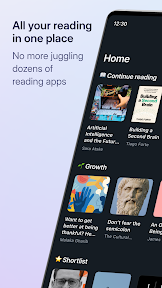
For power readers, researchers, and lifelong learners who prioritize information retention and cross-platform content organization.
 Glose
Glose










Snapshot
Who is Readwise?
Helping readers retain knowledge by aggregating highlights from across the web and physical books. Building a unified workflow for power readers to capture and revisit insights.
Target audience


Portfolio
Free 6Last updated

Glose
v3.8.33
2.2y ago
Publisher DNA
What defines Readwise?
Publisher DNA
Primary focus
Knowledge management and productivity tools for readers
Scale
indie
Target audience
Power readers, researchers, and lifelong learners who prioritize information retention and cross-platform content organization.
Signature Patterns
- •Subscription-based monetization model for core productivity tools
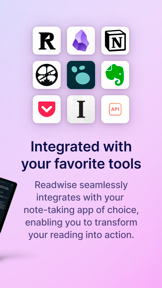
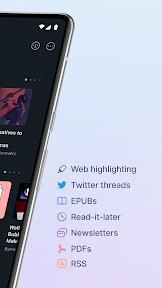
- •Strong emphasis on cross-platform synchronization and ecosystem integration
- •Focus on workflow consolidation for power users
- •Freemium model utilized for social reading and discovery apps
Portfolio momentum
Released 7 updates across 5 apps in the last 6 months, with consistent maintenance across their core productivity and reading tools.
Portfolio
What does Readwise ship?
Apps
6 apps analysed


Spaced-repetition habit loop drives high DAU/MAU ratios
- Spaced repetition and daily highlight reviews build a consistent habit for knowledge retention
- Subscription pricing and lack of a free tier create friction for potential long-term users


Analysis in progress
Single-market publisher, every app ships only to United States.
Based on 2 of 6 apps with localized market data, more coverage rolling in as scans complete · last scanned .
Americas (1)
- United States2 / 2
Core markets (2/2 apps)
User Sentiment
How do users feel about their apps?
1
Positive apps
0
Neutral / mixed
0
Negative apps
72/100
Avg sentiment score
Rivals
Who does Readwise compete with?
The rivals identified
Nemeses(1)

Readmate competes for the same highlight-management audience by offering direct integration with WeRead, targeting users who prioritize specific Chinese-language reading platforms.
Contenders(10)


Kindle Clippings targets the same Kindle-reading audience as Readwise by providing a dedicated interface for highlight management, specifically focusing on the My Clippings.txt file workflow.


Both apps target readers managing highlights from physical and digital books, with Margins offering a free alternative to the subscription-only model of Readwise.


Both apps target the same audience of avid readers looking to manage Kindle highlights, creating direct competition for users seeking to solve the read-and-forget cycle.


Both apps target knowledge workers and researchers by capturing and organizing digital highlights, creating direct competition for users seeking to manage information from web-based sources.


ReMarkly targets the same Kindle highlight-syncing audience as Readwise, offering a focused daily review loop and direct Markdown export to Obsidian. It competes by positioning itself as a local-first alternative for users who prioritize data privacy over cloud-based synchronization.


Integrate competes for the same knowledge management audience by automating highlight capture from Kindle and physical books. Both services function as digital memory layers for users who want to organize insights from disparate reading sources.


Screvi targets the same knowledge retention audience by offering a similar spaced-repetition loop and multi-source import capability, including direct imports from Readwise.


Both applications target researchers and avid readers who need to store and retrieve highlights from digital sources like Kindle. They compete directly on the utility of managing personal libraries of quotes and passages.


WordGlean targets the same Kindle-reading audience as Readwise but eliminates the recurring cost and account requirement, appealing to users who prioritize privacy and offline access.


Booko targets the same audience of readers by offering a centralized interface for highlights imported from Kindle and Apple Books. It competes directly by providing a simplified browsing experience for reading notes without the complex setup of a knowledge management system.
Same space(20)


Outread uses RSVP speed-reading mechanics to increase consumption speed, contrasting with Readwise's focus on long-term retention.


SoBrief uses AI to provide book discovery and summaries, acting as an alternative entry point for users looking to find their next read.


Blinkist provides pre-summarized content as a substitute for reading full texts, whereas Readwise focuses on capturing personal insights from original sources.


Summary Z offers AI-driven conversational features, providing a more interactive way to engage with book content than Readwise's static highlight storage.


Headway competes for the user's daily learning habit by offering micro-summaries that function as a faster alternative to reading and highlighting full books.


Nous focuses on active recall during reading sessions, providing a more immediate memory-building tool than Readwise's post-reading review.


Highlights Library focuses on children's reading development, serving a distinct demographic compared to Readwise's professional user base.


Highlighted serves as a direct capture tool for physical and digital books, mirroring Readwise's core highlight-collection utility.


Matter acts as a unified reading inbox for articles and newsletters, overlapping with Readwise's goal of centralizing digital reading content.


Spreeder focuses on speed-reading training, serving as an efficiency tool for users who want to digest content faster than Readwise's review loop allows.


getAbstract provides professional-grade summaries, competing for the time of knowledge workers who might otherwise use Readwise to process full texts.


Goodreads serves as the primary social discovery layer for books, contrasting with Readwise's focus on private knowledge retention.


Knowledge from OnlineObjects provides a structured framework for hypothesis mapping, which is a more specialized research task than Readwise's general highlight capture.


Highlights targets the academic research niche by prioritizing PDF annotation, whereas Readwise focuses on broader knowledge management.


KTool focuses on the delivery of web content to Kindle, which complements Readwise's highlight-syncing capabilities.


StoryShots focuses on multimedia learning formats, providing an alternative to Readwise's text-heavy highlight storage.


noter provides pencil-based annotation for EPUBs, serving users who prefer a tactile, drawing-based approach to reading.


Buch-Highlights focuses on Notion integration, providing a direct pipeline for users who prefer to manage their knowledge base within Notion.


Shortform offers expert-written analysis of books, providing a deeper layer of content than the raw highlights Readwise captures.


EchoRead transforms highlights into visual mind maps, offering a different cognitive processing method than Readwise's spaced repetition.
New entrants(1)


Plume provides a personal library cataloging system, serving as a companion for users who want to track their reading life beyond just highlights.
The Analyst's Read
The bottom line on Readwise
Bottom line
Readwise is a specialized player that has successfully transitioned from a niche utility to a comprehensive knowledge management ecosystem. Their high user satisfaction and deep integration strategy provide a defensible position in the crowded productivity market.
Frequently asked questions
How many apps does Readwise publish?
What kind of apps does Readwise make?
What is Readwise's top app?
In how many countries are Readwise's apps available?
What fed this analysis
- Apps analyzed:
- 5
- With full intel:
- 0
- With overview:
- 5
- Website scraped:
- yes
- Social presence:
- yes