
Real-Time Specialties
For professional piano technicians, pipe organ builders, and mechanics requiring high-precision audio analysis tools.
 TuneLab Piano Tuner


Snapshot
Who is Real-Time Specialties?
Providing high-precision tuning and diagnostic tools for professional musicians and technicians. Enabling accurate pitch and engine performance analysis through specialized software.
Target audience


Portfolio
Last updated

TuneLab Piano Tuner
v4.7.2
2.2y ago
Publisher DNA
What defines Real-Time Specialties?
Publisher DNA
Primary focus
Professional tuning and diagnostic utilities
Scale
indie
Target audience
Professional piano technicians, pipe organ builders, and mechanics requiring high-precision audio analysis tools.
Origin
Founded in 1984, the company began by developing embedded systems and microcontroller firmware before expanding into specialized musical tuning software.
Signature Patterns
- •Strict focus on professional-grade, high-precision utility tools
- •Monetization exclusively via paid model
- •Integration of advanced signal processing and audio analysis features
- •Targeting of specialized technical trades rather than mass-market consumers
Portfolio momentum
With only 1 release in the last 6 months and 1 abandoned app, the publisher maintains a slow, steady development cycle focused on long-term utility support.
Company profile
medium confidence- Headquarters
- MN, USA
- Founded
- 1984
Portfolio
What does Real-Time Specialties ship?
Apps
5 apps analysed

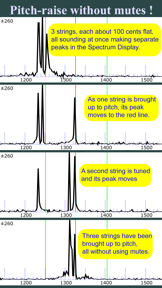
- Selectable filter bandwidth (30-400 cents) enables precise partial isolation


Single-market publisher, every app ships only to United States.
Based on 1 of 5 apps with localized market data, more coverage rolling in as scans complete · last scanned .
Americas (1)
- United States1 / 1
Core markets (1/1 apps)
Rivals
Who does Real-Time Specialties compete with?
The rivals identified
Nemeses(2)


Both apps target mechanics and DIY enthusiasts by using audio analysis to measure engine RPM without physical hardware connections.


Both apps target the piano tuning market, with the rival offering a freemium entry point that directly challenges the high-cost barrier of the professional-grade TuneLab Piano Tuner.
Contenders(6)


Both apps target mechanics and DIY enthusiasts by using microphone-based audio analysis to measure engine RPM without physical hardware connections.

known for VroomScan - Engine Diagnosis
Both apps utilize smartphone microphones to analyze engine sounds, targeting users who require non-invasive engine monitoring without OBD-II hardware.


RPM Dot targets the same engine monitoring category as Engine RPM, competing for users seeking non-invasive RPM measurement tools.


TuneLab Piano Tuner and Bass Guitar Tuner + share the broad category of instrument tuning, though they serve distinct professional and hobbyist user bases.


Both apps target mechanics and DIY enthusiasts by using microphone-based audio analysis to estimate engine RPM without external hardware.


Both applications target piano tuning, but Piano Prober functions as a free diagnostic utility for casual users, while TuneLab Piano Tuner serves professional technicians with high-precision, paid software.
Same space(35)

Tuner Pro offers a broad-market instrument tuning utility, contrasting with the niche, high-precision requirements of pipe organ maintenance.


Perfect Piano serves casual hobbyists through simulation, while Organ Tuner focuses on professional technical maintenance for pipe organs.


Serves the same core user base of musicians needing pitch-related training and practice tools.


This is a dominant, high-utility music tool that captures the same professional and student audience as the target app.


This app targets general ear training for musicians, whereas Organ Tuner provides specialized frequency analysis for pipe organ technicians.


Offers general tuning and chord detection without the professional piano-specific inharmonicity engine.


Functions as a virtual piano simulator for casual practice rather than a professional technician tool.


This app provides a stroboscopic tachometer for measuring rotational speed via light flicker frequency.


Offers a general-purpose instrument tuning utility that lacks the professional-grade piano technician features found in TuneLab.


Direct competitor in the professional piano tuning space using inharmonicity measurement.


This app provides turntable speed measurement using gyroscope or camera analysis.


Provides a general multi-instrument tuner that lacks the professional piano-specific inharmonicity engine.


This app provides a camera-based rotational speed measurement tool for rotating machinery.


This app measures small motor rotation speed via microphone, serving as a direct competitor for motor diagnostics.


Acts as a general chromatic tuner for various instruments, lacking piano-specific inharmonicity measurement.


Offers general chromatic tuning for many instruments without the specialized piano-specific inharmonicity features.


Acts as a general chromatic tuner without the specialized piano-specific inharmonicity measurement.


This app serves as a turntable tachometer for rotational speed measurement.


This app serves as a professional audio analysis suite for frequency detection, providing diagnostic capabilities for sound.


This app acts as an audio spectrum analyzer for frequency detection, providing diagnostic tools for sound.


This app functions as a tachometer alternative by using flashlight strobe frequency to measure rotational speed.


Targets the educational music theory niche, overlapping with the target app's goal of training aural piano tuners.


Functions as a general tuner with spectrum analysis, missing the piano-specific inharmonicity measurement.


This app measures small motor rotation speed, serving as a direct competitor for small engine diagnostics.


This app provides a diagnostic tool for rotational speed using gyroscope sensors, serving as a specialized alternative for turntable calibration.


Provides a general chromatic tuner and pitch pipe that does not address piano-specific tuning needs.


Focuses on high-precision rhythm timing rather than the piano-specific tuning engine.


Provides general pitch detection and waveform visualization, lacking piano-specific inharmonicity features.


Provides general music practice utilities rather than the specialized inharmonicity tools required by piano technicians.


This app uses sound waves for hardware maintenance, mirroring the technical utility of Organ Tuner but for consumer mobile speakers.


Direct competitor in the professional piano tuning space using custom stretch calculation.


Functions as a virtual piano simulator for casual hobbyists instead of a professional technician tool.


This app provides engine sound simulation for automotive hobbyists, serving as an adjacent utility.


GuitarTuna provides a high-frequency tuning utility for string players, serving as a mass-market alternative to the specialized organ-tuning domain.


This app provides a stroboscopic tachometer using flashlight for rotational speed measurement.
New entrants(3)


Direct competitor in the professional piano tuning space focusing on multi-string unison.


An aggressive, high-velocity competitor in the music education space with a massive content-driven moat.


Provides an intonation visualizer for general musicians rather than a professional piano tuning tool.
The Analyst's Read
The bottom line on Real-Time Specialties
Bottom line
Real-Time Specialties is a stable, specialized developer that has successfully captured a niche market through high-utility, professional-grade software. Their long-term viability is tied to their deep domain authority in piano and organ tuning, making them a low-growth but high-retention player in the utility category.
Frequently asked questions
How many apps does Real-Time Specialties publish?
Where is Real-Time Specialties based?
What kind of apps does Real-Time Specialties make?
What is Real-Time Specialties's top app?
In how many countries are Real-Time Specialties's apps available?
What fed this analysis
- Apps analyzed:
- 5
- With full intel:
- 0
- With overview:
- 5
- Website scraped:
- yes
- Social presence:
- no