Smart Box Design
 Farkle Dice!





Snapshot


Publisher DNA
What defines Smart Box Design?
AI intelligence is not yet available for Smart Box Design. The portfolio data below is up to date.
Portfolio
What does Smart Box Design ship?
Apps
2 apps analysed
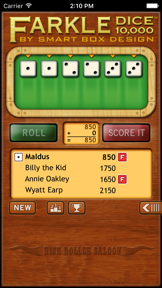
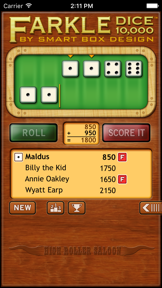
Customizable rulesets cater to diverse regional playstyles
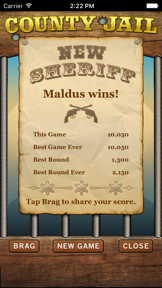
- Clarity of the scoreboard and quick game sessions
- Rule variations compared to local versions

Cross-platform entitlement covers iPhone, iPad, and Apple TV
- Western theme and customizable play options provide a satisfying and fair dice-rolling experience for casual players
- The game fails to render in full screen on modern devices, leaving the play field small and cramped
Distributed across 7 markets, strongest in Europe.
Based on 2 of 2 apps with localized market data · last scanned .
Americas (2)
- Mexico2 / 2
- United States2 / 2
Europe (3)
- France2 / 2
- Germany2 / 2
- Spain2 / 2
Asia-Pacific (2)
- Japan2 / 2
- South Korea2 / 2
Core markets (2/2 apps)
User Sentiment
How do users feel about their apps?
1
Positive apps
1
Neutral / mixed
0
Negative apps
58/100
Avg sentiment score
Unlock the app dragging this portfolio down.
Access the full report for freeRivals
Who does Smart Box Design compete with?
The rivals identified
Nemeses(1)

This app dominates the casual board game market by leveraging high-production social mechanics that directly compete for the same casual gaming time as Farkle Dice.
Contenders(4)


This app is a direct functional competitor, focusing specifically on dice-based mechanics and social tournament play.


It competes for the same tabletop-to-mobile conversion audience by offering a premium, feature-rich board game experience.


It captures the same casual, classic-game-loving audience by providing a simple, accessible multiplayer experience.


This title targets the same demographic of board game enthusiasts who value strategic depth and classic tabletop mechanics.
Same space(2)


It competes for the attention of strategy-focused gamers who prefer turn-based digital adaptations of physical games.


It targets the same tabletop-adjacent audience by providing digital tools for managing complex game states.
New entrants(2)


It targets a specific cultural niche with a non-gambling simulation of traditional dice-based games.


This newcomer enters the market with a competitive ranked system that could siphon off the target's more serious players.