Two Lives Left
For developers, technical artists, and hobbyists interested in creative coding, game prototyping, and shader graph design.
 Codea








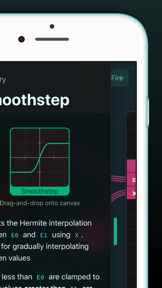


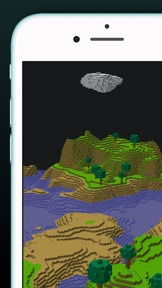



Snapshot
Who is Two Lives Left?
Empowering creators to build and prototype interactive visual experiences directly on mobile devices. Bridging the gap between code and design.
Target audience


Portfolio
Free 3Last updated

Codea
v3.16
7mo ago
Publisher DNA
What defines Two Lives Left?
Publisher DNA
Primary focus
Creative coding tools and simulation games
Scale
indie
Target audience
Developers, technical artists, and hobbyists interested in creative coding, game prototyping, and shader graph design.
Signature Patterns
- •Strong emphasis on creative coding and logic-based gameplay
- •Deep integration between their own development tools (Codea) and app ecosystem
- •Focus on iPad-first productivity and design workflows
- •Mixed monetization model ranging from free tools to paid premium titles
Portfolio momentum
Released 4 updates across 5 apps in the last 6 months, with the majority of the portfolio receiving active maintenance.
Portfolio
What does Two Lives Left ship?
Apps
5 apps analysed


Distributed across 10 markets, strongest in Europe.
Based on 2 of 5 apps with localized market data, more coverage rolling in as scans complete · last scanned .
Americas (3)
- United States2 / 2
- Brazil1 / 2
- Mexico1 / 2
Europe (5)
- France1 / 2
- Germany1 / 2
- Netherlands1 / 2
- Portugal1 / 2
- Spain1 / 2
Asia-Pacific (2)
- Japan1 / 2
- South Korea1 / 2
Core markets (2/2 apps)
Rivals
Who does Two Lives Left compete with?
The rivals identified
Nemeses(1)

Both apps target graphics developers and hobbyists looking to build shaders on mobile, creating direct competition for the same technical user base.
Contenders(6)


Both applications target digital artists and developers building shaders, though they diverge on target hardware and output formats: Shade focuses on node-based game development, while Spatial Shader targets stereoscopic fractal art for Vision Pro.


Both apps target mobile game developers and creative coders needing on-the-go shader prototyping, creating direct competition for the same technical user base.


Both applications target mobile graphics developers for shader prototyping, creating direct competition for the same technical audience.


Both apps target mobile developers building shaders, but they differ in workflow: Shade uses a node-based visual interface, while Shader Playground focuses on code-based Metal Shading Language.


Both apps target creative coding on mobile devices, with RubySketch providing a text-based scripting environment while Shade offers a visual node-based workflow for shader development.


Both applications target users interested in node-based shader creation, creating a direct overlap in the graphics programming and visual effects niche.
Same space(20)


Serves the same entry-level 3D design demographic but prioritizes general modeling over technical shader development.


Focuses on procedural gradient generation, providing a simpler alternative to node-based shader graph creation.


Provides a massive library of pre-fabricated GLSL shaders, serving as a resource or alternative to building custom shaders.


Provides professional mesh editing for 3D printing, serving the same technical audience that uses Shade for game assets.


Manages the backend rendering process for 3D projects, serving as a companion to the content created in Shade.


Acts as a utility for color management, a foundational element for users building shaders in Shade.


Explores high-performance fractal rendering, appealing to the same technical audience interested in complex mathematical visualizations.


Offers a 3D sculpting environment that serves as a creative precursor to applying shaders in Shade.


Targets the same creative mobile audience but focuses on voxel-based art rather than node-based shader graphs.


Shares the professional creative tool space but focuses on motion graphics and vector animation instead of shader code.


Provides a comprehensive 3D scene building environment, acting as a broader platform for the shaders created in Shade.


Occupies the 3D sketching niche, providing an alternative for conceptualizing 3D ideas without the technical depth of shader nodes.


Directly competes in the procedural texture generation space, offering a node-based workflow similar to Shade.


Focuses on gradient design, offering a simplified alternative to the complex shader graphs built in Shade.


Provides a technical bridge between mobile capture and desktop 3D software, similar to Shade's export capabilities.


Teaches programming through visual geometry, sharing the educational and creative coding roots of shader development.


Bridges the gap between coding and visual design, similar to how Shade uses nodes to define visual output.


Focuses on the character design aspect of 3D art, offering a specialized posing utility for the same creative audience.


Provides a specialized animation workflow for Unity developers, complementing the shader export functionality found in Shade.


Targets mobile photography enthusiasts with creative visual effects, overlapping with the aesthetic goals of shader-based image manipulation.
New entrants(2)


Automates the rendering process for architectural concepts, serving as a high-level alternative to manual shader-based visualization.


Functions as a direct competitor by providing a real-time shader playground for mobile devices.
The Analyst's Read
The bottom line on Two Lives Left
Bottom line
Two Lives Left is a specialized studio that successfully leverages its own proprietary coding environment to build both developer tools and niche simulation games. Their ability to maintain a consistent, high-quality output across both utility and gaming categories demonstrates strong technical competency in mobile-first development.
Frequently asked questions
How many apps does Two Lives Left publish?
What kind of apps does Two Lives Left make?
What is Two Lives Left's top app?
In how many countries are Two Lives Left's apps available?
What fed this analysis
- Apps analyzed:
- 5
- With full intel:
- 0
- With overview:
- 5
- Website scraped:
- yes
- Social presence:
- yes