


Abjad日本語 is a Japanese input method utility for iOS that uses consonant-first transliteration to simplify typing for learners familiar with alphabetic scripts.
The App DNA
What makes this app unique?
Users hire this app to bypass the complexity of traditional kana-based keyboards, reducing the friction of Japanese script entry for non-native speakers.
For Japanese language learners familiar with alphabet-based scripts and users seeking a simplified alternative to traditional Japanese input methods.
Key features
Maps consonant-first input to Japanese kana combinations via custom keyboard logic
Executes all input mapping locally without server-side data transmission
Uses larger hit targets and reduced symbol counts compared to standard IMEs
How much does it cost?
The app is currently distributed as a free utility with no observable monetization gates or subscription tiers.
Velocity
Dormant developmentopaqueShow more...
The app has recorded only one release in the last four months, resulting in a cadence of approximately 0.06 releases per week. This falls below the threshold for maintenance, categorizing the app as a zombie. There is no evidence of active development, feature updates, or live operations. The last available update provided only generic bug fixes.
Who built it?

User Sentiment
What do users think recently?
How are ratings & reviews evolving?
Not enough recent reviews to extract reliable themes yet.
Read the full review analysisCompetition
Competitive landscape for Abjad日本語
How's the Utilities market?
Abjad日本語 operates as a niche utility in the Japanese language segment, currently lacking the review volume or chart presence of established keyboard competitors. The absence of a monetization model signals a focus on user acquisition over revenue generation at this stage.
Read the market outlookThe rivals identified

By DOSA Apps
This app competes by dominating the niche utility keyboard space, capturing users who prioritize voice-to-text and multi-language input methods.
- Integrates advanced smart voice features that significantly reduce manual typing effort for non-Latin script users.
- Offers extensive customizable themes that drive higher user retention compared to minimalist utility keyboards.
- Maintains a massive user base and high review volume, creating a strong social proof barrier.
 Hiragana Table Keyboard UltraContender
 Polytonic GreekContender
 Armenian Phonetic KeyboardContender
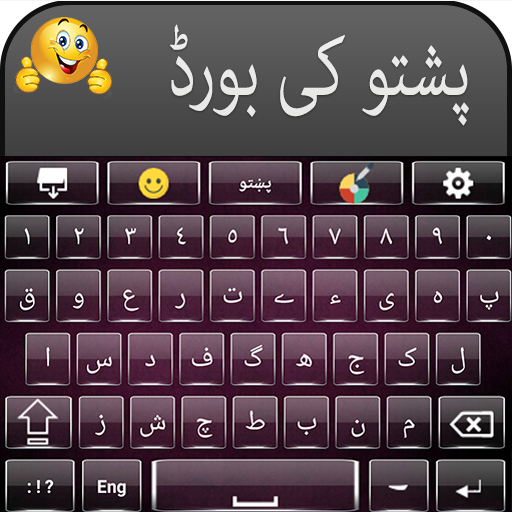 Pashto Keyboard - پښتو کیبورډContender
Unlock the head-to-head verdict: where this rival wins, and where it loses.
Access the full report for freeThe Analyst's Read
Key takeaways for Abjad日本語
Where is it heading?
The Japanese input utility market is consolidating around tools that offer educational value alongside typing efficiency. Abjad日本語 remains exposed due to its lack of predictive text, so the PM must pivot toward educational integration to avoid being relegated to a niche, low-usage tool.
- The app maintains a stable, privacy-focused utility posture, but the lack of feature updates suggests a low-velocity development cycle.
The SWOT
- On-device processing provides a privacy-first value proposition
- Minimalist layout reduces visual clutter for learners
- Partnerships with language learning platforms provide B2B distribution
- Expansion into other non-Latin script markets
Next best moves
Integrate a basic vocabulary database because it is the top-requested feature in the category → increase daily utility
The counter-intuitive read
The app's lack of a monetization model is…
Read the full takeFeature gaps
Vocabulary database (available in Hiragana Table Keyboard Ultra but missing here) +2
Since the last report: The competitive landscape was re-evaluated to focus on niche keyboard utilities, and the product roadmap was updated to prioritize vocabulary database integration over general distribution.
Bottom line
Abjad日本語 offers a unique input method for learners, but it lacks the predictive text and dictionary depth required to compete with standard IMEs, so the PM should prioritize integrating a vocabulary database to move beyond a simple character-mapping tool.
Unlock 2 critical frictions, 2 market threats and the analyst’s take.
Access the full report for freeReport last updated