




AlgoApp is a flashcard study tool for students and language learners that uses AI to convert PDFs into study decks on iOS and Android.
The App DNA
What makes this app unique?
It removes the manual labor of card creation for high-volume study materials, allowing users to focus on retention via FSRS spaced repetition.
For Students, medical professionals, and language learners requiring high-volume memorization and cross-platform study tools.
What does it look like?
Key features
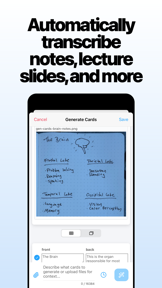
Converts PDFs and lecture slides into flashcards using automated processing.
Schedules reviews based on performance and retention history.
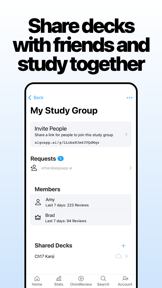
Synchronizes decks across mobile and desktop devices.
How much does it cost?
The $29.99/year subscription gates essential multi-device sync and unlimited daily reviews, creating friction for long-term users.
Velocity
Intense developmentUX improvementssocial featuresperformanceShow more...
AlgoApp maintains an intense development cadence, shipping 6 distinct versions over the last 35 days, averaging more than one release per week. The development team is consistently delivering new features, including study targets, folder organization, and a major overhaul of the card editor. This high-velocity approach focuses heavily on UX improvements and social study features, with recent updates addressing technical reliability and synchronization. The trend remains stable and highly productive, with no signs of slowing down.
Who built it?
User Sentiment
What do users think recently?
Review voice lately leans frustrated. Users appreciate ai-powered document scanning generates flashcards efficiently for students needing to digitize physical study notes and spaced repetition system helps students retain information effectively for high-stakes exams and professional certification, but report ui scaling issues on android devices hide critical navigation and review buttons behind system bars.
How are ratings & reviews evolving?
Weekly average review rating
What users say, by theme
- AI-powered document scanning generates flashcards efficiently for students needing to digitize physical study notes
- Spaced repetition system helps students retain information effectively for high-stakes exams and professional certification
- UI scaling issues on Android devices hide critical navigation and review buttons behind system bars
90 of 1042 recent reviews analyzed · high confidence · Frustrated overall
Read the full review analysisUnlock 2 more frustration themes and 2 user requests, each backed by review evidence.
Access the full report for freeCompetition
Competitive landscape for AlgoApp - Flashcards
How's the Education market?
AlgoApp maintains a 4.67 rating across 24,687 total ratings, positioning it as a high-satisfaction tool for power users despite recent sentiment declines. The $29.99/year subscription fee creates a higher barrier to entry than the $11.00 monthly average seen in category rivals like Quizlet.
Read the market outlookThe rivals identified

By Quizlet Inc
Quizlet competes for the same student demographic by offering a massive library of user-generated content, while AlgoApp targets the same users with specialized retention science.
- Quizlet hosts a massive library of user-generated content, whereas AlgoApp relies on individual AI-driven PDF ingestion.
- Quizlet offers a lower monthly subscription price of $11, compared to AlgoApp's $29.99 annual requirement.
- Quizlet integrates expert-authored solutions, while AlgoApp focuses on FSRS-based spaced repetition for personal study decks.
 DuoCards: Language LearningContender
 Gauth: AI Study CompanionContender
 Vaia: Study, Notes, FlashcardsContender
 GRE Vocabulary FlashcardsContender
 Brainscape - Study FlashcardsContender
 Noji - Flashcards study appContender
 Spaced Repetition SmartCards+Contender
 Thea: Study SmartContender

Unlock the head-to-head verdict: where this rival wins, and where it loses.
Access the full report for freeThe Analyst's Read
Key takeaways for AlgoApp - Flashcards
Where is it heading?
The flashcard market is consolidating around rivals that offer seamless offline access and community-shared content. AlgoApp's reliance on connectivity-dependent sync leaves it exposed to churn if technical instability persists, as users prioritize reliability over advanced retention algorithms.
- Persistent sync failures and UI regressions on Android are driving churn among long-term users, eroding the core retention habit.
- Rapid release cadence of 6 updates in one month demonstrates active feature investment, providing a path to resolve technical debt.
The SWOT
- FSRS algorithm provides scientifically grounded retention tracking
- AI-driven PDF ingestion automates high-volume study digitization
- Offline-first sync architecture to eliminate data loss complaints
- Localized pricing tiers for non-US high-intent markets
Next best moves
Rebuild Android UI layout logic because navigation buttons are obscured by system bars → reduce Android churn
+ 1 more prioritized moveThe counter-intuitive read
The $29.99 annual subscription is not just a monetization lever…
Read the full takeFeature gaps
Offline-first study mode (available in Space but missing here) +1
Since the last report: The competitive outlook has shifted to declining as persistent synchronization failures and Android UI scaling regressions drive churn among power users. While development velocity remains high, the focus has pivoted from cosmetic customization to critical stability and navigation repairs.
Bottom line
AlgoApp's technical retention science is currently undermined by sync instability and aggressive paywalling. Stabilizing the core sync protocol is the only way to protect the premium subscriber base from migrating to more reliable, offline-capable competitors.
Unlock 3 critical frictions, 2 market threats, 1 more prioritized move and the analyst’s take.
Access the full report for freeFAQ
Is AlgoApp worth paying for if I only study occasionally?
How does AlgoApp compare to Quizlet?
Does AlgoApp work without an internet connection?
What is a free alternative to AlgoApp?
Sources
- [1] App Store listing, source
Report last updated