
AlgoApp
For language learners, medical students, and academic test-takers seeking efficient, data-backed memorization workflows.
 AlgoApp - Flashcards


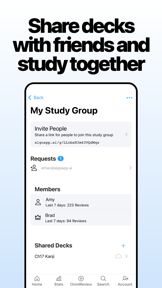
Snapshot
Who is AlgoApp?
Optimizing study sessions for students and language learners through AI-driven spaced repetition. Providing a cross-platform tool to maximize memorization efficiency.
Target audience


Portfolio
Free 1Last updated

AlgoApp - Flashcards
v15.1.1
2mo ago
Publisher DNA
What defines AlgoApp?
Publisher DNA
Primary focus
AI-powered educational flashcard tools
Scale
indie
Target audience
Language learners, medical students, and academic test-takers seeking efficient, data-backed memorization workflows.
Signature Patterns
- •Utilization of AI for automated content generation
- •Advanced Spaced Repetition (SRS) as the core value proposition
- •Cross-platform synchronization between mobile and desktop
- •Freemium model with restrictive daily review caps on the free tier
Portfolio momentum
Released 6 updates in the last 6 months for their single active application, indicating consistent maintenance and feature iteration.
Portfolio
What does AlgoApp ship?
Apps
1 app analysed
Simple and intelligent flashcard app. Seamless sync with phone/tablet/desktop.
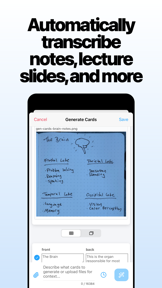


AI-driven PDF ingestion automates high-volume study digitization
- AI-powered document scanning generates flashcards efficiently for students needing to digitize physical study notes
- UI scaling issues on Android devices hide critical navigation and review buttons behind system bars
Distributed across 8 markets, strongest in Europe.
Based on 1 of 1 app with localized market data · last scanned .
Americas (3)
- Brazil1 / 1
- Mexico1 / 1
- United States1 / 1
Europe (4)
- France1 / 1
- Germany1 / 1
- Portugal1 / 1
- Spain1 / 1
Asia-Pacific (1)
- Japan1 / 1
Core markets (1/1 apps)
User Sentiment
How do users feel about their apps?
0
Positive apps
0
Neutral / mixed
1
Negative apps
35/100
Avg sentiment score
Rivals
Who does AlgoApp compete with?
The rivals identified
Nemeses(1)

Both apps target students and language learners with AI-driven flashcard generation, creating direct competition for study time and subscription spend.
Contenders(10)


Both apps target students and professionals requiring high-stakes memorization through spaced repetition, creating direct competition for users seeking reliable long-term retention tools.


Noji competes for the same student and exam-prep demographic by offering a web version and a pre-made deck library, directly challenging the reliance on manual or AI-generated content.


Both apps target students and professionals using spaced repetition for memorization, with SmartCards+ directly competing for users who prioritize deck portability via Anki and Quizlet imports.


Both apps target the student demographic seeking academic assistance, with Gauth capturing the homework-help segment while AlgoApp focuses on long-term retention through spaced repetition.


Both apps target students needing AI-driven flashcard generation from PDFs and physical notes, creating direct competition for users seeking automated study material digitization.


Both apps target students and professionals requiring long-term information retention through spaced repetition algorithms. They compete directly for users seeking high-volume memorization tools.


Both apps target students requiring high-volume memorization, with AlgoApp providing general-purpose AI tools while the rival focuses on high-authority GRE-specific content.


Thea competes for the same student demographic by offering AI-driven ingestion of diverse media formats like YouTube links and lecture videos, which overlaps with the PDF-focused AI generation in AlgoApp.


Space competes for the same student and language learner audience by offering AI-driven flashcard generation from PDFs and URLs, directly overlapping with the core utility of AlgoApp.


Both platforms target university students with AI-driven flashcard generation and spaced repetition, competing directly for the same academic study time.
Same space(20)


Astra AI serves the same student audience by providing instant AI-driven homework assistance.


AI Language Learning & Tutor targets the same language-learning audience by providing 24/7 AI-driven conversational practice.


Babbel targets the same professional learner demographic but uses expert-led curriculum design instead of AI-generated flashcards.


Bunpo serves the same multi-language learner audience by offering structured grammar and speaking exercises.


Busuu targets the same serious learner demographic by combining structured pedagogy with social feedback.


Duolingo competes for the same student attention span by using gamified loops to drive daily habit formation.


ELSA Speak targets the same professional and exam-prep audience with specialized pronunciation coaching.


Jumpspeak serves the same language-learning audience by using AI-simulated roleplay to bypass rote memorization.


Knowunity serves the same student demographic by combining AI-generated tools with community-shared study notes.


Ling targets the same language-learning audience by providing native speaker audio for over 70 languages.


Memrise targets the same language learners by using native speaker content to build conversational confidence.


Falou targets the same language learners by forcing vocal output from the first lesson to bypass passive habits.


LangLearn serves the same language-learning audience by using scenario-based AI modules for practice.


Pingo AI serves the same language-learning audience by using conversational AI to simulate real-world speaking scenarios.


Praktika serves the same language-learning audience by replacing static flashcards with conversational AI avatars.


Gizmo serves the same student audience by automating the digitization of study materials into flashcards.


Pimsleur targets the same high-intent adult learners by prioritizing audio-first immersion over visual flashcards.


Speak targets the same language-learning audience by prioritizing immediate verbal output through AI-powered lessons.


Talkpal competes for the same language-learning audience by using AI-driven roleplay to simulate real-world conversations.


Duo Speak targets the same language-learning audience by using AI characters to provide feedback on voice messages.
New entrants(1)


Studeli serves the same student audience by converting diverse media into interactive study systems.
The Analyst's Read
The bottom line on AlgoApp
Bottom line
AlgoApp is a specialized utility provider that has successfully integrated AI into the traditional flashcard format. Their long-term viability depends on balancing aggressive monetization tactics with the technical stability required by their academic user base.
Frequently asked questions
How many apps does AlgoApp publish?
What kind of apps does AlgoApp make?
What is AlgoApp's top app?
In how many countries are AlgoApp's apps available?
What fed this analysis
- Apps analyzed:
- 1
- With full intel:
- 1
- With overview:
- 1
- Website scraped:
- yes
- Social presence:
- no
