


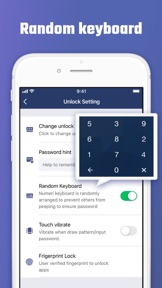
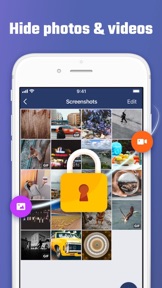

AppLock is a utility application for Android and iOS that secures individual apps and private media via password-protected containers.
The App DNA
What makes this app unique?
Users hire AppLock to prevent unauthorized access to private photos and sensitive apps, relying on its local-only security to maintain personal privacy.
For Mobile users seeking to restrict access to private apps, photos, and videos from unauthorized individuals or children.
What does it look like?
Key features
Prevents app uninstallation or termination by requiring a password via Device Administrator permission
Moves media files from the system Gallery to an encrypted, password-protected container
Obfuscates PIN or pattern entry to prevent shoulder-surfing or pattern-smudging
How much does it cost?
Monetization relies on ad-supported free usage with in-app purchase gates for additional utility.
Velocity
Maintenance developmentperformanceopaqueShow more...
The app exhibits a maintenance-level development cadence, averaging approximately 0.08 releases per week over the last 18 months. Development is exclusively focused on stability and performance, with no evidence of new features, content, or live operations. The release notes are consistently opaque, suggesting a lack of significant feature development or a reliance on minimal maintenance cycles. The development trend is stable at this low-frequency maintenance tier.
Who built it?
DoMobile Co.
7 apps tracked · Utilities
 Idle evolution: Life on Earth
 Nonogram - picture puzzle
 Pixel.Fun2
 DoPixel - pixel color game
 Sudoku - logic number puzzle
 AppLock Lite
User Sentiment
What do users think recently?
Fresh user feedback skews mixed. Users appreciate core app locking functionality provides effective security for private photos and sensitive mobile applications and simple interface design allows users to quickly secure their private content without complex setup, but report data recovery failure after reinstallation or device migration causes permanent loss of private media.
How are ratings & reviews evolving?
What users say, by theme
- Core app locking functionality provides effective security for private photos and sensitive mobile applications
- Simple interface design allows users to quickly secure their private content without complex setup
- Data recovery failure after reinstallation or device migration causes permanent loss of private media
96 of 96 recent reviews analyzed · high confidence · Mixed overall
Read the full review analysisUnlock 1 more frustration theme and 1 user request, each backed by review evidence.
Access the full report for freeCompetition
Competitive landscape for AppLock - photo lock
How's the Utilities market?
AppLock maintains a high-volume install base on Android with over 1.5 million ratings, while the iOS version struggles with a 3.6-star rating and lower engagement. The disparity between the platform ratings signals that the current feature set is not meeting the stability expectations of the iOS user base.
Read the market outlookThe rivals identified

By Legendary Software Labs LLC
With over 1 million ratings and a high release velocity of 15 updates in six months, this app is the dominant, active incumbent in the photo-locking niche.
- Maintains a massive, highly-engaged user base that creates a significant barrier to entry for new competitors.
- High-frequency release cadence ensures rapid feature iteration and bug fixes that outpace this app's development.
- Specialized focus on photo and video security creates a stronger brand authority than this app's general utility approach.


Unlock the head-to-head verdict: where this rival wins, and where it loses.
Access the full report for freeThe Analyst's Read
Key takeaways for AppLock - photo lock
Where is it heading?
The utility-locking market is consolidating around providers that offer seamless cloud-sync, leaving local-only apps like AppLock vulnerable to churn during device upgrades. Unless the team shifts from maintenance-mode to cloud-persistence, the current churn pressure will continue to erode the Android install base.
- Permanent data loss reports during device migration drive high churn, which compounds the negative sentiment already visible in the latest reviews.
- Aggressive ad frequency disrupts the user experience, leading to uninstalls and limiting the potential for long-term user lifetime value.
The SWOT
- Device Administrator permission-based protection creates high switching costs
- 45-language library functions as a B2B distribution barrier
- Cloud-sync integration would resolve the primary churn driver
- Premium ad-free tier could capture high-intent users
Next best moves
Ship cloud-sync backup in the next release because data loss is the top-cited churn driver → stabilize retention
+ 1 more prioritized moveThe counter-intuitive read
The app's high ad-monetization is not just a nuisance…
Read the full takeFeature gaps
Cloud-based backup and synchronization (available in Private Photo Vault but absent here) +1
Since the last report: The app has moved into a maintenance-only lifecycle, with user sentiment now dominated by complaints regarding data loss and intrusive advertising.
Bottom line
AppLock maintains category authority through effective core locking, but the lack of cloud-sync causes permanent data loss that drives churn, so the PM must prioritize cloud-backup to defend the user base against cloud-native competitors.
Unlock 3 critical frictions, 2 market threats, 1 more prioritized move and the analyst’s take.
Access the full report for freeReport last updated