



ARIGATO is a food ordering app for a specific Japanese restaurant in Kyiv, enabling delivery and pickup on iOS.
The App DNA
What makes this app unique?
Users hire this app to bypass third-party delivery fees and secure a 10% discount on self-pickup orders.
For Local residents in Kyiv seeking convenient, on-demand delivery or pickup of Japanese cuisine.
What does it look like?
Key features
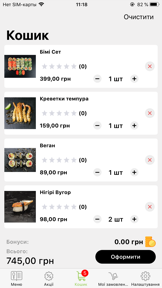
Automated 10% price reduction for in-store collection, incentivizing direct-to-restaurant traffic.
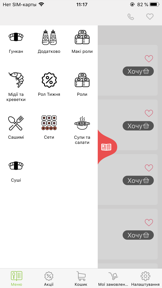
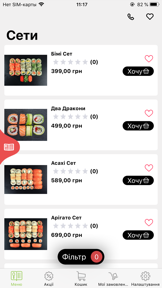
Menu interface with ingredient descriptions and photo previews, standardizing the ordering workflow.
How much does it cost?
Transaction-based revenue model where the app functions as a direct sales channel for the physical restaurant location.
Velocity
Dormant developmentmonetizationUX improvementsShow more...
The development of ARIGATO has effectively ceased, with no releases recorded for over five years. The last update occurred on May 15, 2026, and prior to that, the app saw a brief period of activity in 2020. There is no evidence of ongoing maintenance, feature development, or live operations. The project appears to be abandoned.
Who built it?
iThinkers
13+ apps tracked · Food & Drink
 Sushi Master RO
 Фазенда
 Taverna El Paso
 Craft
Craft FoodLabs
 Рамен у Лі
 Coma
Coma Mama Manana — Food Delivery
 VLAVASHE
 Amagami
 SushiTakeOut
 oregano delivery
User Sentiment
What do users think recently?
How are ratings & reviews evolving?
Not enough recent reviews to extract reliable themes yet.
Read the full review analysisCompetition
Competitive landscape for ARIGATO
How's the Food & Drink market?
ARIGATO operates as a single-restaurant utility app for the Kyiv market, maintaining a 5.0 rating on the App Store. The lack of recent updates since 2020 signals a focus on operational stability over feature-led growth.
Read the market outlookThe rivals identified

By United Airlines
While operating in a different primary category, United represents a massive 'time-share' nemesis for ARIGATO, as both compete for the user's attention and wallet during travel-related planning and consumption moments.
- Offers deep loyalty integration and miles pooling which creates significant switching costs for frequent travelers.
- Provides high-utility inflight connectivity and real-time flight management that keeps users within their ecosystem.
- Maintains a massive global brand presence that dwarfs local food delivery apps in terms of reach.
 Commuter ConnectionsContender
 Yatra.com- Flight Web Check-InContender
 Gowalk Esim Global Wifi U CallContender
 Treehouse HotelsContender
Unlock the head-to-head verdict: where this rival wins, and where it loses.
Access the full report for freeThe Analyst's Read
Key takeaways for ARIGATO
Where is it heading?
The local food delivery market is consolidating around high-frequency loyalty loops, leaving single-restaurant apps like ARIGATO exposed to churn. Without a shift toward active retention, the app will remain a passive utility rather than a growth engine for the restaurant.
- The app functions as a static sales channel with no recent feature expansion, signaling a maintenance-mode posture that risks stagnation in a competitive local market.
The SWOT
- 10% self-pickup discount incentivizes direct-to-restaurant traffic
- Integration of push notifications for local promotions could increase order frequency
Next best moves
Ship a simple loyalty program because the current model lacks retention mechanics → increase repeat order frequency.
The counter-intuitive read
The app's lack of updates is not a…
Read the full takeSince the last report: The product strategy shifted from operational maintenance to a focus on user retention via loyalty mechanics.
Bottom line
ARIGATO secures local orders through a functional, no-friction interface, but the lack of a loyalty loop leaves it exposed to larger delivery aggregators, so the PM should prioritize a simple rewards program to defend the existing customer base.
Unlock 1 critical friction, 1 market threat and the analyst’s take.
Access the full report for freeSources
- [1] App Store, source
Report last updated