

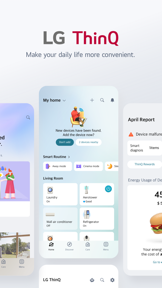
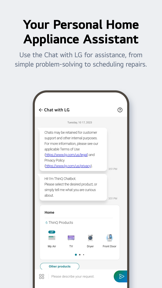


LG ThinQ is a smart home management app for LG IoT appliances, providing remote control, energy monitoring, and diagnostic services on iOS and Android.
The App DNA
What makes this app unique?
Users hire the app to monitor and automate high-value home appliances, but the current cloud-dependency forces a reliability trade-off that threatens long-term retention.
For Owners of LG IoT-enabled home appliances seeking centralized control, energy management, and automated maintenance.
What does it look like?
Key features
App-based diagnostic tool to check appliance status and troubleshoot issues via microphone input
Tracks power consumption data and compares usage against neighbors
Downloadable features and apps to upgrade existing appliance functionality
How much does it cost?
The app functions as a free utility to support hardware sales, with no direct monetization via subscriptions or in-app purchases.
Velocity
Active developmentnew contentinternationalizationUX improvementsShow more...
The app ships approximately 0.6 releases per week, placing it in the active development tier. Development is stable, with a clear focus on feature expansion and internationalization rather than just maintenance. The latest updates demonstrate a consistent effort to integrate new AI-driven appliance control features and language support across both iOS and Android platforms. The release notes are descriptive, providing clear insight into the functional improvements being deployed.
Who built it?
LG Electronics
13+ apps tracked · Lifestyle
 LG전자 LGE.COM
 LG전자 멤버십
 LG Soundbar
 LG AV Remote
 LG XBOOM – 2024 and earlier
 LG Screen Manager (LG Monitor)
 Pocket Photo
 LG TONE Free
 LG HVAC Service
 LGMV-Business
 LG gram Link
 LG Telepresence
User Sentiment
What do users think recently?
Recent user voice shows an upset sentiment. Users appreciate core appliance control functionality provides utility for laundry cycle monitoring when the app connects successfully, but report frequent forced policy updates and account re-logins disrupt daily appliance usage and cause frustration.
How are ratings & reviews evolving?
What users say, by theme
- Core appliance control functionality provides utility for laundry cycle monitoring when the app connects successfully
- Frequent forced policy updates and account re-logins disrupt daily appliance usage and cause frustration
100 of 148 recent reviews analyzed · high confidence · Upset overall
Read the full review analysisUnlock 1 user request, each backed by review evidence.
Access the full report for freeCompetition
Competitive landscape for LG ThinQ
How's the Lifestyle market?
LG ThinQ sits #15 Free in the US Lifestyle category, with the rank falling 3 spots this week. The high review count of 1.5M+ across platforms indicates a massive user base, but the recent rank decline signals that reliability issues are eroding market share.
Read the market outlookThe rivals identified

By Tuya Smart Inc.
Both apps compete for the same smart home user base by providing centralized control interfaces for IoT-enabled appliances and household devices.
- Tuya supports broad legacy hardware compatibility across diverse manufacturers, while LG ThinQ restricts control to native LG appliances.
- Tuya offers automated routines for cross-device management, whereas LG ThinQ focuses on specific appliance diagnostics and energy monitoring.
 Xiaomi HomeContender
 ECOVACS HOMEContender
 Kasa SmartContender
 Roomba HomeContender
 Home + ControlContender
 IKEA Home smartContender
 FRITZ!App Smart HomeContender
 Bosch Smart HomeContender
Unlock the head-to-head verdict: where this rival wins, and where it loses.
Access the full report for freeThe Analyst's Read
Key takeaways for LG ThinQ
Where is it heading?
The smart home market is consolidating around hardware-agnostic aggregators that offer lower friction, leaving LG ThinQ exposed. Unless the team shifts from cloud-heavy feature updates to local-network reliability, the app will continue to lose chart position to rivals like SmartLife.
- Connectivity regressions in the latest update prevent device detection, which compounds the rating drag already visible on Android.
- Mandatory policy-update friction disrupts daily appliance usage, accelerating churn pressure toward platform-agnostic competitors.
The SWOT
- Native appliance diagnostic integration reduces support overhead
- AI-driven energy monitoring increases session frequency
- Local-network control mode to recapture privacy-conscious users
- B2B energy-saving partnerships for appliance fleets
Next best moves
Ship local-network control mode because it is the top-requested feature → reduce cloud-dependency churn
+ 1 more prioritized moveThe counter-intuitive read
Users report: The app's aggressive data-harvesting is not…
Read the full takeFeature gaps
Local-only network control (available in SmartLife but missing here)
Since the last report: The app has transitioned from a standard utility to a high-friction platform, where aggressive cloud-based policy updates and connectivity regressions are actively driving user churn.
Bottom line
LG ThinQ holds its category lead through native appliance diagnostics but bleeds users to platform-agnostic rivals due to persistent connectivity regressions, so revenue growth hinges on prioritizing local-network reliability over cloud-based feature expansion.
Unlock 2 critical frictions, 2 market threats, 1 more prioritized move and the analyst’s take.
Access the full report for freeReport last updated