


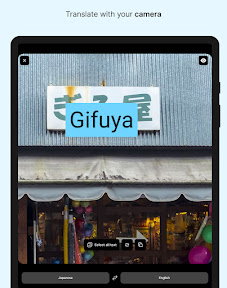
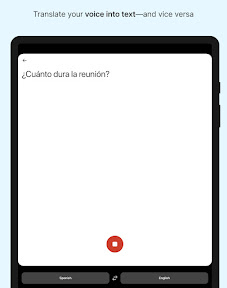


DeepL Translate is a reference app for high-accuracy multilingual text, photo, and file translation on iOS and Android.
The App DNA
What makes this app unique?
Users open DeepL Translate when they require linguistic nuance and professional-grade accuracy that general-purpose translators fail to provide.
For Global businesses, localization teams, and professional translators requiring high-accuracy, brand-consistent, and secure multilingual communication.
What does it look like?
Key features
Enforces brand-specific glossaries and style rules across organizational projects.
Real-time, voice-to-voice translation for virtual meetings and in-person conversations.
Translates files including PDF and Word while preserving original formatting.
How much does it cost?
Freemium model uses core translation as an acquisition funnel, gating enterprise-grade control and customization features behind paid business plans.
Velocity
Active developmentopaqueperformanceUX improvementsShow more...
The app maintains an active development cadence, shipping 5 releases over the last 42 days, averaging roughly 0.6 releases per week. Despite this consistent frequency, the publisher consistently utilizes identical, opaque release notes across all updates, providing no visibility into specific feature additions or technical changes. This pattern suggests the team may be utilizing server-side feature flags or A/B testing rather than traditional App Store-driven feature releases. Development appears stable, focusing on generic usability and bug fixes without clear public-facing milestones.
Who built it?
DeepL SE
5 apps tracked · Reference
 DeepL for Intune
 DeepL para Intune
 Dictionary LingueeDictionary Linguee
User Sentiment
What do users think recently?
Review voice lately leans frustrated. Users appreciate linguistic accuracy across european languages provides a superior translation experience compared to mainstream competitors and image translation capabilities allow users to extract and translate text from foreign magazines and documents, but report recent interface changes cause the text input to clear automatically when the keyboard is hidden.
How are ratings & reviews evolving?
Weekly average review rating
What users say, by theme
- Linguistic accuracy across European languages provides a superior translation experience compared to mainstream competitors
- Image translation capabilities allow users to extract and translate text from foreign magazines and documents
- Integration with system-level translation settings allows for quick access across various mobile applications
- Recent interface changes cause the text input to clear automatically when the keyboard is hidden
120 of 1361 recent reviews analyzed · high confidence · Frustrated overall
Read the full review analysisUnlock 2 more frustration themes and 3 user requests, each backed by review evidence.
Access the full report for freeCompetition
Competitive landscape for DeepL Translate
How's the Reference market?
DeepL Translate sits #6 Free / #14 Grossing in the US Photo & Video chart this week, holding the #6 slot for 14 consecutive days. The Grossing rank lagging Free by 8 spots signals monetisation friction relative to its discovery advantage.
Read the market outlookThe rivals identified
By Mosaic S.r.l.
Both apps compete for the same international user base, with iTranslate Voice targeting the travel-utility segment through a voice-first interface while DeepL Translate focuses on high-accuracy professional translation.
- iTranslate Voice provides a voice-first interface for rapid communication, while DeepL Translate emphasizes document translation.
- iTranslate Voice bundles access across multiple apps, whereas DeepL Translate restricts advanced features to business plans.
 iTranslate TranslatorContender
 Translator : Translate VoiceContender
 Translator・Photo TranslatorContender
 AI Translator – Go TranslateContender
 Translator Keyboard - AI KeysContender
 GO Translate・AI Translator AppContender
 AI Cam Translate: Text, VoiceContender
 AI Camera Scan & TranslateContender
Show 1 more

Unlock the head-to-head verdict: where this rival wins, and where it loses.
Access the full report for freeThe Analyst's Read
Key takeaways for DeepL Translate
Where is it heading?
Casual translation traffic is consolidating around multi-modal entrants; iTranslate's offline-first design absorbs the rotational interest that previously fed DeepL's growth. Maintenance-mode updates leave DeepL exposed: a single live-ops rival with a faster feature-rollout cadence will erode the lead before the next major drop.
- UI regressions in the latest update (text-clearing bug) erode the daily active habit, which compounds the rating drag already visible on Android.
- iTranslate's December 2025 entry into offline-first translation pulls attention away from DeepL's cloud-dependent model, accelerating churn pressure into Q1.
The SWOT
- Editors' Choice badge across five markets sustains organic install velocity
- System-level integration allows for quick access across mobile applications
- Localized pricing untapped in high-ARPU markets where category rivals charge more
Next best moves
Fix text-clearing bug in the next minor release because it is the top-reported churn driver → restore daily active habit
+ 1 more prioritized moveThe counter-intuitive read
DeepL's reliance on high-accuracy, cloud-based processing is a…
Read the full takeFeature gaps
Offline translation packs (available in iTranslate but missing here) +1
Since the last report: DeepL Translate's sentiment has shifted to negative as UI regressions and poor support experiences compound, forcing a strategic pivot toward data persistence and bug remediation.
Bottom line
DeepL Translate's superior linguistic engine retains core professional users, but the current interface instability threatens to erode the daily habit. Addressing the text-clearing bug would stabilize the retention floor, allowing the team to pivot back to high-value enterprise feature development.
Unlock 3 critical frictions, 1 market threat, 1 more prioritized move and the analyst’s take.
Access the full report for freeFAQ
Is DeepL Translate worth paying for if I only use it for travel?
How does DeepL Translate compare to iTranslate?
Does DeepL Translate work without an internet connection?
What is a good alternative to DeepL Translate?
Sources
Report last updated