





Planner 5D is an AI-powered interior design and floor-plan modeling tool for homeowners and professionals on iOS and Android.
The App DNA
What makes this app unique?
Users turn to the app to visualize renovation ideas and furniture layouts in 3D, removing the cognitive cost of manual drafting.
For Homeowners planning renovations and interior design professionals requiring quick 3D visualization tools.
What does it look like?
Key features
Converts 2D blueprints into editable 3D models using computer vision.
Uses camera and LiDAR to map real-world dimensions for virtual furniture placement.
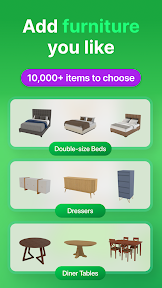
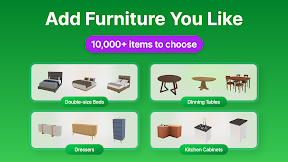
Library of 8,400+ items for interior decoration.
How much does it cost?
Freemium model anchors conversion on catalog depth and AI-assisted design tools.
Velocity
Active developmentnew contentperformanceUX improvementsShow more...
The app ships approximately 0.38 releases per week, placing it in the active category. Development is split between platform-specific performance updates on iOS and feature-rich AI-driven enhancements on Android. While the iOS release notes remain opaque, the Android updates provide clear evidence of new feature development. The current cadence is stable, balancing technical maintenance with the rollout of significant AI-powered design tools.
Who built it?
Planner5D, UAB
2 apps tracked · Lifestyle
 Planner 5D - AI Home Design
User Sentiment
What do users think recently?
Review voice lately leans frustrated. Users appreciate minimalist design and unclogged interface make the app enjoyable to use on tablets with a stylus and high-quality three-dimensional rendering capabilities provide an immersive experience for interior design enthusiasts, but report aggressive subscription prompts and paywalls restrict basic functionality, frustrating users who expect a functional free tier.
How are ratings & reviews evolving?
Weekly average review rating
What users say, by theme
- Minimalist design and unclogged interface make the app enjoyable to use on tablets with a stylus
- High-quality three-dimensional rendering capabilities provide an immersive experience for interior design enthusiasts
- Intuitive core design tools allow beginners to build basic floor plans without needing architectural expertise
- Aggressive subscription prompts and paywalls restrict basic functionality, frustrating users who expect a functional free tier
120 of 3264 recent reviews analyzed · high confidence · Frustrated overall
Read the full review analysisUnlock 2 more frustration themes and 3 user requests, each backed by review evidence.
Access the full report for freeCompetition
Competitive landscape for Planner 5D: AI Home Design
How's the Lifestyle market?
Planner 5D holds a top-10 grossing position in the House & Home category across multiple regions. The gap between its high grossing rank and the negative sentiment regarding its subscription model signals a monetization-retention imbalance that risks long-term chart stability.
The rivals identified

By PulseApps Solutions OÜ
Both apps target homeowners and design professionals with 3D visualization tools, creating direct competition for users seeking interior layout planning and renovation support.
- AI Remodel provides generative AI room redesigns, whereas Planner 5D focuses on 2D-to-3D blueprint conversion.
- AI Remodel lacks the AR-based room scanning found in competitors, while Planner 5D includes native AR room planning.
 AI Decor - AI Home DesignContender
 Home Interior Decor: AI DesignContender
 AI Home Design - InterioAIContender
 Home AI Interior DesignContender
Unlock the head-to-head verdict: where this rival wins, and where it loses.
Access the full report for freeThe Analyst's Read
Key takeaways for Planner 5D: AI Home Design
Where is it heading?
The home design market is consolidating around high-velocity AI tools, and Planner 5D's maintenance-mode stability issues leave it exposed to rivals with faster release cycles. Unless the team prioritizes performance hygiene, the current churn trend will erode the app's grossing lead by Q3.
- Post-update performance regressions (crashes, freezing) degrade the user experience, which compounds the rating drag already visible on Android.
- Aggressive subscription gating of basic tools drives negative sentiment, accelerating churn pressure into the next quarter.
The SWOT
- Computer-vision-based 2D-to-3D floor plan conversion
- 8,400+ item catalog supports diverse project scopes
- Cross-platform synchronization
- Localized pricing in high-ARPU markets
- Improved floor plan recognition accuracy
Next best moves
Audit trial-to-subscription billing flow because users report unauthorized charges → reduce refund surge
+ 1 more prioritized moveThe counter-intuitive read
The aggressive subscription model is not a failure but a deliberate filter…
Read the full takeFeature gaps
Hyper-active AI iteration (available in Home Design AI: Room Planner but absent here)
Since the last report: Technical instability and persistent billing friction have overtaken the product roadmap, forcing a pivot from AI feature development to critical performance remediation. The app's competitive position is increasingly threatened by these stability regressions, which now serve as the primary driver of user churn.
Bottom line
Planner 5D's technical lead in 3D visualization is currently overshadowed by monetization friction and stability failures. Addressing the billing transparency and performance regressions would stabilize the user base, preventing the erosion of the app's category-leading position.
Unlock 3 critical frictions, 2 market threats, 1 more prioritized move and the analyst’s take.
Access the full report for freeFAQ
Is Planner 5D free to use?
How does Planner 5D compare to Home Design AI?
Are there hidden charges in the free trial?
What is a good alternative for floor plan creation?
Sources
Report last updated