




When I Work is a staff scheduling and time-tracking app for shift-based workplaces on iOS.
The App DNA
What makes this app unique?
Managers and deskless employees hire the app to coordinate shifts and track attendance without the administrative overhead of manual spreadsheets.
For Managers and owners of shift-based, deskless businesses such as restaurants, retail stores, healthcare clinics, and construction crews.
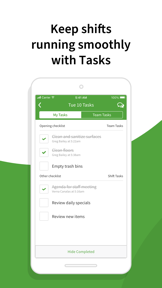
What does it look like?
Key features
Automated shift assignment based on availability and eligibility rules.
Enforces location-based clock-ins to prevent buddy punching.
In-app 1:1 and group chat for shift-related communication.
How much does it cost?
Subscription model anchored at $2.50 per user per month, utilizing a per-seat pricing structure to scale with workforce size.
Velocity
Intense developmentShow more...
5 versions in history. Development pace: intense.
Who built it?

User Sentiment
What do users think recently?
Recent user voice shows an excited sentiment. Users appreciate shift management and scheduling accessibility provide significant utility for hourly workers across various industries and communication tools allow employees to coordinate shifts and availability with their employers effectively.
How are ratings & reviews evolving?
Weekly average review rating
What users say, by theme
- Shift management and scheduling accessibility provide significant utility for hourly workers across various industries
- Communication tools allow employees to coordinate shifts and availability with their employers effectively
- Inconsistent application performance and server connectivity issues disrupt the daily scheduling workflow for users
49 of 49 recent reviews analyzed · high confidence · Excited overall
Read the full review analysisUnlock 1 more frustration theme and 1 user request, each backed by review evidence.
Access the full report for freeCompetition
Competitive landscape for When I Work Staff Scheduling
How's the Business market?
The app holds a #85 Free rank in the US Business category, trailing its primary vertical-specific competitors in grossing potential. The 53,181 ratings suggest a mature, stable user base that is not currently driving aggressive chart movement.
Read the market outlookThe rivals identified

By 7shifts, Inc.
7shifts dominates the restaurant and hospitality scheduling niche with a specialized feature set that directly competes for When I Work's core user base.
- Built specifically for restaurant operations with integrated POS sales data for labor cost forecasting.
- Offers deep industry-specific compliance tools for tip pooling and labor law adherence in hospitality.
- Provides a dedicated manager-to-employee communication hub that mimics social feed interactions for higher engagement.



Unlock the head-to-head verdict: where this rival wins, and where it loses.
Access the full report for freeThe Analyst's Read
Key takeaways for When I Work Staff Scheduling
Where is it heading?
The shift-based scheduling market is consolidating around vertical-specific solutions that offer deeper financial integrations, leaving generalist platforms like When I Work exposed to churn. The current development focus on industry templates is a defensive move to maintain share, but the lack of POS-level integration will likely limit growth in the high-margin hospitality sector over the next two quarters.
- Persistent server connectivity issues disrupt daily scheduling, which erodes the daily active habit and compounds the rating drag on Android.
- Expanded industry-specific templates for manufacturing and dental practices indicate active feature investment to capture new deskless segments.
The SWOT
- Flexible scheduling interface reduces onboarding friction for non-hospitality deskless businesses
- GPS geofencing mechanism provides direct labor cost control for multi-location managers
- In-app messaging centralizes operational communication to increase daily active usage
- Education partnerships offer untapped B2B distribution channels for shift coordination
- Wearable integration could improve clock-in compliance for high-mobility construction crews
- Instructional guides for new users would reduce support overhead for basic tasks
Next best moves
Rebuild schedule view to default to the current week because manual navigation is a top-cited frustration → reduce churn
+ 1 more prioritized moveThe counter-intuitive read
The app's generalist flexibility is its primary moat…
Read the full takeFeature gaps
POS-integrated labor cost forecasting (available in 7shifts) +2
Since the last report: The platform has shifted toward a defensive market position, formalizing its subscription pricing and highlighting specific technical weaknesses that contrast with its previous generalist-only framing.
Bottom line
When I Work succeeds by offering a flexible, generalist scheduling tool, but it risks losing its hospitality base to POS-integrated rivals like 7shifts, so the PM must prioritize technical stability and navigation efficiency to defend the core user base.
Unlock 3 critical frictions, 3 market threats, 1 more prioritized move and the analyst’s take.
Access the full report for freeReport last updated