


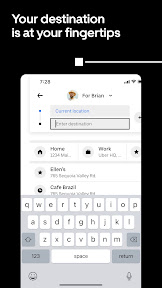


Uber Lite is a simplified ride-hailing application for Android, designed for low-connectivity environments and data-constrained users.
Product velocity
Dormant
Daily rank 🇺🇸
—
Maps & Navigation
Sentiment
4.1
451k reviews
Nemesis

Bolt: Request a Ride
The App DNA
What makes this app unique?
Users hire Uber Lite for reliable, low-friction transportation in regions where standard ride-hailing apps fail due to bandwidth or device limitations.
For Users in low-connectivity areas or those with limited data plans who require reliable, simple ride-hailing services.
What does it look like?
Key features
App architecture designed for minimal data usage.
Ride payment processing via cash.
Safety feature for live trip status updates.
How much does it cost?
Operates on a free model with no digital payment processing, focusing on market penetration.
Velocity
Dormant developmentopaqueShow more...
The app has not received a release in the last 12 months, indicating a lack of active development. With only a single version provided in the history and no activity since May 2026, the development momentum is classified as zombie. There are no indications of new features, performance updates, or live operations.
Who built it?
Uber Technologies
12 apps tracked · Maps & Navigation
 Uber - Driver: Drive & Deliver
 Uber - Request a ride
 Uber Eats: Food & Groceries
 Postmates - Food Delivery
 Uber Eats Orders
 Uber Freight
 Uber Eats Manager
 Uber Fleet
 Uber Eats: Food and Grocery
 Uber - Request a ride
 Uber - Driver: Drive & Deliver
User Sentiment
What do users think recently?
Fresh user feedback skews upset. Users appreciate reliable ride service quality provides a consistent travel experience for daily commuters, but report frequent driver cancellations and non-arrival patterns waste significant time for riders.
How are ratings & reviews evolving?
Weekly average review rating
What users say, by theme
- Reliable ride service quality provides a consistent travel experience for daily commuters
- Frequent driver cancellations and non-arrival patterns waste significant time for riders
50 of 50 recent reviews analyzed · high confidence · Upset overall
Read the full review analysisUnlock 1 more frustration theme and 1 user request, each backed by review evidence.
Access the full report for freeCompetition
Competitive landscape for Uber Lite
How's the Maps & Navigation market?
Uber Lite holds the #25 Free rank in Mexico and #17 in Brazil, reflecting a strong foothold in emerging markets. The gap between its utility-focused design and the super-app models of competitors signals a risk of long-term user migration.
Read the market outlookThe rivals identified
By BOLT TECHNOLOGY OU
With over 10 million ratings and a high-frequency release cadence, Bolt is the primary global competitor directly challenging Uber's market share in the ride-hailing space.
- Aggressive multi-modal expansion including scooter and food delivery integration within the primary ride-hailing interface.
- High-velocity release cycle of 22 updates in six months indicates rapid feature iteration and bug resolution.
- Optimized for emerging markets with a focus on low-cost vehicle tiers that directly compete with Uber Lite.


Unlock the head-to-head verdict: where this rival wins, and where it loses.
Access the full report for freeThe Analyst's Read
Key takeaways for Uber Lite
Where is it heading?
The ride-hailing market in emerging regions is consolidating around super-apps that offer integrated food and grocery services, leaving single-purpose apps like Uber Lite increasingly exposed. Without addressing the core operational friction of driver reliability, the app will continue to lose ground to competitors that provide a more consistent and comprehensive service experience.
- Frequent driver cancellations and fare discrepancies erode user trust, which directly accelerates churn in competitive urban markets.
- The lack of multi-service integration leaves the app vulnerable to super-app competitors that offer higher daily utility.
The SWOT
- Low-data architecture enables market penetration in regions with poor network infrastructure
- Cash payment support captures unbanked user segments
- Integrate localized service offerings to compete with super-app models
- Improve map interface accuracy to reduce pickup-related churn
Next best moves
Audit driver cancellation logic because high cancellation rates are the top complaint → reduce churn
+ 1 more prioritized moveThe counter-intuitive read
Uber Lite's lightweight design is a liability, not a moat…
Read the full takeFeature gaps
Integrated food delivery (available in Bolt and Yandex Go but absent here) +1
Since the last report: Uber Lite has transitioned into a stagnant operational state, with sentiment declining due to driver reliability issues and pricing friction while development has halted.
Bottom line
Uber Lite maintains a critical acquisition funnel in emerging markets, but operational failures regarding driver reliability and pricing transparency threaten its long-term viability, so the team must prioritize fare consistency and cancellation penalties over new feature development.
Unlock 3 critical frictions, 2 market threats, 1 more prioritized move and the analyst’s take.
Access the full report for freeReport last updated