


Uber Technologies
For urban and suburban consumers seeking on-demand transport and delivery, alongside gig economy workers looking for flexible earning opportunities.
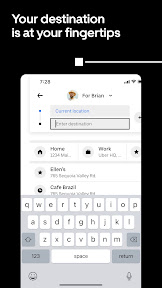
 Uber - Request a ride




Snapshot
Who is Uber Technologies?
Connecting people to on-demand mobility and delivery services through a unified global logistics ecosystem.
Target audience


Portfolio
Free 13Last updated

Uber - Request a ride
vVARY
2mo ago
Publisher DNA
What defines Uber Technologies?
Publisher DNA
Primary focus
On-demand mobility and multi-category delivery services
Scale
indie
Target audience
Urban and suburban consumers seeking on-demand transport and delivery, alongside gig economy workers looking for flexible earning opportunities.
Signature Patterns
- •Integration of the Uber One subscription across all consumer-facing delivery and mobility platforms
- •Strategic expansion beyond food delivery into grocery, retail, and household essentials
- •Dual-purpose app design catering to both the consumer (demand) and the gig worker (supply) sides of the marketplace
- •High-frequency update cycle to maintain performance across a global footprint of 10,000+ cities
- •Freemium monetization model combining per-transaction fees with recurring subscription revenue
Portfolio momentum
The publisher maintains an exceptionally high development cadence with 76 releases across 9 active apps in the last 6 months.
Portfolio
What does Uber Technologies ship?
Apps
13 apps analysed

Local eats & grocery delivery to your door. Order your groceries with Postmates!


Pickup mode captures transaction fees without delivery logistics overhead.
- Wide selection of local restaurants and stores provides convenient options for users needing quick delivery
- Aggressive order stacking and multiple driver stops cause food to arrive cold and significantly delayed

Local eats & grocery delivery to your door. Order your groceries with Postmates!


Analysis in progress

Earn money with the driver & delivery partner app for Uber, UberEats & Postmates


Multi-service integration creates a unified earning dashboard
- Drivers appreciate the core earning potential when the platform provides consistent ride volume
- Drivers report that the current fare structure fails to cover rising fuel and maintenance costs

Flexible gigs for drivers and food delivery couriers. Drive or deliver to earn.


- Drivers find the platform provides a reliable source of part-time income for those with driving experience
- Drivers report that the latest update removed the pause button, making it impossible to manage their availability

Not just food delivery. Shop for groceries from local supermarkets to your door.


Multi-category marketplace captures non-food household spend
- Occasional food deliveries arrive hot and ahead of schedule when the courier follows specific delivery instructions
- Automated customer support systems consistently deny refund requests for missing items or cold food deliveries
Distributed across 20 markets, strongest in Europe.
Based on 8 of 13 apps with localized market data, more coverage rolling in as scans complete · last scanned .
Americas (4)
- United States8 / 8
- Canada6 / 8
- Mexico6 / 8
- Brazil4 / 8
Europe (9)
- Italy6 / 8
- Netherlands6 / 8
- Spain6 / 8
- Turkey6 / 8
- United Kingdom6 / 8
›+4 more europe markets
- France5 / 8
- Germany5 / 8
- Portugal5 / 8
- Sweden5 / 8
Asia-Pacific (7)
- India7 / 8
- Australia6 / 8
- Indonesia6 / 8
- Japan6 / 8
- Vietnam6 / 8
›+2 more asia-pacific markets
- Singapore5 / 8
- South Korea5 / 8
Core markets (8/8 apps)
User Sentiment
How do users feel about their apps?
2
Positive apps
0
Neutral / mixed
8
Negative apps
34/100
Avg sentiment score

Unlock the app dragging this portfolio down.
Access the full report for freeRivals
Who does Uber Technologies compete with?
The rivals identified
Nemeses(7)


Both platforms target urban consumers with multi-category delivery, creating direct competition for high-frequency grocery and retail spend.


Pizza Hut competes for the same food delivery wallet share as Uber Eats, targeting families and individuals seeking convenient meal delivery. Both platforms vie for the same urban and suburban consumer base through direct-to-consumer ordering interfaces.


Captures budget-conscious users by offering surplus food at a discount, competing for the same meal-time transaction.


Yelp competes by capturing the discovery phase of the food delivery journey, utilizing its repository of 200 million reviews to influence restaurant selection before the transaction occurs.


Bolt Food competes for the same urban consumer base by offering overlapping on-demand food and grocery delivery services. Both platforms target users seeking convenient access to local restaurant meals and household essentials.


With over 10 million ratings and a high-frequency release cadence, Bolt is the primary global competitor directly challenging Uber's market share in the ride-hailing space.


The most direct rival, operated by the world's largest freight broker, offering a nearly identical digital marketplace for booking and managing loads.
Differentiators
- Unmatched market share in the third-party logistics (3PL) space
- Decades of historical data for pricing and lane optimization
- Deep-rooted relationships with Fortune 500 shippers
Contenders(20)


Both apps target urban consumers for on-demand food and grocery delivery, competing for the same high-frequency transaction spend in the food and grocery delivery category.


Diverts high-frequency fast food orders away from generalist delivery platforms through a proprietary loyalty program.

known for
Both platforms target urban consumers with multi-category delivery for meals and groceries, competing for the same on-demand transaction frequency.


Both apps compete for the same urban and suburban food delivery spend, with Papa Johns capturing high-frequency pizza orders that Postmates attempts to aggregate through its multi-category logistics model.


Both platforms provide multi-category on-demand delivery for food, groceries, and retail, competing for the same urban consumer base seeking convenience.


Rappi competes by offering a multi-category delivery model for food, groceries, and retail essentials that mirrors the Postmates fulfillment structure. Both platforms target urban consumers seeking on-demand access to local inventory.

known for talabat: Food, grocery & more
Both platforms operate as multi-category delivery marketplaces for food and household essentials, competing for the same urban consumer base through subscription-based delivery incentives.


Both platforms compete for urban on-demand delivery of food and groceries, sharing a core user base that prioritizes delivery speed and merchant variety.


A strong regional contender that has successfully pivoted to a super-app strategy, creating a high barrier to entry for single-purpose apps.


The primary global rival to Uber Fleet, dominating the Latin American and Asia-Pacific markets with comprehensive fleet oversight tools.
Differentiators
- Dominant market share in major international regions
- Aggressive investment in AI-driven dispatch and fleet efficiency


Both platforms compete for urban and suburban delivery market share, sharing a subscription-based model and multi-category inventory that spans meals, groceries, and retail essentials.


Both platforms compete for urban food delivery spend, with Grubhub targeting high-value group orders via fee-waiver thresholds while Uber Eats leverages ride-sharing account integration for user acquisition.


Both apps target urban consumers for on-demand grocery and prepared food delivery, creating direct competition for the same household grocery and meal spend.


Instacart competes for the same urban and suburban grocery delivery market, challenging the Uber Eats multi-category marketplace with a 40,000-location retail network. Both platforms target time-constrained households seeking on-demand delivery for household essentials.


A massive, high-frequency competitor that dominates specific geographic regions with a highly integrated super-app model.


Both apps compete for the same urban and suburban food delivery spend, with Papa Johns capturing direct-to-consumer pizza demand that Uber Eats otherwise aggregates.


Both platforms compete for the same household grocery and retail delivery spend, with Shipt focusing on a high-touch personal shopper model while Uber Eats relies on its existing ride-sharing user base.


Slice competes for the same food delivery spend by targeting the pizza-specific segment, while Uber Eats captures broader household demand through its multi-category marketplace.


Takeaway.com Courier functions as a logistics bridge for food delivery personnel, standardizing the hand-off process between restaurants and couriers.


Both platforms provide multi-category delivery for food and groceries, competing for the same urban consumer demand for daily household fulfillment.
Same space(56)


Functions as a direct sales channel for quick-service meals, using loyalty rewards to drive repeat orders.


Lyft Driver competes for the same pool of rideshare contractors by providing a similar, yet distinct, interface for managing on-demand work.


Drives direct sales through exclusive fast food rewards that reduce the incentive to use aggregators.


Curri Driver addresses the industrial logistics niche, providing a specialized platform for construction material delivery contractors.


Competes for the same casual dining audience by offering a specialized, trackable pizza ordering experience.


Gopuff competes directly for the urban convenience market by utilizing micro-fulfillment centers to achieve faster delivery than marketplace aggregators.


Retains high-frequency customers through a points-based loyalty program that incentivizes in-store and mobile visits.


Provides a direct-to-consumer ordering channel for fast food, competing for the same quick-service dining occasions.


Roadie Driver serves as an alternative for drivers with larger vehicles, focusing on big-and-bulky logistics rather than standard rideshare.


Targets convenience-focused diners with a specialized menu, competing for the same meal-time delivery spend.


Veho Driver targets the same independent contractor base but focuses on scheduled e-commerce route execution rather than on-demand rides.


Spark Driver captures a segment of the gig delivery market by exclusively managing labor for Walmart's retail fulfillment.


Weee! competes for the grocery share of the Uber Eats marketplace by specializing in hard-to-find international food products.


Side provides a broader temporary work platform that competes for the same gig-economy labor pool seeking flexible income.


Serves as a high-frequency convenience alternative to Uber Eats for small-basket household essentials and snacks.


Arby's functions as a direct-to-consumer ordering bridge that competes for the same fast-food audience through loyalty-based rewards.


Captures fast food spend through a dedicated loyalty program that incentivizes direct mobile ordering.


Captures poke bowl demand through a direct-to-consumer app that offers loyalty benefits.


Blue Apron competes for the dinner occasion by offering a hybrid model that captures both subscription and transactional users.


Provides fast grocery delivery from local retailers, competing for the same urban convenience market.


CAVA targets the same health-conscious demographic as Uber Eats but focuses on specialized Mediterranean customization rather than broad marketplace delivery.


An adjacent peer focusing on long-distance travel and carpooling rather than urban on-demand ride-hailing.


Provides a direct-to-consumer ordering channel that bypasses third-party delivery fees for pizza-specific demand.


eMeals automates the grocery shopping list creation process, serving as a planning tool for users who also use delivery services.


Targets pizza-specific delivery demand with a loyalty program that rewards repeat orders.


Competes for budget-conscious grocery shoppers by offering discounted items near their expiration date.


Grab Driver serves as the supply-side engine for a regional superapp, managing ride-hailing and delivery tasks.


Gridwise aggregates earnings across multiple platforms, serving as a utility layer for multi-platform gig drivers.


HelloFresh offers a planned cooking alternative to the on-demand delivery model, appealing to users who prefer home preparation.


Provides a recurring meal-kit alternative to on-demand restaurant delivery, capturing the same household food budget.


Home Chef competes for the planned-meal occasion, offering a higher degree of ingredient-level customization than standard restaurant delivery.


Operates in the same food delivery space, competing for urban consumers via transaction-based pricing.

known for
Direct-to-consumer channel for fast food that competes for the same quick-service delivery occasions as Uber Eats.


Lalamove connects delivery and ride services across multiple global markets, competing for the same labor pool.


Mystro automates the multi-apping process for gig drivers, directly addressing the friction of managing multiple platforms.


A massive super-app peer that dominates the Southeast Asian market with a wide array of integrated services.


Randstad acts as a staffing portal for temporary work, competing for the same gig-economy labor pool.


Sheetz integrates food ordering and payment into a single utility, capturing the same quick-service audience as Uber Eats.


Shiftsmart connects independent workers to retail and hospitality shifts, offering an alternative to ride-hailing income.


Shippeo Driver facilitates enterprise logistics visibility by integrating subcontractors into a broader supply chain platform.


Slider Driver enables flexible delivery services for independent contractors, competing for the same gig-work labor pool.


Targets the same urban grocery delivery segment with a hyper-local fulfillment model that guarantees speed.


Smarter provides an automation layer for multi-app gig drivers to manage ride requests and earnings tracking.


Porter Driver focuses on logistics and commercial vehicle delivery, competing for the same independent contractor base.


Serves as a regional super app that aggregates multiple delivery categories into a single interface.


Functions as a direct-to-consumer ordering tool, competing for the same lunch and quick-service delivery occasions.


Taco Bell captures high-frequency fast food transactions by prioritizing social gamification over the generalist marketplace model of Uber Eats.


Takeaway.com Courier functions as a logistics bridge for food delivery personnel, standardizing the hand-off process between restaurants and couriers.


Tim Hortons captures high-frequency coffee and snack transactions through a loyalty-first digital interface.


Too Good To Go captures the budget-conscious segment of the food delivery market by offering surplus inventory at reduced prices.


The mobile portal for TQL, one of the largest private freight brokerages in the US.
Differentiators
- Aggressive sales and brokerage force driving high load counts
- Private ownership allowing for long-term strategic investments


JobStack provides a broad labor marketplace for shift work that competes for the same flexible-income demographic.


Vertt Driver provides a localized ride-hailing solution in Switzerland, competing for professional drivers.


Yelp provides the discovery layer that precedes the transaction, using community-driven data to influence where users order their meals.


Acts as a regional aggregator for food and grocery, mirroring the multi-category marketplace model of Uber Eats.


Offers a novel delivery method that competes for the same on-demand meal and grocery demand.
New entrants(2)


Serves as a direct sales channel for quick-service meals, competing for the same delivery and pickup demand.


An emerging ride-hailing player with a consistent release cadence, positioning itself as a flexible alternative in specific markets.
The Analyst's Read
The bottom line on Uber Technologies
Bottom line
Uber is a dominant logistics incumbent that has successfully weaponized its massive user base through cross-platform bundling. Their ability to sustain growth depends on stabilizing user sentiment and successfully pivoting from a restaurant-delivery specialist to a comprehensive 'get anything' utility.
Frequently asked questions
How many apps does Uber Technologies publish?
What kind of apps does Uber Technologies make?
What is Uber Technologies's top app?
In how many countries are Uber Technologies's apps available?
What fed this analysis
- Apps analyzed:
- 9
- With full intel:
- 8
- With overview:
- 9
- Website scraped:
- yes
- Social presence:
- yes
