


Deliveroo
For urban and suburban consumers seeking convenience, alongside independent delivery contractors and internal staff.
 Deliveroo: Food & Shopping


Snapshot
Who is Deliveroo?
Connecting urban consumers with local restaurants and grocers through a technology-driven logistics network.
Target audience


Portfolio
Free 4Last updated

Deliveroo: Food & Shopping
v3.283.1
2mo ago
Publisher DNA
What defines Deliveroo?
Publisher DNA
Primary focus
On-demand food and grocery delivery marketplace
Scale
indie
Target audience
Urban and suburban consumers seeking convenience, alongside independent delivery contractors and internal staff.
Origin
Founded in London in 2013 by Will Shu to improve local food delivery options.
Portfolio momentum
Maintains a high update cadence with 24 releases in the last 6 months, focusing on the flagship consumer app and rider logistics.
Company profile
medium confidence- Headquarters
- London, UK
- Founded
- 2013
Portfolio
What does Deliveroo ship?
Apps
4 apps analysed
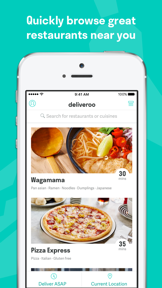
Takeout, groceries & retail delivered fast — all your favorites in one app


Editions Kitchens infrastructure optimizes supply-side margins
- Reliable delivery speed and food temperature consistency keep some users loyal despite broader platform issues
- The latest update removed essential restaurant filtering and sorting tools, frustrating users who prioritize hygiene ratings

Takeout, groceries & retail delivered fast — all your favorites in one app


Editions delivery-only kitchens providing exclusive restaurant supply
- Delivery Speed
- Technical Instability


Logistics algorithm (Frank) optimizes marketplace throughput via route efficiency
- The flexible work model allows riders to earn extra income on their own schedule
- Post-update technical failures including NFC check-in errors and app freezing disrupt the delivery workflow

Distributed across 20 markets, strongest in Europe.
Based on 3 of 4 apps with localized market data, more coverage rolling in as scans complete · last scanned .
Americas (4)
- United States3 / 3
- Brazil2 / 3
- Canada2 / 3
- Mexico2 / 3
Europe (9)
- France3 / 3
- Italy3 / 3
- Netherlands3 / 3
- Spain3 / 3
- Germany2 / 3
›+4 more europe markets
- Portugal2 / 3
- Sweden2 / 3
- Turkey2 / 3
- United Kingdom2 / 3
Asia-Pacific (7)
- Australia3 / 3
- India2 / 3
- Indonesia2 / 3
- Japan2 / 3
- Singapore2 / 3
›+2 more asia-pacific markets
- South Korea2 / 3
- Vietnam2 / 3
Core markets (3/3 apps)
User Sentiment
How do users feel about their apps?
0
Positive apps
0
Neutral / mixed
3
Negative apps
23/100
Avg sentiment score
Unlock the app dragging this portfolio down.
Access the full report for freeRivals
Who does Deliveroo compete with?
The rivals identified
Nemeses(3)


Both platforms compete for the same gig-economy labor pool by offering flexible, independent delivery work, despite their differing cargo specializations.

known for talabat: Food, grocery & more
Both platforms compete for urban consumers in the food and grocery delivery sector, utilizing similar freemium subscription models and multi-category marketplace structures to drive order frequency.


Both platforms compete for urban food delivery spend through freemium models and subscription-based loyalty programs that drive recurring order habits.
Contenders(20)


Just Eat competes for the same UK urban and suburban consumer base, offering overlapping delivery services for restaurant meals and groceries.


Both apps compete for urban and suburban consumers by offering delivery for food and groceries, utilizing subscription models to capture recurring spend.


Bolt Food competes for the same urban consumer base by offering overlapping on-demand food and grocery delivery services.


Both apps compete for the same gig-economy labor pool by providing logistics infrastructure for rapid delivery services. They overlap in their core function of managing independent courier schedules and earnings.


Both platforms compete for urban consumers by offering subscription-based delivery for restaurant meals and groceries, utilizing similar freemium models to drive order frequency.


Both apps compete for the same urban and suburban consumer base by offering multi-category delivery of food, groceries, and retail items. They overlap directly in their value proposition of providing on-demand convenience through a marketplace model.

known for
Both platforms target urban consumers with on-demand meal and grocery delivery, competing for the same high-frequency transaction habits via subscription-based loyalty programs.


Both platforms compete for urban and professional consumers by offering food and grocery delivery, with both relying on subscription-based loyalty models to retain high-frequency users.


Both platforms compete for urban and suburban food delivery consumers, with Deliveroo's multi-category marketplace directly challenged by Grubhub's focus on high-value restaurant group orders.


Both platforms compete for urban and suburban grocery and food delivery demand, sharing a core value proposition of on-demand household essentials.


Just Eat competes for the same UK-based urban and suburban consumers, offering overlapping food and grocery delivery services.


Both apps compete for urban consumers in the food delivery market, with Keeta targeting price-sensitive users through daily discounts while Deliveroo focuses on premium logistics and curated restaurant supply.


Both platforms function as multi-category marketplaces for food and retail, competing for urban consumers who require on-demand delivery services.


Rappi competes for the same urban delivery market by offering a broad catalog of food, groceries, and pharmacy items, directly overlapping with the restaurant and grocery delivery model of Deliveroo.


Both apps compete for the same gig-economy labor pool by offering flexible, on-demand delivery work to independent contractors.


Both apps compete for the same gig-economy labor pool by providing logistics-managed interfaces for on-demand delivery work.


Both platforms target urban consumers with multi-category delivery of food and groceries, utilizing subscription models to drive recurring order volume.


Both apps compete for the same urban consumer food budget by offering delivery and pickup services, though they differ in their approach to inventory and pricing models.


Both platforms target urban consumers with on-demand food and grocery delivery, utilizing a freemium model with subscription-based delivery fee waivers to drive recurring revenue.


Both platforms compete for urban food delivery market share, utilizing proprietary logistics networks to manage high-volume restaurant discovery and order fulfillment.
Same space(39)


Delivers convenience items from 7-Eleven, competing for late-night and quick-need delivery occasions.


Functions as an operational platform for dispatch riders to manage shipments and track earnings.


Captures fast-food transaction volume directly, bypassing delivery aggregators.


Serves as a B2B logistics management tool for fleet tracking, competing for the same administrative user base.


Provides a vertically integrated delivery loop that competes for pizza-specific delivery occasions.


Provides discounted grocery deals, competing for the same household grocery budget as Deliveroo's grocery vertical.


Delivers groceries via a micro-fulfillment network, competing for rapid delivery occasions.


Provides a digital bridge for pub ordering and rewards, competing for the dining-out and social-ordering occasion.


Drives physical store traffic through a digital loyalty interface, competing for the same food-spend demographic.


Offers recipe discovery for home cooks, serving as an alternative to ordering prepared food.


Targets the merchant side of the food delivery ecosystem, providing operational oversight for restaurant owners.


Provides a loyalty-focused ordering utility for fast food, competing for the same habitual meal-time spend.


Functions as a direct ordering tool for fast food, competing for the same convenience-oriented users.


Serves as a direct sales channel for fast food, competing for the same convenience-seeking audience.


Facilitates restaurant reservations, capturing the dining-out intent that complements delivery usage.


Focuses on restaurant reservations, capturing the dine-in segment of the same user base.


Targets the same independent contractor demographic seeking flexible income through on-demand ride-sharing.


Captures daily transaction volume through loyalty-point accumulation and mobile-order convenience.


Captures direct food ordering spend for a specific restaurant chain, competing for the same delivery audience.


Serves as a direct ordering channel for pizza, competing for the same convenience-seeking audience.


Provides a direct-to-consumer channel for pizza delivery, competing for the same meal-time transaction.


Offers similar multi-category delivery for food and groceries in specific geographic regions.


Provides a direct channel for pizza delivery in the UK, competing for the same meal-time spend.


Operates as a direct-to-consumer sales channel for pizza, competing for the same delivery-focused user base.


Manages the home-cooking workflow that competes with grocery delivery for household food spend.


Offers a membership-based grocery delivery service that competes for the household grocery shopping occasion.


Connects users to independent pizzerias, bypassing the commission-heavy marketplace model.


Targets urban grocery needs with a hyper-local model that competes with Deliveroo HOP.


Serves as a high-trust recipe database for home cooks, contrasting with the delivery-first marketplace model.


Targets budget-conscious consumers with surplus food inventory, providing an alternative to full-price delivery.


Competes for the same independent contractor labor pool by offering schedule-based e-commerce delivery routes.


Offers a specialized ride-hailing alternative for professional drivers in the Swiss market.


Occupies the same delivery-focused gig space, competing for contractors who prioritize retail-based delivery volume.


Provides a specialized grocery delivery service for Asian and global food items.


Provides an adjacent path for gig workers to find temporary jobs across logistics and retail industries.


Acts as a discovery layer for local dining, helping users decide where to order before using delivery platforms.


Provides discovery and review data for restaurants that Deliveroo users visit.


Provides food and grocery delivery services in Turkey, mirroring the Deliveroo multi-vertical model.

known for Yemeksepeti: Food & Grocery
Provides a food and grocery delivery service similar to the core marketplace offering.
New entrants(1)


Offers direct ordering and delivery for restaurant food, competing for the same meal-time transaction volume.
Frequently asked questions
How many apps does Deliveroo publish?
What kind of apps does Deliveroo make?
What is Deliveroo's top app?
In how many countries are Deliveroo's apps available?
What fed this analysis
- Apps analyzed:
- 3
- With full intel:
- 1
- With overview:
- 3
- Website scraped:
- yes
- Social presence:
- yes
