


Maplebear
For busy households seeking convenience and gig workers looking for flexible, on-demand income opportunities.
 Instacart: Groceries & Food


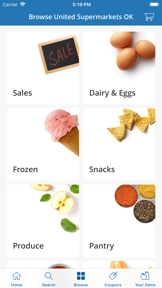
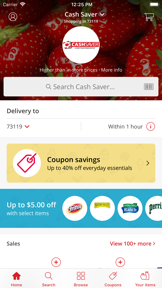


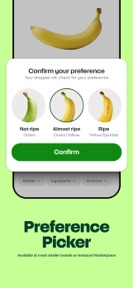


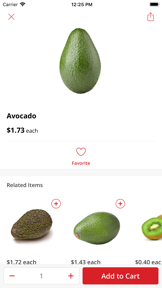


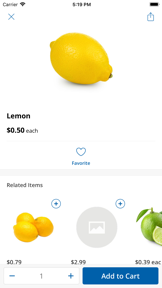
Snapshot
Who is Maplebear?
Providing the digital infrastructure and logistics network to connect local grocers with consumers and flexible workers.
Target audience


Portfolio
Free 8Last updated

Instacart: Groceries & Food
v9.33.1
19d ago
Publisher DNA
What defines Maplebear?
Publisher DNA
Primary focus
Grocery delivery and gig-economy logistics
Scale
indie
Target audience
Busy households seeking convenience and gig workers looking for flexible, on-demand income opportunities.
Signature Patterns
- •Dual-sided marketplace model balancing consumer-facing delivery and worker-facing fulfillment apps.
- •White-labeling strategy providing digital storefronts for regional grocery chains like Fiesta Mart and Fairway.
- •Monetization through a mix of service fees, delivery fees, and premium subscriptions.
- •High-frequency update cadence to manage real-time inventory and shopper logistics across thousands of locations.
Portfolio momentum
The publisher maintains an intense development cycle with 48 updates across 8 active apps in the last 6 months, including a major release within the last 5 days.
Portfolio
What does Maplebear ship?
Apps
8 apps analysed


Real-time shopper chat reduces order cancellation rates by enabling immediate resolution of out-of-stock items
- Convenient grocery delivery service provides a vital lifeline for busy parents and non-drivers
- Frequent delivery delays and missed time windows frustrate users who pay for priority service

Get paid to shop groceries & more when you become an Instacart shopper.


Fastest-in-class payout (2 hours)
- Income Flexibility
- Low Pay and High Expenses
Distributed across 10 markets, strongest in Asia-Pacific.
Based on 2 of 8 apps with localized market data, more coverage rolling in as scans complete · last scanned .
Americas (2)
- United States2 / 2
- Canada1 / 2
Europe (3)
- France1 / 2
- Turkey1 / 2
- United Kingdom1 / 2
Asia-Pacific (5)
- Australia1 / 2
- India1 / 2
- Indonesia1 / 2
- Singapore1 / 2
- Vietnam1 / 2
Core markets (2/2 apps)
User Sentiment
How do users feel about their apps?
0
Positive apps
0
Neutral / mixed
2
Negative apps
25/100
Avg sentiment score
Unlock the app dragging this portfolio down.
Access the full report for freeRivals
Who does Maplebear compete with?
The rivals identified
Nemeses(2)


Both platforms compete for the same time-constrained household demographic by offering same-day grocery delivery from local and national retailers. They overlap directly in their core service of connecting users with personal shoppers for retail fulfillment.
Differentiators
- Backed by Target's massive retail infrastructure and capital
- Deep integration with Target's 'Circle' loyalty program and same-day delivery strategy
- Focus on a membership-based model that prioritizes customer and shopper retention


Bolt Food competes by offering integrated pickup options and real-time courier tracking, which directly addresses the fulfillment flexibility gaps currently present in the Instacart platform.
Contenders(9)


Both platforms target urban consumers for multi-category delivery, creating direct competition for grocery and household essential spend.
Differentiators
- World-class engineering team and data-driven marketplace optimization
- Cross-platform ecosystem that captures multiple consumer needs (travel, food, grocery)


Both platforms compete for urban grocery delivery spend, with Deliveroo using a subscription-based model to capture high-frequency users that Instacart currently loses to transactional fee friction.


DoorDash competes by bundling grocery delivery with restaurant orders via the DashPass subscription, directly challenging the transactional fee model used by Instacart: Groceries & Food for high-frequency shoppers.


Gopuff competes for urban grocery spend by offering 15-minute delivery through a proprietary micro-fulfillment network, directly challenging Instacart's reliance on longer-lead retail aggregation.


This rival is a redundant listing of the same service, competing for the same user base by offering identical grocery and food delivery functionality.


Both platforms compete for on-demand grocery and meal delivery, sharing a transactional fee model that targets time-constrained consumers in suburban and urban markets.

known for talabat: Food, grocery & more
Both platforms aggregate local retail and grocery inventory into a single delivery interface, competing for the same time-constrained urban demographic.


Walmart's proprietary delivery platform that has rapidly scaled to compete with Instacart by leveraging Walmart's status as the world's largest grocer.
Differentiators
- Ownership of the entire supply chain from store shelf to delivery vehicle
- Unmatched physical footprint with stores within 10 miles of 90% of the US population


Weee! competes by capturing niche demand for specialized Asian and global grocery items that Instacart's broad retail network often fails to stock.
Same space(16)


Hybrid transactional model for meal kits competes for the same home-cooking demand as Instacart's grocery delivery.


Fee-waiver thresholds for group dining capture high-value occasions that overlap with Instacart's grocery delivery use cases.


Price-led acquisition in emerging markets competes for the same food delivery demand as Instacart's restaurant services.


Omnichannel grocery management provides a direct alternative to Instacart's delivery and pickup services.


Regional delivery partnership with H-E-B provides a localized grocery and restaurant fulfillment model similar to Instacart.


Marketplace for retail and grocery essentials competes for the same digital wallet as Instacart's grocery delivery.


Direct-to-consumer food sales compete for the same share of wallet as Instacart's prepared food options.


B2B courier service for documents and specimens provides a specialized logistics alternative to Instacart's consumer delivery.


Broad on-demand delivery for groceries and pharmacy items directly competes with Instacart's multi-category retail model.


Warehouse-membership model uses digital tools to anchor grocery and pharmacy spend, competing with Instacart's retail aggregation.


Foreign-friendly delivery for food and groceries serves a specific demographic similar to Instacart's user base.


Marketplace model for local pizza discovery offers a specialized alternative to Instacart's broader retail aggregation.


Autonomous robot delivery provides a niche, localized alternative to Instacart's human-shopper delivery model.


Urban delivery model for groceries and retail mirrors Instacart's multi-category approach in high-density markets.


Proprietary food robotics consolidate multi-cuisine orders, offering a fee-free alternative to Instacart's delivery model.


Massive restaurant database provides a discovery-first experience that competes for the same urban food-delivery demand.
New entrants(2)


Loyalty-linked grocery delivery and pharmacy services compete directly with Instacart's retail aggregation.


Meal planning service provides a pre-shopping utility that influences grocery purchasing decisions similar to Instacart.
The Analyst's Read
The bottom line on Maplebear
Bottom line
Maplebear Inc has successfully transitioned from a single-app service to a critical infrastructure provider for the grocery industry. Their strategy of powering regional retail apps while maintaining a dominant central marketplace creates a formidable network effect in North American logistics.
Frequently asked questions
How many apps does Maplebear publish?
What kind of apps does Maplebear make?
What is Maplebear's top app?
In how many countries are Maplebear's apps available?
What fed this analysis
- Apps analyzed:
- 8
- With full intel:
- 2
- With overview:
- 8
- Website scraped:
- no
- Social presence:
- no
