




Adding Melody To Your Voice is a specialized communication training app for voice-over actors and professionals, featuring muscle memory exercises and instructional video content.
The App DNA
What makes this app unique?
Users hire this app to refine vocal delivery and emotional impact through repeatable physical techniques, serving the job of professional skill development.
For Voice-over actors, business professionals, and public speakers seeking to improve their vocal delivery, diction, and emotional impact.
What does it look like?
Key features
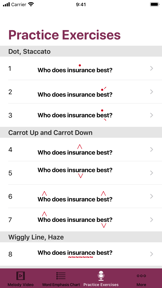
Practice exercises with 21 samples allowing users to record, listen, and compare their voice against professional benchmarks.
Instructional content utilizing specific gestures and repeatable actions to modify speech melody, tempo, and rhythm.
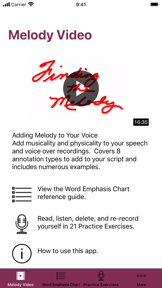
Instructional video content providing visual and auditory guidance on speech improvement techniques.
How much does it cost?
Paid model anchored at $9.99 for video content, leveraging the developer's established reputation as a communication coach.
Velocity
Active developmentShow more...
5 versions in history. Development pace: active.
Who built it?

User Sentiment
What do users think recently?
Recent user voice shows a thrilled sentiment. Users appreciate educational value for aspiring voice actors provides significant career development utility.
How are ratings & reviews evolving?
What users say, by theme
- Educational value for aspiring voice actors provides significant career development utility
1 of 1 recent reviews analyzed · limited sample
Read the full review analysisCompetition
Competitive landscape for Adding Melody To Your Voice
How's the Business market?
The app holds the #87 Paid position in the Business category, reflecting a specialized market niche. The low rating count relative to the 2017 release date signals a lack of aggressive acquisition, leaving the app vulnerable to broader-reach competitors.
Read the market outlookThe rivals identified

By Learn To Master Ltd
Both apps target vocalists seeking structured practice, but they diverge on pedagogical approach: Adding Melody To Your Voice focuses on physical muscle memory via a one-time fee, while Voice Training - Learn to Sing uses a real-time pitch-detection engine for immediate feedback.
- Voice Training - Learn to Sing uses a real-time pitch-detection engine; Adding Melody To Your Voice relies on manual recording comparison.
- Voice Training - Learn to Sing offers a freemium model; Adding Melody To Your Voice gates core training behind a $9.99 one-time purchase.
- Voice Training - Learn to Sing provides visual piano-key feedback; Adding Melody To Your Voice centers on physical muscle memory techniques.
Unlock the head-to-head verdict: where this rival wins, and where it loses.
Access the full report for freeThe Analyst's Read
Key takeaways for Adding Melody To Your Voice
Where is it heading?
The professional voice training market is shifting toward automated, real-time feedback models that reduce the friction of manual recording. Adding Melody To Your Voice remains stable due to its author's authority, but it faces long-term churn pressure as users migrate to AI-native platforms.
- The latest text-size update improves accessibility for long-form study sessions, which supports the app's core utility for professional voice actors.
- The lack of automated feedback mechanisms in the current version leaves the app exposed to AI-driven competitors that offer real-time pronunciation analysis.
The SWOT
- Author's 30-year industry authority drives high-intent user trust
- Muscle memory technique provides a distinct, non-AI pedagogical approach
- B2B partnerships with voice-over training schools
- Wearable integration for on-the-go vocal warm-ups
Next best moves
Integrate automated voice-analysis because manual comparison lacks real-time feedback → increase user engagement
+ 1 more prioritized moveThe counter-intuitive read
The app's low review count is not a failure of marketing…
Read the full takeFeature gaps
Real-time AI pronunciation feedback (available in ELSA Speak but absent here) +1
Since the last report: The report reflects a shift from a basic functional description to a competitive analysis, identifying the app's reliance on legacy pedagogy as both a strength and a vulnerability against AI-driven market entrants.
Bottom line
The app maintains high authority through its specialized muscle-memory pedagogy, but the $9.99 video gate and lack of automated feedback limit its scale against AI-driven rivals, so the PM should prioritize integrating real-time analysis to defend the core user base.
Unlock 3 critical frictions, 2 market threats, 1 more prioritized move and the analyst’s take.
Access the full report for freeReport last updated