




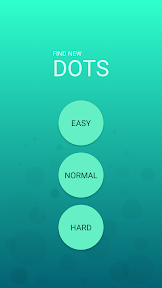


Dots. Brain training is a puzzle game for Android that focuses on memory and cognitive skill exercises through dot-recall tasks.
The App DNA
What makes this app unique?
Users hire the app for quick, task-based mental stimulation that fits into short free-time windows, serving as a low-friction alternative to complex cognitive training platforms.
For Casual mobile users seeking short-form brain training and mental exercise games.
What does it look like?
Key features
Task-based recall of increasing dot sequences per stage
Categorized training for memory, attention, speed, reaction, and logic
Visual interface built on Android Material Design standards
How much does it cost?
Ad-supported model with in-app purchases, anchored by free access to core brain training mechanics.
Velocity
Steady developmentShow more...
Who built it?
Free Style Dev LCC
12 apps tracked · Puzzle
 Tape Measure & Ruler Арр
 Ruler Pro
 Bubble Level, Ruler
 Metronome Pro
 Speedometer
 Compass Pro
 Flashlight
 Math games
 Bubble Level, Spirit Level
 Metronome
 Compass
User Sentiment
What do users think recently?
Recent user voice shows an excited sentiment. Users appreciate the core gameplay loop provides a reliable and engaging experience for professional selection processes.
How are ratings & reviews evolving?
What users say, by theme
- The core gameplay loop provides a reliable and engaging experience for professional selection processes
- Persistent logic errors occur where the final result is always calculated as one
10 of 10 recent reviews analyzed · moderate confidence · Excited overall
Read the full review analysisUnlock 1 more frustration theme and 1 user request, each backed by review evidence.
Access the full report for freeCompetition
Competitive landscape for Dots. Brain training
How's the Puzzle market?
The app occupies a niche in the Puzzle category, relying on a functional reputation for professional selection testing rather than broad market chart dominance.
Read the market outlookThe rivals identified

By Lumos Labs, Inc.
Dominates the brain training category with a high-frequency release cadence and established scientific branding.
- Offers a structured, science-based curriculum that tracks cognitive progress over long-term user engagement cycles.
- Provides personalized training programs that adapt difficulty levels based on individual performance metrics and history.
- Maintains a high release velocity with six updates in six months to ensure platform stability.

Unlock the deeper market read.
Access the full report for freeThe Analyst's Read
Key takeaways for Dots. Brain training
Where is it heading?
The brain training market is consolidating around platforms that offer adaptive, science-backed curricula, leaving Dots exposed as a static, single-mechanic tool. Unless the team pivots to address core logic bugs and introduces variety, the app will continue to lose ground to competitors with higher release velocities and deeper cognitive analytics.
- Persistent calculation errors in the latest release erode core functional trust, which compounds the risk of user churn to more reliable competitors.
- Recent updates focused on stability, no feature expansion, signaling the product is in a maintenance-mode lifecycle rather than active growth.
The SWOT
- Minimalist design reduces cognitive load for casual sessions
- Core loop serves as a niche tool for professional selection testing
- Implement dark mode to support extended usage sessions
- Expand training categories to compete with broader cognitive platforms
Next best moves
Fix end-of-game calculation bug because users report persistent logic errors → restore functional trust
+ 1 more prioritized moveThe counter-intuitive read
The app's reputation for professional selection testing is a liability…
Read the full takeFeature gaps
Scientific progress curriculum (available in Lumosity) +2
Since the last report: The app shifted to a freemium monetization model and revealed critical functional stability issues that now define its maintenance-mode status.
Bottom line
Dots holds a functional niche for selection testing but suffers from critical logic bugs and missing basic UX controls, so the PM must prioritize stability fixes over feature expansion to prevent user churn.
Unlock 2 critical frictions, 2 market threats, 1 more prioritized move and the analyst’s take.
Access the full report for freeReport last updated