


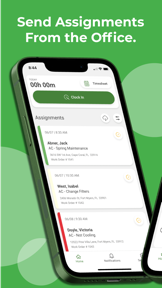


FE 2.0 is a field service management app for HVAC, plumbing, and electrical technicians to track assignments, time, and payments on iOS.
The App DNA
What makes this app unique?
Technicians hire the app to bridge the office-to-field communication gap, but the lack of offline mode and quoting tools forces them to maintain secondary paper-based workflows.
For Field service contractors and technicians in HVAC, plumbing, and electrical industries managing multi-truck operations.
What does it look like?
Key features
Access to invoice creation, customer records, work order creation, and price book management.
Process credit card payments directly from the mobile interface.
View active, overdue, and completed work orders with timeline visibility.
How much does it cost?
Subscription model based on tiered technician licensing, gating advanced financial and operational features behind the Full license.
Velocity
Steady developmentShow more...
Who built it?


User Sentiment
What do users think recently?
Fresh user feedback skews mixed. Users appreciate the updated interface design provides a much cleaner experience for long-term users.
How are ratings & reviews evolving?
What users say, by theme
- The updated interface design provides a much cleaner experience for long-term users
- Inaccurate weekly hour tracking forces manual paper recording for field employees
3 of 3 recent reviews analyzed · limited sample
Read the full review analysisCompetition
Competitive landscape for FE 2.0
How's the Business market?
FE 2.0 operates within the Business category, currently holding a 3.42 rating across 33 reviews. The lack of offline mode and quoting tools places it behind mature competitors like Housecall Pro in functional parity.
Read the market outlookThe rivals identified

By Codefied Inc.
Dominates the field service management space with massive scale and a mature feature set that directly addresses the gaps in FE 2.0.
- Offers comprehensive quote generation and offline capabilities that are currently missing from FE 2.0.
- Integrated credit card processing provides a seamless payment workflow that FE 2.0 cannot yet match.
- High-velocity release cycle of 16 updates in six months ensures rapid feature iteration and stability.


Unlock the head-to-head verdict: where this rival wins, and where it loses.
Access the full report for freeThe Analyst's Read
Key takeaways for FE 2.0
Where is it heading?
The field service market is consolidating around platforms that offer full offline capability and on-site quoting. FE 2.0 remains exposed due to its reliance on constant connectivity and manual timekeeping, so the PM must address these utility gaps to maintain parity with Housecall Pro.
- Inaccurate weekly hour tracking forces manual paper recording, which drives churn and erodes the app's value as a professional timekeeping system.
- Recent updates focused on general maintenance, signaling that the app is currently in a stability phase rather than an aggressive feature-expansion cycle.
The SWOT
- dESCO backend infrastructure enables deep integration with legacy office software
- Tiered licensing model aligns revenue with technician operational needs
- Integrate GPS-based job costing to compete with specialized time-tracking rivals
- Expand offline capabilities to match industry-standard field service expectations
Next best moves
Rebuild time-tracking logic because inaccurate weekly hours force manual paper recording → reduce churn risk
+ 1 more prioritized moveThe counter-intuitive read
The app's current feature-light state is a strategic advantage…
Read the full takeFeature gaps
Offline mode (available in Housecall Pro) +1
Since the last report: The platform transitioned to a subscription-based pricing model and identified critical operational gaps in time-tracking and offline functionality that now drive user churn.
Bottom line
FE 2.0 provides a clean interface for basic dispatch, but the lack of offline mode and inaccurate time-tracking erode professional trust, so the PM must prioritize core utility fixes over new feature expansion to prevent churn to Housecall Pro.
Unlock 3 critical frictions, 2 market threats, 1 more prioritized move and the analyst’s take.
Access the full report for freeReport last updated