


Goodness Shapes
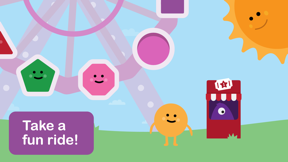
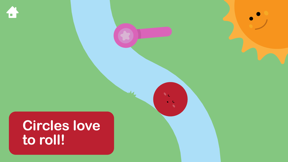
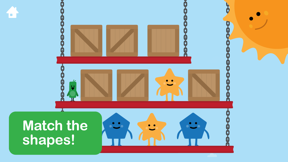

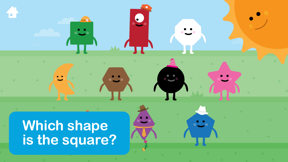

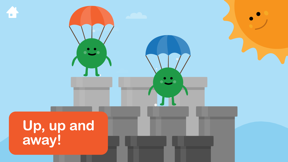

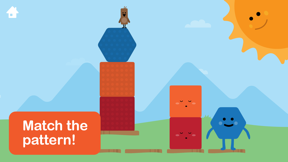

Goodness Shapes is a geometry-focused educational app for preschoolers, offering 12 interactive challenges in a one-time purchase format.
The App DNA
What makes this app unique?
Parents choose Goodness Shapes to avoid the recurring subscription costs and connectivity dependencies that disrupt the learning experience in larger, freemium-based educational apps.
For Preschoolers and toddlers aged 2-5, and their parents.
What does it look like?
Key features
12 interactive challenges covering shapes, colors, and patterns.
Full access to content without Wi-Fi or data connectivity, removing the connectivity dependency required by rivals.
No data collection, third-party ads, or in-app purchases, avoiding the intrusive paywalling patterns found in competitors.
How much does it cost?
The one-time purchase model serves as a primary differentiator against subscription-gated rivals, lowering the barrier to entry for parents.
Velocity
Steady developmentShow more...
Who built it?
Little 10 Robot
13+ apps tracked · Education
 Billy's Coin Visits the Zoo
 AlphaTots Alphabet ABC Game
 TallyTots Counting 123 Game
 Geography Drive USA
 Swapsies Jobs
 Gappy Learns Reading
 Winky Think Logic Puzzles
 YodelOh Math Mountain
 Swapsies Sports
 Operation Math Code Squad
 Gappy Learns Writing
 Geography Drive Arcade
User Sentiment
What do users think recently?
How are ratings & reviews evolving?
Not enough recent reviews to extract reliable themes yet.
Read the full review analysisCompetition
Competitive landscape for Goodness Shapes
How's the Education market?
Goodness Shapes maintains a focused market position with a $2.99 price point, avoiding the subscription-gated friction of rivals like Kiddopia. The app currently holds a 4.38 rating, signaling strong satisfaction with its ad-free, offline-first value proposition.
The rivals identified

By Lingokids - Games, Shows & Songs for Kids
Both apps compete for the same parent-purchaser demographic seeking educational screen time for children aged 2 to 8.
- Goodness Shapes uses a one-time purchase model, while Lingokids requires a recurring subscription for full access.
- Goodness Shapes functions entirely offline, whereas Lingokids requires an active internet connection for its content library.
- Goodness Shapes focuses on foundational geometry, while Lingokids relies on licensed IP partnerships like Disney and Marvel.
 Bebi: Baby Games for PreschoolContender
 Keiki Learning games for KidsContender
 Kiddopia: Kids Learning GamesContender
 Toddler Learning Games for 2+Contender
 Baby Games for 2–5 year oldsContender
 Baby & toddler preschool gamesContender
 Learning Games for Toddlers 2+Contender
 Khan Academy KidsContender


Unlock the head-to-head verdict: where this rival wins, and where it loses.
Access the full report for freeThe Analyst's Read
Key takeaways for Goodness Shapes
Where is it heading?
The preschool education market is consolidating around subscription-based content hubs, leaving Goodness Shapes in a stable but niche position. If the app remains in maintenance mode, it will likely retain its core base of privacy-conscious parents while slowly losing market share to rivals that offer broader, adaptive curricula.
- The 344-day update gap suggests a maintenance-mode strategy, which protects the ad-free experience but risks content stagnation against active rivals.
- The one-time purchase model continues to serve as a high-conversion alternative for parents avoiding the subscription-gating friction reported by users of rival apps.
The SWOT
- One-time purchase model removes recurring subscription friction
- Offline-first architecture ensures consistent performance without connectivity dependencies
- Privacy-first design avoids third-party advertising and data tracking
- Implement parental progress dashboards to increase household switching costs
- Introduce multi-language support to capture non-English speaking markets
Next best moves
Ship parental progress dashboard because it is a key missing feature compared to rivals like Keiki → increase retention
+ 1 more prioritized moveThe counter-intuitive read
The 344-day update gap is not necessarily a failure but a feature…
Read the full takeFeature gaps
Parental progress tracking (available in Keiki but missing here) +2
Since the last report: The analysis now incorporates the 344-day update gap as a primary competitive risk, shifting the outlook from purely stable to one that acknowledges potential content stagnation. This update formalizes the need for utility-focused features like parental dashboards and localization to maintain relevance against active rivals.
Bottom line
Goodness Shapes maintains a strong value proposition through its ad-free, one-time purchase model, but the 344-day update gap leaves it vulnerable to content-heavy rivals. Adding utility-focused features like progress tracking would unlock higher retention without requiring a shift to subscription monetization.
Unlock 3 critical frictions, 2 market threats, 1 more prioritized move and the analyst’s take.
Access the full report for freeSources
- [1] App Store
Report last updated