


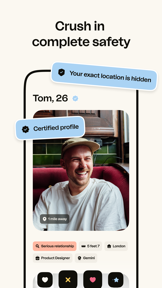

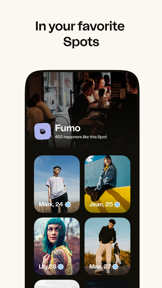


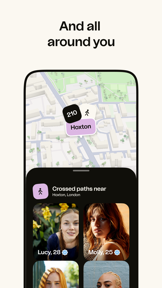

happn is a Lifestyle dating app that matches users based on real-life geographical proximity and shared daily routines. With a claimed 140 million users, it positions itself as the 'real-life' alternative to swipe-heavy competitors by showing users who they have physically crossed paths with. However, the app currently faces a significant trust crisis, with a 'Terrible' sentiment score driven by high-frequency complaints regarding bot accounts and poor subscription value.
The App DNA
What makes this app unique?
For Singles looking for authentic, real-life connections based on shared daily routines and geographical proximity.
What does it look like?
Key features
Matches users based on real-life crossing paths and frequently visited locations.
A gamified feature where users guess which profiles have already liked them.
A premium interaction tool to stand out and notify a potential match immediately.
How much does it cost?
Monetization relies on gating high-intent visibility and interaction tools. However, users report a 'scam' perception where profile availability seems to drop after purchasing Premium.
Velocity
Active developmentsocial featuresperformanceShow more...
The app maintains an active development cadence, shipping a major feature update within the last 30 days. While the most recent release (2026.8.0) focused on technical stability, the preceding version introduced significant social-oriented functionality. Development is currently focused on enhancing user profile depth and social discovery. The team demonstrates a consistent rhythm of alternating between feature expansion and platform maintenance.
Who built it?
User Sentiment
What do users think recently?
Users report: Fresh user feedback skews upset. Users appreciate ease of use, but report fake profiles and bots.
How are ratings & reviews evolving?
What users say, by theme
- Ease of Use
Unlock 1 more frustration theme, each backed by review evidence.
Access the full report for freeCompetition
Competitive landscape for happn: dating app
How's the Lifestyle market?
The rivals identified

By Meet5 GmbH
Meet5 competes for the same casual social audience by shifting the focus from proximity-based matching to activity-based group interactions. This approach directly targets the user base currently experiencing friction with individual matching models.
- Meet5 mandates a verification process for all users to ensure authenticity.
- Meet5 centers on group activity participation like hiking or dining instead of individual proximity matching.
- Meet5 offers all activity-related features for free, contrasting with the subscription-gated model of happn: dating app.
 Glimr - Date Fun, Meet RealContender
 Finya Dating App: Match & DateContender
 Uniee: Easy Chat & Local DateContender
Unlock the head-to-head verdict: where this rival wins, and where it loses.
Access the full report for freeThe Analyst's Read
Key takeaways for happn: dating app
Where is it heading?
- Sentiment is 'Terrible' due to bot prevalence, indicating a critical failure in core utility.
- Active update cycle (April 2026) shows developer commitment, but focus remains on minor features like 'Hobbies' rather than trust.
- Users report a 'ghost town' effect in mid-sized cities, suggesting a lack of growth in secondary markets.
The SWOT
- Unique proximity-based matching logic
- Gamified CrushTime engagement
- Strong 'Real Life' brand positioning
- Identity verification to restore user trust
- Live video features to match competitor LOVOO
- Intent-based filtering to improve match quality
Next best moves
Implement mandatory identity verification (photo/ID).
+ 2 more prioritized movesFeature gaps
Verified Profiles and Safety Center (available in Tinder) +2
Since the last report: Users report: The app has shifted from a neutral market position to a 'Terrible' sentiment rating, with core features now struggling against a 'scam' perception despite new gamification additions.
Bottom line
Users report: If I were the PM, I would pivot immediately from feature expansion to platform integrity. The 'crossed paths' hook is a powerful differentiator, but it is currently buried under a 'scam ecosystem' perception caused by bots; until identity verification is solved, no amount of UI polish will fix the declining sentiment.
Unlock 3 critical frictions, 3 market threats, 2 more prioritized moves and the analyst’s take.
Access the full report for freeFAQ
Is happn good for people living in small towns?
How is happn different from Tinder?
Are there a lot of fake profiles on happn?
Report last updated