




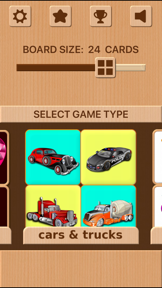
Memory! is a card-matching memory training game for children and adults, featuring 15 thematic card sets and adjustable board sizes on iOS.
Product velocity
Maintenance
Daily rank 🇺🇸
—
Games
Sentiment
4.3
3k reviews
Nemesis
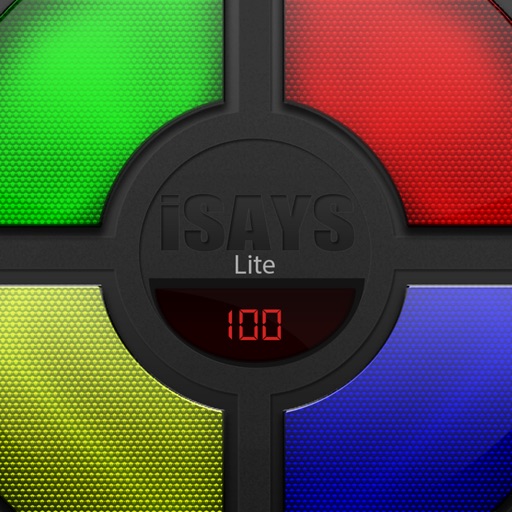
iSays Memory Game (Lite)
The App DNA
What makes this app unique?
The app serves as a cognitive exercise tool, replacing physical memory-card games with a digital, portable format that provides immediate feedback on concentration and recall.
For Children, adults seeking cognitive training, and therapists working with patients on memory and concentration deficits.
What does it look like?
Key features
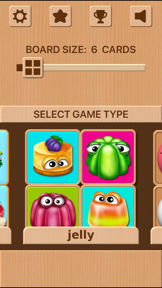
Adjustable board sizes ranging from 4 to 30 cards to match user skill levels.
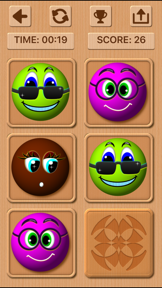
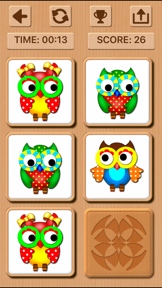
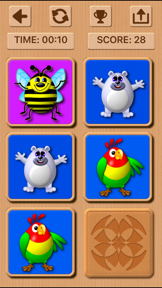
15 distinct visual categories including jellies, cars, and mosaic patterns.
Tracks high scores and performance metrics via native iOS Game Center.
How much does it cost?
Memory! operates on a free-to-play model with no explicit subscription or IAP tiers mentioned.
Velocity
Maintenance developmentperformanceShow more...
The app has shipped only one release in the last 53 days, resulting in a cadence of approximately 0.13 releases per week. This falls into the maintenance tier, as the latest release focused exclusively on performance and minor bug fixes. There is no evidence of new features or live-ops content. Development appears to be in a stable maintenance state with no recent major updates.
Who built it?
Irina Schens
11 apps tracked · Games
 Pony Mermaid Memory Girl Games
 Pony Unicorn Puzzles For Kids
 Unicorn Coloring Pony Games
 Animal Memory Matching Games
 Makeup Games for Girls
 Train Jigsaw Puzzles for Kids
 Christmas Games For Kids 3+
 Mandala Coloring Pages Games
 Bible Coloring Book for Kids
 Memory Match Brain Trainer
User Sentiment
What do users think recently?
Review voice lately leans excited. Users appreciate memory matching mechanics provide effective brain training for both children and senior citizens, but report lack of clear progression paths leaves players confused about how to unlock new levels.
How are ratings & reviews evolving?
What users say, by theme
- Memory matching mechanics provide effective brain training for both children and senior citizens
- Lack of clear progression paths leaves players confused about how to unlock new levels
60 of 166 recent reviews analyzed · high confidence · Excited overall
Read the full review analysisUnlock 1 user request, each backed by review evidence.
Access the full report for freeCompetition
Competitive landscape for Memory!
How's the Games market?
Memory! currently holds the #60 Free position in the Cyprus Games category. The lack of monetization tiers relative to the 2,769 total ratings suggests a missed opportunity to capture revenue from the established user base.
Read the market outlookThe rivals identified
By Kfirapps Limited
This app is a direct nemesis due to its long-standing presence in the memory training category and its focus on progressive difficulty, which mirrors the core value proposition of Memory!.
- Offers multiple sound themes to enhance engagement, whereas Memory! focuses primarily on visual card variety.
- Integrates Game Center support for social leaderboards, a feature currently absent in this app.
- Provides a more established, albeit dated, track record of long-term retention in the memory genre.
 Cube Cube: Color MatchingContender
 Strange Tracking GameContender
 Memorize - Focus and memoriseContender
 Memory - OnlineContender
Unlock the head-to-head verdict: where this rival wins, and where it loses.
Access the full report for freeThe Analyst's Read
Key takeaways for Memory!
Where is it heading?
The casual memory-training market is consolidating around social-first mechanics and performance tracking. Memory! remains in maintenance mode, and its failure to address competitive scoring gaps will likely accelerate churn as users migrate to rivals that offer real-time multiplayer and global rankings.
- Maintenance-only release cadence leaves Memory! exposed to rivals with 2-week update cycles, which will erode the current user base before the next major drop.
- User frustration regarding unclear progression paths indicates a failure to optimize the early-game funnel, which compounds the churn pressure from social-feature gaps.
The SWOT
- 15-category card library sustains visual engagement across age groups.
- Flexible grid scaling supports both pediatric and geriatric cognitive training.
- Implementing local-play scoring would satisfy the top user request.
- Adding social leaderboards would neutralize the nemesis's primary advantage.
Next best moves
Ship local-play scoring because users cite the lack of competitive tracking as a primary frustration → increase session length.
+ 1 more prioritized moveThe counter-intuitive read
The lack of monetization is a strategic risk…
Read the full takeFeature gaps
Competitive leaderboards (available in iSays Memory Game but absent here). +1
Since the last report: Competitive outlook has declined due to the absence of social and multiplayer features, which are now identified as critical retention gaps against direct rivals. The app remains in a maintenance-only release cycle, further exposing it to competitors that offer active social loops.
Bottom line
Memory! must implement competitive scoring to neutralize the social-feature advantage held by iSays Memory Game. Prioritizing this shift will address the primary user request and stabilize retention against multiplayer-focused rivals.
Unlock 2 critical frictions, 2 market threats, 1 more prioritized move and the analyst’s take.
Access the full report for freeFAQ
Is Memory! suitable for children?
How does Memory! compare to iSays Memory Game?
Does Memory! have intrusive ads?
What is a free alternative to Memory!?
Sources
- [1] App Store, source
Report last updated