


Strange Tracking Game is a paid cognitive training app for iOS that challenges users with spatial and short-term memory recall patterns.
Product velocity
Maintenance
Daily rank 🇺🇸
—
Games
Sentiment
—
—
Nemesis

Memory!
The App DNA
What makes this app unique?
Users hire this app for focused, ad-free cognitive workouts, but the lack of social or progression loops forces them to churn once the initial challenge is mastered.
For Individuals seeking cognitive training exercises and casual gamers interested in memory-based challenges.
What does it look like?
Key features
Visual sequence tracking where users observe and replicate spot patterns to progress through levels
Cognitive exercises targeting spatial, short-term, and long-term memory recall
Competitive mode allowing users to challenge friends and colleagues on recall performance
How much does it cost?
Paid model at $0.99 USD, requiring upfront purchase for access to all memory training levels.
Velocity
Maintenance developmentplatform expansionopaqueShow more...
The app has only one recorded release in the observed data, resulting in a maintenance-level cadence of approximately 0.1 releases per week. There is no evidence of active feature development or live operations. The latest release focused solely on platform compatibility. Development appears to be in a maintenance state with no recent major updates.
Who built it?
Nicholas Wilson
13+ apps tracked · Games
 Sure Win Bet Calculator
 iPsychometricTester
 iVisionTester
 Record Audio then Email
 Object Recogniser
 iColorNamer4
 MotionTracker
 iPopular
 Signal Scripter and Generator
 iTimesTables multiply tests
 Golden Crypt Conqueror
 iBuddyGrow
User Sentiment
What do users think recently?
How are ratings & reviews evolving?
Not enough recent reviews to extract reliable themes yet.
Read the full review analysisCompetition
Competitive landscape for Strange Tracking Game
How's the Games market?
Strange Tracking Game maintains a static, paid-upfront position in the Games category. The lack of recent feature expansion relative to freemium competitors signals a risk of long-term user migration to social-heavy alternatives.
Read the market outlookThe rivals identified
By Irina Schens
This app directly competes for the same casual brain-training audience by utilizing classic pattern-matching mechanics that mirror the core loop of Strange Tracking Game.
- Features deep Game Center integration to drive social competition and long-term user retention metrics.
- Offers extensive thematic card sets that provide visual variety missing from this app's minimalist approach.
- Maintains a consistent release cadence with updates over the last six months to ensure platform compatibility.
 Dots. Brain trainingContender
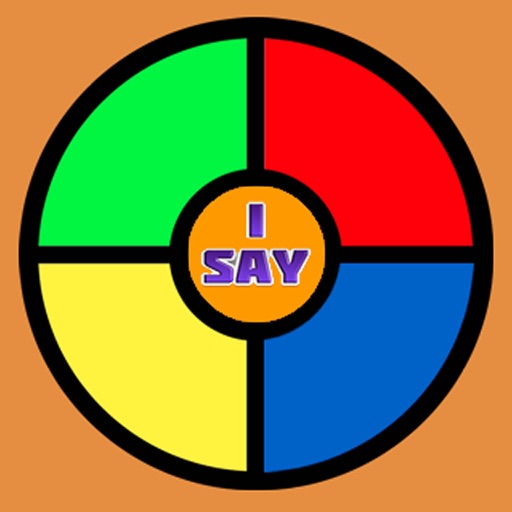 I-Say - Challenge Your BrainContender
 Animal Memory Matching GamesContender
 Cube Cube: Color MatchingContender
Unlock the head-to-head verdict: where this rival wins, and where it loses.
Access the full report for freeThe Analyst's Read
Key takeaways for Strange Tracking Game
Where is it heading?
The casual memory-training market is consolidating around freemium apps that leverage social competition to drive daily active habits. Strange Tracking Game remains stable but exposed, as its lack of social features makes it a secondary choice for users who prioritize community engagement over isolated training.
- The app maintains a consistent, albeit slow, update cadence focused on platform compatibility rather than feature expansion.
- Competitors are increasingly adopting freemium models with social-retention loops, which accelerates churn pressure on the app's isolated, paid-upfront experience.
The SWOT
- Focused cognitive training niche targets specific spatial memory recall
- Ad-free, single-purchase model avoids monetization friction
- Implement wearable-optimized interfaces to capture the glanceable-training segment
- Add daily streak-tracking to increase session frequency
Next best moves
Ship cloud-save functionality because it is the top-requested missing feature → unlock data-loss frustration
+ 1 more prioritized moveThe counter-intuitive read
The app's paid-upfront model is not a weakness…
Read the full takeFeature gaps
Game Center leaderboards (available in Memory! but missing here) +2
Since the last report: The report shifted from a broad critique of the app's maintenance state to a tactical roadmap prioritizing cloud-save functionality and social integration to address user churn.
Bottom line
Strange Tracking Game provides a clean, ad-free cognitive workout, but its lack of social retention loops and progression mechanics leaves it exposed to freemium rivals, so the PM should prioritize social integration to defend the user base.
Unlock 3 critical frictions, 2 market threats, 1 more prioritized move and the analyst’s take.
Access the full report for freeReport last updated