


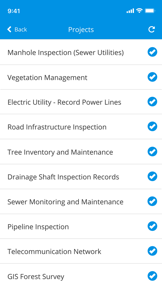


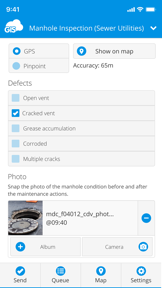


Mobile Data Collection is a GIS-integrated field survey tool for recording and mapping data on mobile devices.
The App DNA
What makes this app unique?
Users hire the app to digitize field workflows and eliminate paper-based data entry, allowing for real-time map visualization of collected assets.
For Field workers, surveyors, and project managers in industries like utilities, construction, and government.
What does it look like?
Key features
Web-based portal for creating survey forms with fields like electronic signatures, barcodes, and conditional logic
Syncs field data and maps locally on the device for use without network coverage
Visualizes collected points, lines, and polygons on a map interface immediately upon sync
How much does it cost?
Freemium model uses a free entry point to drive adoption, with revenue generated through enterprise-grade project management and collaboration tools.
Velocity
Maintenance developmentperformanceplatform expansionShow more...
The app currently ships at a maintenance cadence of approximately 0.11 releases per week, based on the two most recent updates provided. Development is focused exclusively on platform compatibility updates rather than new features or live operations. The release notes are generic, indicating a focus on stability and maintenance rather than active feature development. This trend has remained stable with no evidence of a shift toward live operations or major feature expansion.
Who built it?

User Sentiment
What do users think recently?
Review voice lately leans mixed. Users appreciate customizable form builder and offline mapping, but report sync and stability issues.
How are ratings & reviews evolving?
What users say, by theme
- Customizable form builder
- Offline mapping
- Sync and stability issues
Competition
Competitive landscape for Mobile Data Collection
How's the Productivity market?
The app maintains a 3.63 rating on Android with 511 reviews, indicating a stable but pressured position in the productivity category. The reliance on manual data entry creates a competitive disadvantage against AI-automated field tools.
Read the market outlookThe rivals identified
Unlock the deeper market read.
Access the full report for freeThe Analyst's Read
Key takeaways for Mobile Data Collection
Where is it heading?
The field-data market is shifting toward AI-assisted automation, which threatens the subject app's manual-entry model. While the GIS-mapping integration keeps the app relevant, the lack of automated asset identification will accelerate churn pressure into the next two quarters.
- Android stability complaints persist, which erodes the daily active habit and compounds the rating drag relative to iOS.
- The web-based form builder remains a core differentiator, allowing the app to serve niche workflows that rigid enterprise tools cannot accommodate.
The SWOT
- Web-based form builder enables rapid deployment of custom survey workflows
- GIS-integrated mapping provides immediate spatial context for collected data
- Integration of AI-driven scanning for asset identification would reduce manual input friction
- Expansion into specialized industry compliance templates would increase B2B value
Next best moves
Audit Android sync logic because 3.63 rating is dragged by stability complaints → improve retention
+ 1 more prioritized moveThe counter-intuitive read
The app's reliance on manual form building is…
Read the full takeFeature gaps
AI-driven asset identification (available in Equipment Tracker Pro but absent here) +1
Since the last report: The app experienced a significant rating decline and a strategic pivot toward AI-assisted data entry to counter new vertical-specific competitors.
Bottom line
Users report: Mobile Data Collection maintains a functional lead in GIS-integrated field mapping, but the lack of automated data entry leaves it exposed to AI-native competitors, so the team must prioritize AI-scanning features to prevent user migration to automated alternatives.
Unlock 2 critical frictions, 1 market threat, 1 more prioritized move and the analyst’s take.
Access the full report for freeReport last updated