






Ola is a multi-modal ride-hailing and logistics app for commuters in India, available on iOS and Android.
The App DNA
What makes this app unique?
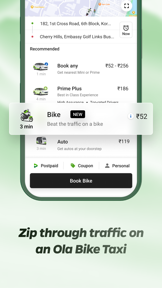
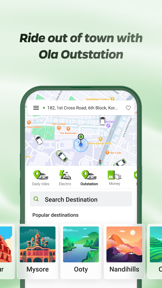
Users hire Ola for flexible, on-demand transit ranging from budget bike-taxis to corporate sedans, consolidating multiple travel needs into a single platform to reduce search friction.
For Commuters in 250+ Indian cities requiring flexible, on-demand transportation ranging from budget bike taxis to premium sedans.
What does it look like?
Key features
Unified interface for bike, auto, and cab categories.
Intra-city package delivery service.
Business-specific ride tagging and management.
How much does it cost?
Revenue is generated via service fees on rides, parcel deliveries, and commissions from integrated ONDC retail partners.
Velocity
Active developmentperformanceopaqueShow more...
The app maintains an active release cadence of approximately 0.38 releases per week over the analyzed period. Development appears stable, though the publisher consistently utilizes generic 'bug fixes and performance improvements' messaging across both iOS and Android platforms. This pattern suggests that significant feature updates or A/B testing may be managed via server-side feature flags rather than traditional App Store build notes. There is no evidence of live-ops events or specific feature rollouts in the observed data.
Who built it?
ANI Technologies Pvt
3 apps tracked · Travel
 Ola Money - Wallet & Payments
 Ridlr - Local Travel App
User Sentiment
What do users think recently?
Recent user voice shows an upset sentiment. Users appreciate basic ride-hailing functionality provides occasional utility for users who experience no technical or driver friction, but report unprofessional driver behavior including ride cancellations and demands for extra cash payments outside the app.
How are ratings & reviews evolving?
What users say, by theme
- Basic ride-hailing functionality provides occasional utility for users who experience no technical or driver friction
- Unprofessional driver behavior including ride cancellations and demands for extra cash payments outside the app
99 of 99 recent reviews analyzed · high confidence · Upset overall
Read the full review analysisUnlock 1 user request, each backed by review evidence.
Access the full report for freeCompetition
Competitive landscape for Ola: Book Cab, Auto, Bike Taxi
How's the Travel market?
Ola maintains a dominant footprint in the Indian travel category with over 3.5M total ratings across platforms. The gap between its high utility and the negative sentiment regarding driver conduct signals a vulnerability to zero-commission challengers.
Read the market outlookThe rivals identified

By Grab.com
Grab competes with Ola by offering a multi-service superapp architecture that bundles mobility with financial services, directly challenging Ola's transit-focused model for the same commuter demographic.
- GrabPay wallet embeds the app into local merchant transactions; Ola lacks an integrated financial payment layer.
- GrabAds monetizes internal security infrastructure via B2B licensing; Ola focuses primarily on transactional ride-hailing revenue.
- GrabMaps converts location intelligence into recurring data revenue; Ola lacks a dedicated B2B mapping data product.
 Uber - Request a rideContender
 Bolt: Request a RideContender
 Freenow by Lyft - taxi & moreContender
 Rapido: Bike-Taxi, Auto & CabsContender
 maxim: order a taxi & deliveryContender
 YallaGo! book a taxiContender
 G7 TAXI - Book a taxiContender
 CabifyContender

Unlock the head-to-head verdict: where this rival wins, and where it loses.
Access the full report for freeThe Analyst's Read
Key takeaways for Ola: Book Cab, Auto, Bike Taxi
Where is it heading?
The Indian ride-hailing market is shifting toward community-first, transparent models that prioritize driver earnings and platform accountability. Ola remains exposed to these challengers because its current automated support infrastructure fails to address the fundamental trust breakdown between riders and drivers.
- Users report: Persistent driver extortion and payment disputes erode brand trust, leading to a measurable decline in long-term user retention.
- Technical barriers like OTP failures prevent new user acquisition, which compounds the churn pressure from existing user dissatisfaction.
The SWOT
- Multi-modal transit architecture captures diverse transit needs
- Deep integration with local parcel delivery increases session frequency
- Formalizing human-led grievance resolution could restore long-term user trust
- Expanding B2B corporate partnerships secures recurring high-margin volume
Next best moves
Implement human-led support for payment disputes because support-inaccessibility is the top complaint → reduce churn
+ 1 more prioritized moveThe counter-intuitive read
Ola's massive scale is its primary liability…
Read the full takeFeature gaps
Zero-commission driver model (available in Namma Yatri but absent here)
Since the last report: Ola's competitive position has declined due to severe user sentiment regarding driver behavior and support, despite maintaining a broad multi-modal feature set.
Bottom line
Users report: Ola holds its category lead through deep local transit integration but bleeds users to competitors due to driver extortion and support failures, so revenue growth hinges on prioritizing human-led grievance resolution to stabilize the user base.
Unlock 2 critical frictions, 2 market threats, 1 more prioritized move and the analyst’s take.
Access the full report for freeReport last updated