




Signal is a private, encrypted messaging app for mobile and desktop users, structured around secure text, voice, and video communication.
The App DNA
What makes this app unique?
Users report: Users hire Signal for a zero-trust communication environment where the technical architecture guarantees privacy, removing the social and security costs of data-harvesting platforms.
For Privacy-conscious individuals and groups seeking secure, ad-free communication tools.
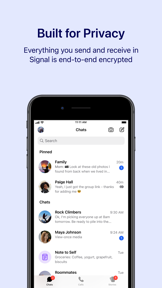
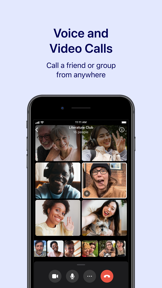
What does it look like?
Key features
Open-source end-to-end encryption for all messages, voice, and video calls
Image, text, and video updates that expire after 24 hours with granular privacy controls
Group chats supporting up to 1,000 members with admin permission settings
How much does it cost?
Operates as a 501c3 nonprofit, relying on donations rather than ad-based or subscription-based monetization.
Velocity
Maintenance developmentUX improvementsShow more...
With only one release recorded in the observed data, the app is currently operating at a maintenance cadence. The latest version introduces minor content updates rather than significant feature development. There is no evidence of a high-frequency release cycle or active live-ops engagement. Development appears focused on incremental updates rather than major feature milestones.
Who built it?
User Sentiment
What do users think recently?
Review voice lately leans excited. Users appreciate privacy-focused messaging architecture provides a secure alternative to mainstream platforms for daily communication, but report technical instability during device linking prevents users from accessing accounts on secondary hardware.
How are ratings & reviews evolving?
What users say, by theme
- Privacy-focused messaging architecture provides a secure alternative to mainstream platforms for daily communication
- Technical instability during device linking prevents users from accessing accounts on secondary hardware
50 of 50 recent reviews analyzed · high confidence · Excited overall
Read the full review analysisUnlock 1 user request, each backed by review evidence.
Access the full report for freeCompetition
Competitive landscape for Signal - Private Messenger
How's the Social Networking market?
Signal sits at #11 Free in the US Social Networking category. The lack of paid user acquisition suggests the current rank is driven entirely by organic trust-based adoption.
Read the market outlookThe rivals identified

By WhatsApp Inc.
WhatsApp is the primary global competitor in the encrypted messaging space, leveraging massive network effects and a high-frequency release cadence to maintain market dominance.
- Maintains a massive global user base that creates a significant barrier to entry for privacy-focused alternatives.
- High-frequency release cycle of 29 updates in six months ensures rapid feature parity and platform stability.
- Deep integration into local business ecosystems through the WhatsApp Business API creates unique commercial utility.


Unlock the head-to-head verdict: where this rival wins, and where it loses.
Access the full report for freeThe Analyst's Read
Key takeaways for Signal - Private Messenger
Where is it heading?
The messaging market is consolidating around platforms that offer both security and social utility. Signal remains advantaged in the privacy segment, but the lack of rapid feature iteration leaves it exposed to competitors that are successfully balancing encryption with modern social features.
- Technical instability during device linking prevents users from accessing secondary hardware, which compounds the churn risk for multi-device power users.
- Users report: The app maintains strong sentiment as a privacy-first tool, which protects its market share against data-harvesting competitors in the current regulatory climate.
The SWOT
- Open-source protocol establishes category authority as a privacy-first utility
- Minimalist interface reduces cognitive load during daily use
- Editors' Choice badge across five markets sustains organic install velocity
- Education partnerships for secure group communication
- Wearable integration for message notification and quick-reply
- Automated moderation bots for large-scale group management
Next best moves
Rebuild device-linking flow because QR code failure is a top-reported friction point → improve onboarding retention
+ 1 more prioritized moveThe counter-intuitive read
Users report: Signal's nonprofit status is its primary moat…
Read the full takeFeature gaps
Cloud-based message storage (available in Telegram) +2
Since the last report: Signal's competitive profile has shifted from a stable privacy utility to one facing active technical friction in device linking and increased pressure from commercial competitors.
Bottom line
Signal maintains its lead through a high-trust, privacy-first brand, but technical friction in device linking and a lack of group moderation tools threaten to drive power users to more feature-rich alternatives, so the team must prioritize stability and community management tools.
Unlock 3 critical frictions, 3 market threats, 1 more prioritized move and the analyst’s take.
Access the full report for freeReport last updated