


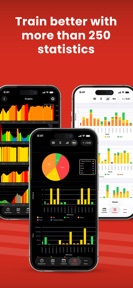


Runmeter is a performance-tracking fitness computer for runners and cyclists, offering granular data visualization and sensor integration on iOS and Apple Watch.
The App DNA
What makes this app unique?
It removes the cognitive and privacy friction of social-first fitness platforms by keeping data local and providing deep, customizable analytics for long-term training progress.
For Serious runners, cyclists, and multi-sport athletes who require granular data and sensor integration.
What does it look like?
Key features
Wireless handlebar-mounted display and control for cycling metrics, acting as a retention loop for dedicated cyclists.
Hands-free lap and stat retrieval during active training sessions, reducing interaction friction.
Direct pairing with Bluetooth heart rate and power meters, providing professional-grade training data.
How much does it cost?
The freemium model gates advanced training and analytical features behind an Elite subscription, which some users report as high relative to value.
Velocity
Steady developmentplatform expansionUX improvementsperformanceShow more...
The app maintains a steady development pace, averaging approximately one release every 3-4 weeks. Recent updates have focused on hardware integration, specifically for the Cyclemeter Bike Computer, alongside iterative improvements to heart rate monitoring and Siri integration. The development trend remains stable, with a consistent focus on expanding peripheral device support and refining existing feature sets. The team continues to deliver functional enhancements rather than shifting toward a live-ops model.
Who built it?
Abvio
7 apps tracked · Health & Fitness
 Cyclemeter Cycling Tracker
 Cyclemeter Cycling GPS Tracker
 Runmeter Running & Cycling GPS
 Walkmeter Walking & Hiking GPS
 5K Runmeter Run Walk Training
 Cyclemeter Cycling GPS Tracker
User Sentiment
What do users think recently?
The recent review mood reads excited. Users appreciate highly configurable charts and data tracking allow dedicated athletes to analyze performance metrics over long periods and offline-first design ensures reliable activity tracking without requiring constant account logins or internet connectivity, but report aggressive prompts asking users to submit reviews disrupt the user experience during active training sessions.
How are ratings & reviews evolving?
What users say, by theme
- Highly configurable charts and data tracking allow dedicated athletes to analyze performance metrics over long periods
- Offline-first design ensures reliable activity tracking without requiring constant account logins or internet connectivity
- Integration with external hardware like heart rate monitors and bike computers provides professional-grade training insights
- Aggressive prompts asking users to submit reviews disrupt the user experience during active training sessions
68 of 671 recent reviews analyzed · high confidence · Excited overall
Read the full review analysisUnlock 2 more frustration themes and 1 user request, each backed by review evidence.
Access the full report for freeCompetition
Competitive landscape for Runmeter Running & Walking GPS
How's the Health & Fitness market?
Runmeter occupies a niche as a data-first fitness computer, distinct from social-centric rivals. The app maintains a 4.7-star rating across 3,705 total ratings, signaling high satisfaction among its core power-user base despite the lack of social network effects.
Read the market outlookThe rivals identified

By Nike, Inc
Both apps target the running market, but they diverge on core utility: Nike Run Club provides free coaching for mass-market beginners, while Runmeter focuses on granular data analysis for performance-oriented athletes.
- Nike Run Club provides high-production audio guided runs; Runmeter focuses on raw sensor-based performance metrics.
- Nike Run Club includes integrated shoe-wear tracking; Runmeter lacks this specific equipment management feature.
- Runmeter enables offline-first data storage; Nike Run Club requires connectivity for its coaching content.
- Runmeter supports advanced Bluetooth sensor pairing; Nike Run Club prioritizes social and coaching features.
 Hevy - Workout Tracker Gym LogContender
 Strava: Run, Bike, WalkContender
 Gymverse: AI Gym Workout PlansContender
 komoot - hike, bike & runContender
 Ride with GPS: Bike NavigationContender
 adidas Running: Run trackerContender
 Map My Run GPS Running TrackerContender
 ASICS Runkeeper—Run TrackerContender

Unlock the head-to-head verdict: where this rival wins, and where it loses.
Access the full report for freeThe Analyst's Read
Key takeaways for Runmeter Running & Walking GPS
Where is it heading?
The fitness-tracking market is consolidating around social-first platforms, yet Runmeter remains advantaged by serving the high-intent, data-driven athlete segment. Continued feature expansion into specialized hardware integration will likely maintain this position, provided the team addresses the UX friction currently driving negative sentiment.
- The latest release added wireless bike computer support, demonstrating active feature investment rather than maintenance-only updates.
- Persistent complaints regarding review prompts during training sessions erode the daily active habit, which compounds the rating drag already visible in recent feedback.
The SWOT
- Offline-first data storage removes connectivity dependency rivals require
- Granular chart customization enables long-term performance analysis
- Bluetooth sensor pairing provides professional-grade training insights
- Implement gift-purchase options to leverage existing user base for acquisition
- Expand training plan library to capture entry-level runner segments
- Introduce spectator tracking features to compete with event-specific apps
Next best moves
Deprecate recurring review prompts during active sessions because they are the #1 reported training frustration → improve session retention
+ 1 more prioritized moveThe counter-intuitive read
The lack of social features is not a weakness but a retention lever…
Read the full takeFeature gaps
Spectator tracking (available in Bay Bridge Half but missing here) +2
Since the last report: Runmeter has sharpened its market positioning as a specialized fitness computer while expanding its competitive gap analysis to include niche features like music-tempo adjustment and spectator tracking. The product strategy remains focused on data-heavy performance tracking, though persistent UX friction from review prompts continues to challenge user retention.
Bottom line
Runmeter retains core power users through superior data granularity, but the aggressive review prompts and pricing friction threaten to erode the daily active habit. Addressing these friction points would unlock higher long-term retention among the existing, highly-engaged user base.
Unlock 3 critical frictions, 3 market threats, 1 more prioritized move and the analyst’s take.
Access the full report for freeSources
- [1] App Store, source
Report last updated