Report updated Jun 19, 2026

Safepoint: Lone Worker Safety is an established business app that is available. Users particularly appreciate the support team provides helpful and responsive assistance for users encountering technical difficulties, though inaccurate location tracking places workers in incorrect positions during daily operational usage remains a common concern.

What is Safepoint: Lone Worker Safety?

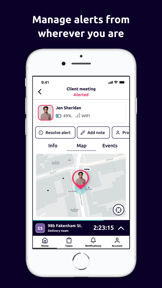
Safepoint is a lone worker safety app for enterprise teams, featuring 24/7 monitoring, wearable hardware integration, and a web-based management portal.

Businesses hire Safepoint to fulfill duty-of-care obligations for remote staff, using the app to bridge the gap between field activity and centralized emergency response.

Current Momentum

v1.37 · 3mo ago

Maintenance
  • Ships stability fixes in latest release.
  • Maintains 24/7 monitoring service infrastructure.

Active Nemesis

eDispatches

eDispatches

By Penguin Management

Other Rivals

Emergency Numbers - Call Help
BlackBerry AtHoc
SafeZone
WeCare, Camp Humphreys
WeCare, USACE
WeCare, 23rd Quartermaster Bde
WeCare, Fort Hood
SOS+ Emergency Dial

7-Day Rank Pulse 🇺🇸

Business

No ranking data

BusinessGrossing

Rating Pulse 🇺🇸

No rating yet

Recent User Mood

What makes this app unique?

What Does It Look Like?

Loading...

What Are The Key Features?

24/7 Alarm Receiving Centre (ARC)Differentiator

Professional monitoring service that handles emergency alerts and coordinates response teams

Management PortalStandard

Browser-based dashboard for tracking staff location, status, and historical activity for auditing

Wearable Panic Alarm IntegrationDifferentiator

Bluetooth-connected hardware for discreet SOS triggering and fall detection

How much does it cost?

Subscription
  • 14-day free trial
  • Scalable pricing structure for businesses

Subscription model anchored in B2B service contracts, with pricing that scales based on the number of monitored staff.

Who Built It?

Business

Enrichment in progress

Publisher profile available very soon

What other apps does Techshift make?

What do users think recently?

Low confidence · 2 reviews analyzed

What is the recent mood?

Mixed

Recent user voice shows a mixed sentiment. Users appreciate the support team provides helpful and responsive assistance for users encountering technical difficulties, but report inaccurate location tracking places workers in incorrect positions during daily operational usage.

Limited review volume (2 reviews). Sentiment analysis will deepen as more data lands.

What is the competitive landscape for Safepoint: Lone Worker Safety?

Where is it available?

Localized markets (1)

United States

How's The Business Market?

Market outlook for this category

Available very soon

The rivals identified

Nemeses(1)

eDispatches icon
eDispatchesmoat: highslowing

Penguin Management, Inc.

4.3(1.2K)

eDispatches competes directly for the emergency response market by providing critical CAD integration and audio dispatch playback, overlapping with Safepoint’s mission-critical safety monitoring.

Differentiators

  • Offers deep CAD alert integration that automates dispatch workflows, which Safepoint currently lacks in its feature set.
  • Provides audio dispatch playback capabilities, enabling responders to hear live emergency communications directly within the app interface.

Head to head

Safepoint should double down on its human-monitored safety service while integrating more robust automated dispatch features to close the functional gap.

Contenders(4)

SafeZone icon
SafeZonemoat: mediumactive

CriticalArc Pty Ltd

3.8(364)

SafeZone is a direct competitor in the lone worker and wellbeing space, offering similar check-in and emergency alerting functionality.

Differentiators

  • Integrates wellbeing assistance features that provide a broader scope of support beyond just emergency incident response.
  • Utilizes a geo-fencing approach to safety that allows for more granular location-based monitoring than Safepoint's current model.
BlackBerry AtHoc icon
BlackBerry AtHocmoat: highactive

AtHoc, Inc.

1.9(333)

AtHoc competes in the enterprise business space by offering critical event alerting and duress signaling for large organizations.

Differentiators

  • Provides enterprise-grade critical event alerting and field reporting tools designed for large-scale organizational crisis management.
  • Features complex duress signaling protocols that cater to high-security environments beyond standard lone worker safety needs.
Emergency Numbers - Call Help icon

MasterDC s.r.o.

4.7(14)

This app competes by providing a global directory of emergency services, serving as a lightweight alternative for users needing immediate help.

Differentiators

  • Maintains a global emergency number directory, serving international travelers rather than the enterprise lone worker segment.
  • Lacks the professional monitoring and supervisor sync features that define Safepoint's B2B business model.
Bear Shield icon

Missouri State University

5.0(3)

Bear Shield targets the campus safety demographic with panic sliders and timers, mirroring Safepoint’s focus on personal safety alerts.

Same space(3)

WeCare, Fort Hood icon
WeCare, Fort Hoodmoat: lowslowing

TRADOC Mobile

4.0(4)

Offers basic emergency dialing and contact management for the Fort Hood community, competing for the same safety-conscious user base.

Differentiators

  • Offers a simplified emergency dialer interface that lacks the backend supervisor sync and data logging of Safepoint.
  • Designed for a closed military ecosystem, making it a non-factor for Safepoint's broader commercial enterprise target audience.
WeCare, 23rd Quartermaster Bde icon

TRADOC Mobile

3.7(3)

Shares the safety-focused utility space by providing specialized prevention and support resources for military personnel.

Differentiators

  • Includes specialized content for suicide prevention and chaplain services, catering to specific institutional support needs.
  • Lacks the real-time location tracking and emergency response team integration that are core to Safepoint's value proposition.
WeCare, USACE icon
WeCare, USACEmoat: lowslowing

TRADOC Mobile

5.0(2)

Provides similar emergency dialer and contact management functionality for a specific government agency audience.

Differentiators

  • Operates as a static reference tool for USACE employees, lacking the dynamic tracking and fall detection of Safepoint.
  • Monetization and distribution are restricted to government-affiliated users, preventing direct competition in the commercial lone worker market.

Compare Safepoint: Lone Worker Safety against every rival

All rivals in one side-by-side table — identity, store metrics, ratings & sentiment, and strategic intel — plus a head-to-head page for each.

Go deeper

The outtake for Safepoint: Lone Worker Safety

Strengths to defend, gaps to attack

Core Strengths

  • 24/7 human-monitored ARC service justifies recurring enterprise subscription revenue.

Critical Frictions

  • Inaccurate location tracking reported by users undermines core safety utility.

Growth Levers

  • Expansion into GPS-denied environments via beacon hardware increases total contract value.

Market Threats

  • eDispatches' CAD integration automates dispatch workflows, threatening Safepoint's market share in professional response.

What are the next best moves?

highPivot

Audit geolocation logic because location inaccuracy is the top user complaint → stabilize core tracking utility.

User sentiment analysis identifies location tracking failure as the primary churn risk.

Trade-off: Pause the wearable hardware integration sprint — geolocation stability is a prerequisite for enterprise trust.

A counter-intuitive read

The reliance on proprietary wearable hardware is a strategic asset for enterprise lock-in, not a friction point, as it creates a physical barrier to switching that software-only rivals cannot replicate.

Feature Gaps vs Competitors

  • CAD alert integration (available in eDispatches but absent here)
  • Audio dispatch playback (available in eDispatches but absent here)

Key Takeaways

Safepoint secures enterprise contracts through its 24/7 monitoring service, but persistent geolocation failures threaten long-term retention, so the PM must prioritize technical audit of tracking logic to prevent churn.

Where Is It Heading?

Mixed Signals

The lone worker safety market is shifting toward automated dispatch workflows, placing Safepoint's manual-heavy model at risk. The PM must address geolocation technical debt to maintain parity with enterprise-grade competitors.

Persistent location tracking failures reported by users erode trust in the primary safety utility, which compounds churn risk for enterprise accounts.

The 24/7 human-monitored ARC service provides a high-value differentiator that justifies recurring B2B subscription revenue against software-only competitors.

Disclosure: Independent intel to help mobile builders succeed.

AI-powered analysis with editorial review, built from publicly available sources. Marlvel.ai is not affiliated with, endorsed by, or sponsored by Safepoint: Lone Worker Safety, its developer, the app publisher, Apple, or Google Play. All trademarks, logos, and screenshots referenced remain the property of their respective owners.

What's new

Safepoint has pivoted its immediate development priority from feature expansion to fixing geolocation tracking inaccuracies following negative user feedback.

declined

Emergence of negative sentiment

shifted

Geolocation logic audit

shifted

Weakness identification

shifted

Opportunity pivot

Cite this report

Marlvel.ai. “Safepoint: Lone Worker Safety Intelligence Report.” Updated Jun 19, 2026. https://marlvel.ai/apps/safepoint-lone-worker-safety

Agent Markdown (.md)See methodologyContact support

Data licensed under CC-BY-NC 4.0