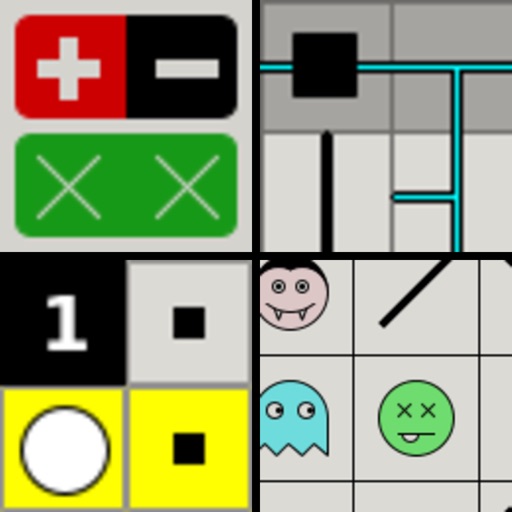


Simon Tatham's Puzzles is a collection of 38 single-player logic games for iOS and Android.
The App DNA
What makes this app unique?
Users hire this app for ad-free, offline mental stimulation that avoids the intrusive monetization and social-pressure mechanics of mainstream casual puzzle games.
For Logic puzzle enthusiasts seeking a deep, ad-free, and offline-capable collection of classic games.
What does it look like?
Key features
Single-player logic puzzle suite including Black Box, Bridges, and Mines, generated on-demand with adjustable difficulty settings.
Full functionality available without internet connection, including game generation and settings management.
On-screen arrow keys, pinch-to-zoom, and toggle for press/long-press interactions optimized for mobile input.
How much does it cost?
The app operates as a non-monetized, open-source project with no IAP or ad-supported inventory.
Velocity
Dormant developmentplatform expansionUX improvementsShow more...
The development cadence is currently classified as zombie status, as there have been no releases in the last 8 months. The latest release from September 2025 focused on platform compatibility and upstream codebase improvements, but the lack of activity since then indicates a cessation of active development. The project appears to be in a dormant state with no recent feature updates or maintenance patches.
Who built it?
User Sentiment
What do users think recently?
Review voice lately leans thrilled. Users appreciate ad-free and offline-capable puzzle collection provides a high-value experience without intrusive monetization, but report touch controls lack precision on mobile devices, making specific puzzle interactions difficult to execute.
How are ratings & reviews evolving?
What users say, by theme
- Ad-free and offline-capable puzzle collection provides a high-value experience without intrusive monetization
- Touch controls lack precision on mobile devices, making specific puzzle interactions difficult to execute
102 of 163 recent reviews analyzed · high confidence · Thrilled overall
Read the full review analysisUnlock 1 user request, each backed by review evidence.
Access the full report for freeCompetition
Competitive landscape for Simon Tatham's Puzzles
How's the Games market?
The app maintains a 4.89 rating on Android with over 16,000 ratings, signaling high user satisfaction despite the lack of modern retention hooks.
Read the market outlookThe rivals identified

By Hungry Studio
This app dominates the casual puzzle category by capturing the same 'quick-session' audience that utilizes Simon Tatham's Puzzles for mental stimulation.
- Massive social proof and review volume create a barrier to entry for smaller puzzle collections
- High-frequency release cadence keeps the app fresh compared to the static nature of Tatham's collection
- Gamified endless high-score systems drive significantly higher daily active usage than individual puzzle solving
 Parking OutContender
 Unblock Jam PuzzleContender
 Woodoku Blast: Block PuzzleContender
 Block Puzzle - Fun GamesContender
Unlock the head-to-head verdict: where this rival wins, and where it loses.
Access the full report for freeThe Analyst's Read
Key takeaways for Simon Tatham's Puzzles
Where is it heading?
The casual puzzle market is consolidating around high-retention, social-feature-heavy entrants, leaving this app's static, utility-focused model exposed. The PM must bridge the gap between desktop-logic and mobile-ergonomics to prevent the current user base from migrating to more tactile, modern alternatives.
- The latest release maintains high stability on Android, ensuring the core logic engine remains accessible for long-term users.
- Touch-precision complaints in the latest version erode the mobile-first experience, which compounds the difficulty of onboarding new users.
The SWOT
- Open-source, ad-free utility model creates a high-trust brand
- 38-game variety provides long-term replayability
- Offline-first architecture ensures 100% uptime
- Implement high-score tracking to drive competitive engagement
- Develop interactive tutorials to lower the barrier for new users
Next best moves
Ship high-score tracking because user requests highlight a lack of progression milestones → increase session frequency
+ 1 more prioritized moveThe counter-intuitive read
The app's lack of monetization is its greatest competitive moat…
Read the full takeFeature gaps
Limited-time events (available in Woodoku Blast but absent here) +1
Since the last report: The product outlook stabilized as the PM pivoted focus from UI preferences to core touch-input ergonomics to address persistent user complaints.
Bottom line
The app succeeds as a pure utility because of its ad-free, offline nature, but it risks irrelevance to casual players who demand progression loops, so the PM must prioritize mobile-first interaction ergonomics to retain the current user base.
Unlock 3 critical frictions, 2 market threats, 1 more prioritized move and the analyst’s take.
Access the full report for freeReport last updated