


Sleep as Android is a sleep cycle tracking and smart alarm utility for Android, featuring sonar-based monitoring and wearable integration.
The App DNA
What makes this app unique?
Users hire the app to optimize sleep quality through data-driven insights and forced-wakefulness tasks that prevent oversleeping.
For Individuals seeking data-driven sleep optimization and those who struggle with traditional alarm clocks.
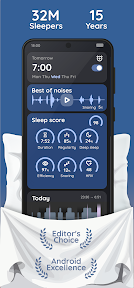
What does it look like?
Key features
Uses ultrasonic waves to monitor sleep cycles and respiration without requiring a device in bed
Forces users to complete physical or mental tasks like scanning barcodes to disable the alarm
Neural networks classify snoring, sleep talk, and sickness indicators from microphone input
How much does it cost?
Freemium model uses a 7-day trial to gate advanced AI features and data analysis, converting users through long-term habit formation.
Velocity
Dormant developmentopaqueShow more...
With only a single release recorded in the observed data, the development cadence cannot be definitively established as active. The latest release provides no specific feature details, directing users to an external website for information. Given the lack of recent activity or a clear release pattern, the app currently sits at a maintenance-level cadence. Future updates are required to determine if this represents a stable development cycle or a decline in momentum.
Who built it?
Petr Nálevka (Urbandroid)
13+ apps tracked · Lifestyle
 CAPTCHA for Sleep as Android
 SayIt Full Unlock
 Lullaby pack Sleep + Mindroid
 Sleep as Android Unlock
 SleepCloud: Backup for Sleep
 BabySleep: Whitenoise lullaby
 KineStop: Car sickness aid
 Twilight: Blue light filter
 DontKillMyApp: Make apps work
 Digital Detox: Focus & Live
 Voli: Volume limiter for Kids
 Lis10: Audio Guides
User Sentiment
What do users think recently?
Review voice lately leans excited. Users appreciate gradually increasing alarm volume and vibration settings prevent jarring wake-up experiences for long-term users, but report recent monetization changes including ads and subscription pressure frustrate long-term users who previously purchased the app.
How are ratings & reviews evolving?
Weekly average review rating
What users say, by theme
- Gradually increasing alarm volume and vibration settings prevent jarring wake-up experiences for long-term users
- Recent monetization changes including ads and subscription pressure frustrate long-term users who previously purchased the app
60 of 78 recent reviews analyzed · high confidence · Excited overall
Read the full review analysisUnlock 1 user request, each backed by review evidence.
Access the full report for freeCompetition
Competitive landscape for Sleep as Android: Smart alarm
How's the Lifestyle market?
Sleep as Android maintains a consistent presence in the Lifestyle category, though its grossing rank frequently lags behind free-tier download performance. This gap suggests that the current monetization model fails to capture the full value of its power-user base.
Read the market outlookThe rivals identified

By Enerjoy Pte. Ltd.
With over 347k ratings and a high-velocity release cadence, ShutEye dominates the direct sleep tracking and alarm niche with a massive, active user base.
- Integrates comprehensive soundscapes and guided meditations directly into the sleep tracking dashboard for holistic wellness
- Aggressive feature deployment cycle with 5 major updates in six months keeps the UI feeling modern
- Monetization model leverages premium sound content libraries to drive higher ARPU compared to utility-focused trackers
 Sleep Monitor: Sleep TrackerContender
 Pillow: Sleep TrackerContender
 SnoreLab : Record Your SnoringContender
Unlock the head-to-head verdict: where this rival wins, and where it loses.
Access the full report for freeThe Analyst's Read
Key takeaways for Sleep as Android: Smart alarm
Where is it heading?
The sleep-utility market is consolidating around lifestyle-oriented wellness apps that prioritize ease of use over raw data density. Sleep as Android remains advantaged in technical accuracy but exposed by its aging UI and aggressive monetization, so the PM must prioritize stability and value-based pricing to prevent further churn.
- Recent monetization shifts (ads and subscription pressure) are eroding long-term user goodwill, which compounds the churn risk among established power users.
- The latest updates focus on wearable stability and neural network accuracy, indicating a shift toward maintenance rather than aggressive feature expansion.
The SWOT
- Proprietary sonar tracking creates high switching costs
- Deep hardware integration across Wear OS and Garmin
- CAPTCHA tasks enforce daily habit formation
- B2B partnerships for sleep health data
- Expansion of AI-assistant advice for non-premium users
Next best moves
Pivot monetization to focus on AI insights because ad-supported alarms drive negative sentiment → improve long-term retention
+ 1 more prioritized moveThe counter-intuitive read
The app's density is its primary asset, not a liability…
Read the full takeFeature gaps
Bundled meditation and sound therapy content (available in ShutEye but absent here) +1
Since the last report: The app has transitioned toward aggressive monetization and maintenance-level development, causing friction with its established user base.
Bottom line
Sleep as Android maintains a strong technical lead through sonar and wearable integration, but the shift toward ad-heavy monetization is alienating the core power-user base, so the PM should pivot to value-based AI gating to stabilize retention.
Unlock 3 critical frictions, 3 market threats, 1 more prioritized move and the analyst’s take.
Access the full report for freeReport last updated