


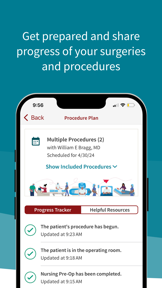


Stanford Health Care MyHealth is a patient portal app for iOS and Android that enables appointment scheduling, secure messaging, and medical record access for Stanford Health Care patients.
The App DNA
What makes this app unique?
The app removes the friction of phone-based administrative tasks by providing a self-service interface for clinical interactions.
For Patients of Stanford Health Care seeking to manage appointments, medical records, and hospital navigation.
What does it look like?
Key features
Provides step-by-step directions to appointment locations within hospital buildings.
Syncs vitals data from the device Health app to the patient record.
Books in-person visits and video consultations directly through the interface.
How much does it cost?
The app functions as a free utility for existing patients with no direct consumer monetization.
Velocity
Maintenance developmentperformanceopaqueShow more...
Stanford Health Care MyHealth maintains a maintenance-level release cadence, with two releases identified in the recent window. The development trend is stable, focusing exclusively on technical stability rather than new feature rollouts. The publisher utilizes opaque release notes, providing no insight into specific functional changes or improvements. The app has not seen a major feature update in the analyzed period.
Who built it?
Stanford Health Care
2 apps tracked · Medical
 Stanford Health Care MyHealth
User Sentiment
What do users think recently?
Fresh user feedback skews mixed. Users appreciate direct access to medical records and appointment management reduces the need for lengthy phone calls and professional and caring interactions with medical staff during appointments improve the overall patient experience, but report restrictive data access prevents patients from copying text or downloading records for personal care coordination.
How are ratings & reviews evolving?
Weekly average review rating
What users say, by theme
- Direct access to medical records and appointment management reduces the need for lengthy phone calls
- Professional and caring interactions with medical staff during appointments improve the overall patient experience
- Restrictive data access prevents patients from copying text or downloading records for personal care coordination
50 of 50 recent reviews analyzed · high confidence · Mixed overall
Read the full review analysisUnlock 2 more frustration themes and 1 user request, each backed by review evidence.
Access the full report for freeCompetition
Competitive landscape for Stanford Health Care MyHealth
How's the Medical market?
Stanford Health Care MyHealth maintains a 4.38 rating on Android and 3.94 on iOS across 4,780 total ratings. The platform serves as a functional utility for existing patients, with no direct consumer monetization model.
Read the market outlookThe rivals identified
Unlock the deeper market read.
Access the full report for freeThe Analyst's Read
Key takeaways for Stanford Health Care MyHealth
Where is it heading?
The platform is currently in a maintenance phase, focusing on stability rather than new feature development. Addressing the technical friction in form submissions is essential to prevent further sentiment decline, as patients rely on the app for critical care coordination.
- Technical instability during form submission causes users to lose progress, which directly erodes trust in the digital care management process.
- The current maintenance-only release cadence suggests the platform is prioritized for stability rather than active feature expansion.
The SWOT
- Indoor navigation reduces patient friction during hospital visits
- Health app integration increases data density in patient records
- Implementing record-export functionality would address top user requests
Next best moves
Rebuild form-submission logic because technical instability causes progress loss during registration → improve completion rates
+ 1 more prioritized moveThe counter-intuitive read
The app's restrictive data policy is a retention mechanism, not a bug…
Read the full takeBottom line
Stanford Health Care MyHealth must address form-submission stability to protect the patient-provider relationship, as technical friction is currently the primary driver of negative sentiment. Prioritizing core utility over new feature expansion will stabilize the user experience.
Unlock 2 critical frictions, 1 market threat, 1 more prioritized move and the analyst’s take.
Access the full report for freeSources
- [1] Play Store listing, source
Report last updated