


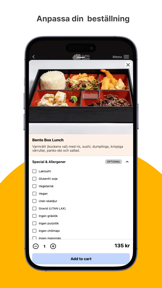
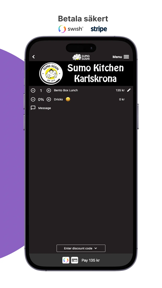
Sumo Sushi is a mobile ordering app for local takeout, allowing customers to place and pay for orders directly on iOS.
The App DNA
What makes this app unique?
Users hire the app to avoid third-party aggregator fees while securing sushi takeout, but the current 1-star experience prevents it from becoming a reliable habit.
For Local customers seeking efficient, commission-free sushi takeout.
What does it look like?
Key features
Select and order food items directly within the app.
Facilitates payment processing for food orders.
Alerts users when their order is ready for pickup.
How much does it cost?
The app functions as a free utility to facilitate direct restaurant sales, avoiding the commission fees of third-party aggregators.
Velocity
Steady developmentShow more...
Who built it?
PumpApp Solutions AB
13+ apps tracked · Food & Drink
 Loco
Loco zushi
zushi Pong
Pong Råvara
 Soya Sushi
 Contrast
 Boo Burgers
 Apelberg Krogar
 Samui Thai
 Tonys
Tonys GG Bar
 Bryggans
User Sentiment
What do users think recently?
How are ratings & reviews evolving?
Not enough recent reviews to extract reliable themes yet.
Read the full review analysisCompetition
Competitive landscape for Sumo Sushi
How's the Food & Drink market?
Sumo Sushi holds the #41 Free position in its category (SE). The 1-star rating on the App Store indicates significant friction, as the app's utility is currently overshadowed by technical or UX failures.
The rivals identified

By Uber Technologies, Inc.
Uber Eats dominates the food delivery market, competing directly for Sumo Sushi's customer base by offering a comprehensive, high-frequency ordering platform.
- Offers a massive multi-category marketplace that captures users beyond just sushi and Japanese cuisine.
- Provides real-time GPS order tracking which significantly reduces customer anxiety compared to static notifications.
- Leverages the Uber One subscription model to create high switching costs and recurring user loyalty.
 Get EazyContender
 ChowNow: Local Food OrderingContender
 Caviar - Order Food DeliveryContender
 Red Lobster Dining Rewards AppContender
Unlock the head-to-head verdict: where this rival wins, and where it loses.
Access the full report for freeThe Analyst's Read
Key takeaways for Sumo Sushi
Where is it heading?
The local takeout market is consolidating around apps that offer reliable tracking and loyalty rewards. Sumo Sushi remains exposed due to its low rating, so the PM must address core stability to prevent total churn to marketplace rivals.
- The 1-star rating on the App Store indicates a broken user experience, which prevents the app from scaling its commission-free model.
The SWOT
- Direct-to-consumer model avoids high commission fees
- Implementing a digital loyalty program could increase repeat order frequency
Next best moves
Audit app stability and core UX flow because the 1-star rating indicates critical failure → stabilize user base
The counter-intuitive read
The app's biggest risk is not Uber Eats' delivery network…
Read the full takeFeature gaps
Real-time GPS order tracking (available in Uber Eats but missing here) +1
Since the last report: The app's market rank declined slightly, and the competitive threat assessment shifted to focus on specific logistics capabilities rather than general marketplace consolidation.
Bottom line
Sumo Sushi secures higher margins by bypassing aggregators, but the 1-star rating indicates the current app experience is failing to retain users, so the PM must prioritize stability fixes before attempting to build out loyalty features.
Unlock 1 critical friction, 1 market threat and the analyst’s take.
Access the full report for freeSources
- [1] App Store, source
Report last updated