PumpApp Solutions AB
For local restaurant patrons and university students in Korea and Sweden requiring specific service-based utilities.
 Sumo Sushi


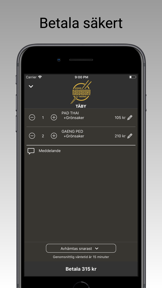


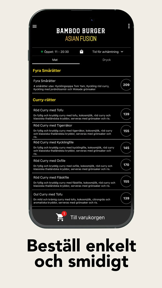
Snapshot
Who is PumpApp Solutions AB?
Providing digital tools for local business management and community coordination. They bridge the gap between niche service providers and their users.
Target audience


Portfolio
Free 42Last updated

Sumo Sushi
v15.0.0
6mo ago
Publisher DNA
What defines PumpApp Solutions AB?
Publisher DNA
Primary focus
Food & Drink service apps and local lifestyle utilities
Scale
studio
Target audience
Local restaurant patrons and university students in Korea and Sweden requiring specific service-based utilities.
Signature Patterns
- •High concentration of single-purpose apps for local food and drink businesses
- •Consistent free-to-use pricing model across the portfolio
- •Focus on utility-driven features like mobile ordering, location tracking, and administrative scheduling
- •Geographically diverse app deployment spanning Korean and Swedish markets
Portfolio momentum
Released 14 updates across 42 apps in the last 6 months, demonstrating a high-frequency maintenance and deployment cycle.
Portfolio
What does PumpApp Solutions AB ship?
Apps
42 apps analysed

An offline network where you meet through QR codes and build trust. Create real connections through real-life encounters.


A smart karaoke app! Search for songs and analyze their vocal range with Spotify integration. Enjoy karaoke with friends!


This is a web service that allows you to reserve and register exercise facilities.


- Lightweight web-based interface lowers user friction

This is an app that allows you to check, add, and edit schedules by university and department.


- Niche community-driven benefit system incentivizes data contribution

This app allows you to easily search and learn water-related terminology. It provides over 600 water-related terms in Korean, English, and Chinese characters.


Single-market publisher, every app ships only to United States.
Based on 1 of 42 apps with localized market data, more coverage rolling in as scans complete · last scanned .
Americas (1)
- United States1 / 1
Core markets (1/1 apps)
Rivals
Who does PumpApp Solutions AB compete with?
The rivals identified
Nemeses(4)

Uber Eats competes directly by capturing the same local food ordering demand, leveraging massive scale and logistics to dominate the convenience-focused dining market.


MAPS.ME dominates the offline navigation space, directly challenging Positive's goal of providing reliable location tracking and destination guidance for travelers.


CalenGoo serves as a direct nemesis by offering a robust, feature-rich calendar and task management ecosystem that competes for the same time-management-focused user base.


Ctrl Gym directly competes by offering a comprehensive booking and membership management ecosystem that mirrors the core utility of the target app.
Contenders(10)


Caviar competes for the premium segment of the food ordering market by curating exclusive restaurant partnerships.


ChowNow serves as a direct threat by offering commission-free ordering tools specifically designed for independent restaurants like Aros Catering.


Get Eazy competes by providing a multi-restaurant marketplace platform that targets the same convenience-seeking demographic as Aros Catering.


This app competes by demonstrating how a single-brand entity can effectively use loyalty and rewards to drive mobile ordering.


DayBlocks competes by offering a visual, block-based approach to time management that overlaps with the target's scheduling functionality.


This app competes for the attention of users seeking real-time situational awareness while navigating specific geographic regions.


It overlaps with Positive by offering location-based discovery services for users looking to identify nearby points of interest.


ShiftCal targets users needing specialized schedule management, directly competing with the target's focus on structured academic and personal planning.


This app competes by providing a simplified, color-coded calendar experience that mirrors the target's basic scheduling utility.


It competes for the same user segment looking for lightweight, offline-capable mapping tools for urban exploration.
Same space(16)


This is a direct peer in the single-restaurant mobile ordering space, focusing on digital menu management and customer retention.


While utility-focused, it occupies the same food-tech ecosystem by providing essential tools for the culinary-engaged user base.


This app addresses food safety and management, overlapping with the operational concerns of a catering and food service business.


This app competes for the attention of food-focused users by providing content-driven engagement through recipes.


This app competes for the same user attention by providing performance tracking and workout logging capabilities.


It shares the navigation space by offering community-driven features and AI-powered planning for specific regional travel.


Case Manager shares the target's focus on structured data management and scheduling for specific user groups.


This app targets the same travel-oriented audience by providing structured, offline-accessible guidance for specific destinations.


It competes for the navigation-focused user by providing predictive traffic analytics and live camera feeds.


This peer competes by providing transit-specific navigation and disruption alerts for users in a shared travel ecosystem.


WODwell competes by providing a sophisticated coaching layer and workout logging for high-intensity fitness enthusiasts.


ProspectBoss operates in the broader organizational space, sharing the target's focus on task and appointment management.


Smokeball competes by offering advanced automation and AI-driven scheduling features that target the same organizational needs as the target app.


Fitpass Active competes by offering a broad library of exercises and workout management tools for general fitness users.


This app provides administrative and operational tracking tools that overlap with the target's scheduling and information management features.


This app occupies the same health and fitness category by offering specialized training plans for specific exercises.
New entrants(7)


Brewly is a new entrant focusing on the cafe segment, utilizing subscription models to capture recurring food and drink spend.


Leonidas is a new competitor in the loyalty space, specifically targeting the digitization of traditional paper-based reward cards.


This newcomer focuses on advanced synchronization, challenging the target's ability to maintain accurate, multi-platform schedules.


A recent arrival that emphasizes accountability and client management, competing for the same fitness-focused demographic.


This newcomer focuses on high-utility indoor navigation, competing for the attention of travelers in specific transit hubs.


A new entrant that directly challenges Positive's core value proposition of offline location and navigation utility.


This app introduces AI-driven input methods that directly challenge the target's manual schedule entry process.
The Analyst's Read
The bottom line on PumpApp Solutions AB
Bottom line
PumpApp Solutions AB functions as a high-velocity studio focused on digitizing local service operations. Their strategy is built on volume and niche utility, though the low engagement metrics suggest a need to transition from a fragmented app strategy to a more cohesive ecosystem.
Frequently asked questions
How many apps does PumpApp Solutions AB publish?
What kind of apps does PumpApp Solutions AB make?
What is PumpApp Solutions AB's top app?
In how many countries are PumpApp Solutions AB's apps available?
What fed this analysis
- Apps analyzed:
- 42
- With full intel:
- 0
- With overview:
- 42
- Website scraped:
- yes
- Social presence:
- no