


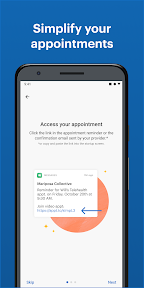
Telehealth by SimplePractice is a HIPAA-compliant video conferencing app for therapy sessions on iOS and Android.
The App DNA
What makes this app unique?
It removes the connectivity dependency of office visits for patients while providing clinicians with integrated billing and documentation tools.
For Mental health practitioners, therapists, psychiatrists, and their clients.
What does it look like?
Key features
HIPAA-compliant video conferencing for therapy sessions accessible via mobile device
Automated documentation assistance for clinical sessions
Automated credit card processing and insurance billing tools
How much does it cost?
Subscription model anchored by a 30-day free trial, with revenue scaled through tiered plans and optional add-on features.
Velocity
Maintenance developmentperformanceopaqueShow more...
Telehealth by SimplePractice maintains a maintenance-level development cadence, with only one version released in the observed window. The latest release provides only generic bug fixes and stability improvements, offering no insight into new features or functional changes. Development appears stable but focused exclusively on technical upkeep rather than active feature expansion. The current release pattern suggests a low-frequency update cycle typical of mature, stable utility software.
Who built it?
SimplePractice
2 apps tracked · Medical
 SimplePractice Client Portal
User Sentiment
What do users think recently?
Recent user voice shows an excited sentiment. Users appreciate telehealth accessibility allows patients to attend therapy sessions from home or work without travel and user interface design provides a straightforward and intuitive experience for connecting with health specialists, but report video and audio instability during sessions disrupts the continuity of therapy appointments for some users.
How are ratings & reviews evolving?
What users say, by theme
- Telehealth accessibility allows patients to attend therapy sessions from home or work without travel
- User interface design provides a straightforward and intuitive experience for connecting with health specialists
- High quality audio and video performance enables effective communication during counseling sessions
- Video and audio instability during sessions disrupts the continuity of therapy appointments for some users
50 of 50 recent reviews analyzed · high confidence · Excited overall
Read the full review analysisUnlock 2 more frustration themes and 1 user request, each backed by review evidence.
Access the full report for freeCompetition
Competitive landscape for Telehealth by SimplePractice
How's the Medical market?
Telehealth by SimplePractice holds the #14 spot in the US Medical chart. The gap between its high chart rank and the persistent reports of connection instability suggests that its clinical integration provides a stronger retention lever than the current video performance.
Read the market outlookThe rivals identified

By Psychology Today
Both platforms target mental health patients and providers with secure, HIPAA-compliant video conferencing, competing directly for the same clinical session workflow.
- SimplePractice includes an AI-powered note taker for clinicians, while Client Video lacks any documentation tools.
- SimplePractice requires patient logins for EHR integration, whereas Client Video uses direct access links to bypass account creation.
Unlock the head-to-head verdict: where this rival wins, and where it loses.
Access the full report for freeThe Analyst's Read
Key takeaways for Telehealth by SimplePractice
Where is it heading?
The telehealth market is consolidating around platforms that offer both clinical utility and high-fidelity video performance. Telehealth by SimplePractice remains advantaged by its EHR integration, but the lack of background multitasking and persistent connection issues creates a churn risk that general-purpose rivals are currently exploiting.
- Persistent connection instability in the latest release erodes user trust in the platform's reliability for sensitive therapy sessions.
- Strong chart positioning in the US Medical category indicates that clinical workflow integration remains a powerful acquisition lever.
The SWOT
- HIPAA-compliant architecture removes compliance barriers for clinicians
- Integrated billing and documentation tools create high switching costs
- Implementing background audio support would resolve the top user request
Next best moves
Ship background multitasking support because it is the top-requested feature → reduce session churn
+ 1 more prioritized moveThe counter-intuitive read
The platform's specialized clinical integration is its only defense against general-purpose video rivals…
Read the full takeSince the last report: The competitive assessment has shifted toward a more urgent tone, reclassifying persistent technical instability from a manageable friction point to a terminal threat against general-purpose video competitors.
Bottom line
Prioritizing background multitasking support would address the primary friction point currently driving user churn, as the platform's clinical utility is undermined by technical instability.
Unlock 2 critical frictions, 1 market threat, 1 more prioritized move and the analyst’s take.
Access the full report for freeSources
Report last updated