





Understood is a behavior-tracking and skill-building app for parents of children with ADHD and dyslexia, available on iOS and Android.
The App DNA
What makes this app unique?
Parents hire Understood to translate complex behavioral outbursts into actionable insights via psychologist-developed tools, serving the need for clinical-grade guidance without the cost of private therapy.
For Parents and guardians of children with learning and thinking differences, specifically ADHD and dyslexia.
What does it look like?
Key features
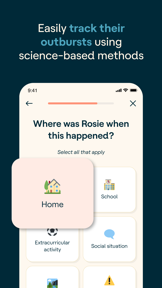
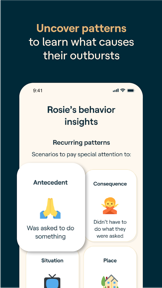
Logs outbursts to identify root causes and patterns, serving as the primary retention loop.
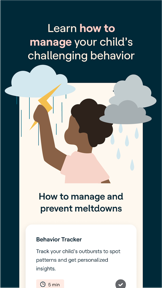
Provides real-time AI guidance and role-play for de-escalation, acting as a unique value-add for parents.
Self-paced CBT modules developed by psychologists, providing the core educational content.
How much does it cost?
The app operates as a non-profit resource supported by donations, creating a significant barrier to entry for subscription-based competitors.
Velocity
Maintenance developmentperformanceopaqueShow more...
The app has shipped only two minor releases in the last three months, resulting in a cadence of approximately 0.07 releases per week. Development appears to be in a maintenance phase, focusing exclusively on stability and bug fixes rather than new features or live operations. The release notes are opaque, providing no insight into specific functional changes or roadmap progression. This low-frequency update pattern suggests a stable, mature product with minimal active development investment.
Who built it?
Understood for All
2 apps tracked · Lifestyle
 Understood: Support ADHD Kids
User Sentiment
What do users think recently?
Fresh user feedback skews excited. Users appreciate behavioral logging tools provide parents with actionable insights into child development patterns and community access to expert advice and peer support reduces isolation for neurodiverse families, but report technical failures during the sign in process prevent users from accessing core features.
How are ratings & reviews evolving?
What users say, by theme
- Behavioral logging tools provide parents with actionable insights into child development patterns
- Community access to expert advice and peer support reduces isolation for neurodiverse families
- Technical failures during the sign in process prevent users from accessing core features
60 of 77 recent reviews analyzed · high confidence · Excited overall
Read the full review analysisUnlock 1 more frustration theme and 1 user request, each backed by review evidence.
Access the full report for freeCompetition
Competitive landscape for Understood: Support ADHD Kids
How's the Lifestyle market?
Understood holds a 4.78 rating on iOS and 4.4 on Android, positioning it as a high-trust, non-profit alternative to commercial parenting trackers. The lack of subscription tiers differentiates it from the broader Lifestyle category, though technical authentication failures currently suppress the conversion of new users into daily active loggers.
The rivals identified

By BALTAPIS UAB
Baby Daybook competes for the same parental attention by offering a comprehensive logging ecosystem that captures the daily behavioral data parents need to manage child development.
- Offers advanced sleep prediction algorithms that provide actionable insights beyond simple manual behavior logging.
- Features robust real-time family synchronization, allowing multiple caregivers to maintain a unified child record instantly.
- Maintains a massive user base and long-term historical data, creating a significant barrier to entry.
 Mango Baby: Newborn TrackerContender
 Talli Baby Tracker Newborn LogContender
 Cubtale: Pregnancy & BabyContender
 Baby Tracker!Contender
Unlock the head-to-head verdict: where this rival wins, and where it loses.
Access the full report for freeThe Analyst's Read
Key takeaways for Understood: Support ADHD Kids
Where is it heading?
The parenting tracker market is consolidating around high-utility, multi-user tools that prioritize frictionless data entry. Understood remains advantaged by its clinical focus, but its lack of shared-account access and current authentication instability leave it vulnerable to commercial rivals that offer better family-sync capabilities.
- Technical failures during authentication block core feature access, which compounds the churn risk already visible in recent user feedback.
- The non-profit, free-access model provides a distinct competitive advantage against subscription-heavy trackers, sustaining high user ratings despite technical hurdles.
The SWOT
- Psychologist-developed content provides deeper clinical context than generic trackers
- Non-profit model removes the subscription barrier common in the category
- Specialized focus on ADHD needs creates a clear niche
- Develop shared-account functionality to support multi-caregiver households
- Expand behavior-tracking templates to include non-outburst events like shutdowns
Next best moves
Rebuild authentication flow because sign-in failures are the top-reported blocker → increase daily active user retention
+ 1 more prioritized moveThe counter-intuitive read
The non-profit model is a strategic liability: by avoiding subscription revenue…
Read the full takeFeature gaps
Real-time family synchronization (available in Baby Daybook but missing here) +1
Since the last report: The report identifies a shift in strategic priority toward multi-user synchronization and authentication stability, moving the outlook from stable to mixed.
Bottom line
Understood wins on clinical authority and free access, but technical friction during login and the lack of multi-user sync limit its daily utility, so the team must prioritize authentication stability and shared-account access to prevent churn to commercial trackers.
Unlock 3 critical frictions, 2 market threats, 1 more prioritized move and the analyst’s take.
Access the full report for freeSources
Report last updated