


Beehive Innovations Services
For productivity-focused power users and individuals seeking privacy-conscious religious utility tools.
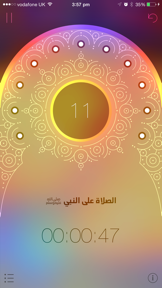
 iQuran - القرآن الكريم








Snapshot
Who is Beehive Innovations Services?
Delivering privacy-focused, offline-first productivity and utility tools for users who prioritize data sovereignty and deep customization.
Target audience


Portfolio
Free 2Last updated

iQuran - القرآن الكريم
v2.7.5
1.1y ago
Publisher DNA
What defines Beehive Innovations Services?
Publisher DNA
Primary focus
Privacy-focused productivity and utility tools
Scale
indie
Target audience
Productivity-focused power users and individuals seeking privacy-conscious religious utility tools.
Portfolio momentum
Released 18 updates across 2 apps in the last 6 months, maintaining a very high development cadence for their active titles.
Portfolio
What does Beehive Innovations Services ship?
Apps
5 apps analysed


Analysis in progress

Read the Quran in Arabic alongside its translation, with color coded Tajweed.


Analysis in progress

Users appreciate the ability to customize specific prayer counts and track their daily progress
- The core design and visual aesthetic provide a satisfying experience for daily religious practice
- Frequent application freezes and crashes force users to delete and reinstall the software repeatedly
Distributed across 5 markets, strongest in Americas.
Based on 3 of 5 apps with localized market data, more coverage rolling in as scans complete · last scanned .
Americas (2)
- United States3 / 3
- Mexico1 / 3
Europe (3)
- France1 / 3
- Germany1 / 3
- Spain1 / 3
Core markets (3/3 apps)
User Sentiment
How do users feel about their apps?
0
Positive apps
1
Neutral / mixed
0
Negative apps
45/100
Avg sentiment score
Rivals
Who does Beehive Innovations Services compete with?
The rivals identified
Nemeses(2)

Both applications target productivity-focused users requiring cross-platform task management, with Todoist's freemium model and natural language entry directly competing for the same power-user segment as 2Do.


Serves as a cross-platform utility for users needing community resources like mosque locators alongside prayer times.
Contenders(20)


Both applications target productivity-focused users requiring task management, with TickTick capturing a larger audience through its freemium model and integrated calendar tools.


Both applications target productivity-focused users within the paid task management segment, competing directly for the same user base on iOS.


Both apps compete for the same daily utility slot by providing prayer timings and Qibla direction, forcing users to choose between a paid privacy-focused tool and a free organization-backed alternative.


Both applications target productivity-focused users through paid models, competing for the same screen time by offering task management and scheduling capabilities.


Both apps provide automated, location-based prayer timing for the same global Muslim demographic, creating direct competition for daily utility usage.


Both apps target users seeking automated prayer timings and Qibla orientation, competing directly through overlapping core utility features and distinct monetization models.


Both applications target productivity-focused users who require highly configurable task management and support for complex project workflows.


Both applications serve the same core user need for Qibla orientation, but they differ fundamentally in their connectivity requirements and monetization models.


Both apps target the same audience of Muslims seeking daily prayer management, creating direct competition for user attention despite different monetization models.


Both applications target productivity users needing task management, with Reminders capturing the OS-integrated segment while 2Do serves power users requiring methodology-agnostic flexibility.


Hajo competes for the same user base by bundling prayer alerts with religious content like Quran lessons and Hajj guides, whereas iPray focuses exclusively on utility.


IslamApp competes by offering a free, ad-free suite of religious tools including a Quran and calendar, directly challenging the paid, utility-focused model of iPray.


Both apps target the same demographic of Muslims seeking prayer-related tools, though they serve different use cases: iPray focuses on daily utility and timing, while Namaz App focuses on educational content and prayer instruction.


Both applications compete for users seeking to manage daily tasks, with the rival capturing the segment prioritizing granular notification customization and free access, while 2Do targets users requiring methodology-agnostic, structured workflows.


Both applications compete for the same task management user base, with Do! challenging 2Do through a free, low-friction entry point that contrasts with 2Do's paid, power-user focus.


Both apps target the same audience of Muslims for daily prayer scheduling and Qibla direction, creating direct competition for the same utility use case.


Both apps target the same user base seeking privacy-focused, ad-free prayer tools, creating direct competition for users prioritizing minimalist religious utilities.


Tiimo competes for the same productivity-focused user base by offering AI-driven planning and visual scheduling, which directly challenges the manual, methodology-agnostic task management approach of 2Do.


Both apps compete for productivity-focused users, with Structured capturing the same audience by offering a visual timeline and calendar integration that 2Do lacks.


Both apps target productivity-focused iOS users requiring granular task management, with Alarmed providing specialized persistent alerts that overlap with the scheduling requirements of 2Do users.
Same space(38)


Serves as a specialized tool for dhikr, acting as an adjacent utility to iPray's prayer timing focus.


Floret combines task management with mood tracking and gratitude logs for users prioritizing mental well-being.


Focuses specifically on logging prayer consistency, serving as a companion to iPray's automated timing.


Targets the same privacy-conscious, paid-app market as iPray but includes wearable integration.

known for Qibla Finder, Qibla Compass AR
Provides a free alternative to iPray with additional religious content like Quran translations and hadith.


Todoery provides a simple, widget-focused task management experience for users who find 2Do's interface too complex.


Escape uses mind mapping and outline switching to structure complex thoughts, unlike 2Do's linear task lists.


BusyCal targets power users with advanced calendar customization and multi-platform sync, mirroring 2Do's focus on high-configurability.


Offers a visual approach to prayer scheduling that complements iPray's automated alerts.

known for Qibla Finder 100% اتجاه القبلة
Offers offline directional utility but relies on an ad-supported model that contrasts with iPray's paid, ad-free experience.


Cozi provides a centralized household operating system that replaces 2Do's individual-focused task management.


Weekly Planner offers a digital paper-planner experience for users who prefer simple, weekly scheduling over 2Do.


Finalist integrates calendar, tasks, and notes into a single timeline, offering a more consolidated view than 2Do.


Provides an automated prayer schedule similar to iPray but suffers from poor user reception.


FamilyWall centralizes family logistics and finance tracking, acting as a collaborative hub for household management.


Notability serves the academic capture workflow that 2Do lacks by utilizing audio-to-ink synchronization.


Adds fasting and prayer adherence tracking to the standard prayer timing utility found in iPray.


iA Writer provides a distraction-free environment for text production that complements 2Do's task-focused note-taking.


MinimaList combines task management with focus timers, providing a streamlined alternative to 2Do's feature-heavy environment.


Notebooks prioritizes data ownership through local file storage, serving users who require long-term document portability.


Provides a similar prayer timing utility with an added focus on language support and HD design.


Provides a standard prayer timing utility that competes directly with iPray's automated features.


Replaces calculated prayer times with verified schedules from local mosques, solving the timing drift issue reported by iPray users.


MeisterTask offers visual Kanban boards and AI-assisted documentation for teams, extending beyond 2Do's individual task management.


Offers an open-source, privacy-focused alternative to iPray for users who want to track prayer consistency manually.


Targets users who prioritize full adhan audio playback over the minimalist, automated approach of iPray.


Provides a Qibla-focused utility that complements the prayer timing features of iPray.


Offers a comprehensive suite of religious tools including a Hijri calendar and greeting cards.


Shares iPray's privacy-first, ad-free philosophy but adds widget-based interaction for faster access.


Calendars by Readdle merges task management with calendar scheduling, offering a unified dashboard alternative to 2Do.


Routinery focuses on active habit execution via voice-guided timers rather than 2Do's passive task list management.


Provides a specialized Qibla direction tool that requires active internet, contrasting with iPray's offline-first design.


Focuses on granular audio customization for prayer calls, appealing to users who find iPray's alerts too generic.


TimeTree complements 2Do by shifting from individual task management to household-level coordination via shared calendars.


Trello uses Kanban-style boards for project-based task tracking, contrasting with 2Do's flexible task management.


Planwoo targets ADHD-specific habit formation and daily routine planning, providing a more structured approach than 2Do.


Daily Planner combines task management with diary entries and life-tracking, offering a broader personal management scope.


Expands on iPray's core utility by adding religious resources like a Zakat calculator and Quran reader.
New entrants(2)


Addresses the friction between digital distraction and prayer by integrating system-level app blocking.


Offers a privacy-first, ad-free prayer notification utility similar to iPray's core offering.
Frequently asked questions
How many apps does Beehive Innovations Services publish?
What kind of apps does Beehive Innovations Services make?
What is Beehive Innovations Services's top app?
In how many countries are Beehive Innovations Services's apps available?
What fed this analysis
- Apps analyzed:
- 2
- With full intel:
- 0
- With overview:
- 2
- Website scraped:
- no
- Social presence:
- yes