


Doist
For professionals, students, and remote teams seeking organized workflows and reduced notification fatigue.
 Todoist: To Do List & Calendar






Snapshot
Who is Doist?
Equipping knowledge workers and teams with streamlined tools for task management and asynchronous communication to reduce workplace distractions.
Target audience


Portfolio
Free 3Last updated

Todoist: To Do List & Calendar
vVARY
6mo ago
Publisher DNA
What defines Doist?
Publisher DNA
Primary focus
Productivity and business communication tools
Scale
indie
Target audience
Professionals, students, and remote teams seeking organized workflows and reduced notification fatigue.
Signature Patterns
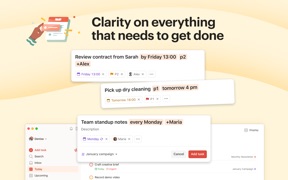
- •Heavy emphasis on natural language processing for frictionless task entry
- •Product philosophy centered on 'deep work' and asynchronous communication
- •Freemium monetization model with tiered subscriptions for advanced features and teams
- •High-frequency update cadence across the entire portfolio
Portfolio momentum
Maintaining an intense development pace with 16 updates across 3 apps in the last 6 months and a major release within the last 7 days.
Portfolio
What does Doist ship?
Apps
3 apps analysed
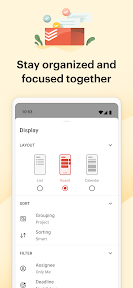
Organize tasks, capture ideas by voice, and keep your teamwork on the same page.


Cross-platform sync expands engagement window
- Natural language task scheduling and intuitive task management features keep long-term users highly productive daily
- Recent UI changes removing swipe-to-select functionality force users into tedious two-finger drag interactions


Messaging for future-thinking teams that believe in asynchronous communication.


User Sentiment
How do users feel about their apps?
0
Positive apps
1
Neutral / mixed
0
Negative apps
55/100
Avg sentiment score
Rivals
Who does Doist compete with?
The rivals identified
Nemeses(1)

Both apps compete for the professional productivity segment by offering task management, with Google Tasks capturing users through native Workspace integration while Todoist relies on specialized task-capture features.
Contenders(10)


Any.do competes by bundling task management and calendar views into a single interface, directly addressing the time-blocking gap identified in the Todoist feature set.


TickTick competes by offering an integrated calendar and habit-tracking suite that directly addresses the missing time-blocking functionality in Todoist. This overlap targets the same professional and team audience seeking a centralized productivity hub.


Both apps target professionals seeking structured task management, but Things 3 captures the minimalist Apple-centric segment that rejects Todoist's subscription model and feature-heavy approach.


Smart Tasks competes directly with Todoist by offering native Apple Calendar integration and a minimalist interface, addressing specific feature gaps and usability complaints reported by Todoist users.


Both apps compete for users managing daily habits and tasks, though they diverge on motivation: Todoist focuses on professional task capture while Habitica uses RPG-style progression to drive engagement.


Microsoft Outlook serves as a professional communication hub that competes for the same daily-active-user time as Todoist's task-management workflow.


Focus To-Do competes for the same professional and student demographic by bundling Pomodoro timers with task management, directly addressing the time-management needs of users who currently rely on Todoist for organization.


Do! competes for the same task management audience by prioritizing rapid, simple interaction over the complex project-oriented feature set found in Todoist.


Both apps compete for users seeking structured task management, but Tiimo captures the neurodivergent segment through visual scheduling while Todoist relies on rapid text-based capture.


Structured competes by offering a visual timeline and native calendar integration, directly addressing the time-blocking gap that Todoist users currently request.
Same space(17)


Basecamp serves as a centralized project management hub that competes with Todoist's team workspace functionality.


Floret integrates task management with wellness tracking, appealing to users who want a more holistic view of their daily life than Todoist provides.


2026 Calendar Launcher integrates scheduling directly into the phone's OS layer, offering a different entry point than Todoist's app-based task capture.


Evoday provides a minimalist habit-tracking utility that complements Todoist's task-focused workflow.


Fantastical Calendar competes for the same power-user segment as Todoist by offering advanced natural language parsing for scheduling.


Notability captures the lecture and meeting-capture segment of the productivity market, offering a specialized alternative to Todoist's text-based task entry.


Calendar - Agenda Planner offers a simplified, agenda-focused alternative to Todoist's complex task management.


Goodnotes functions as a document-centric productivity tool that captures the academic and professional note-taking market Todoist does not address.


CamScanner provides a document-digitization utility that complements Todoist's task management by handling physical-to-digital workflow conversion.


Productive focuses on the behavioral-change aspect of productivity, serving as a specialized tool for habit tracking rather than task management.


Calendars by Readdle competes for the same productivity-focused user base by merging task management with calendar scheduling, directly addressing the calendar-task integration gap found in Todoist.


Routinery focuses on the execution phase of productivity, providing active guidance for habits rather than passive task lists.


HabitKit offers a privacy-first habit tracking alternative to Todoist, appealing to users who prioritize local data storage.


TimeTree targets the collaborative scheduling needs of households and teams, serving as a specialized alternative to Todoist's individual-centric task management.


Digital Planner – Task Journal combines task management with creative expression, serving as a niche alternative to Todoist's utilitarian approach.


Trello provides a Kanban-based project management alternative to Todoist's list-based task management for team-oriented workflows.


Yahoo Mail competes for the same professional daily-active-user segment as Todoist, utilizing storage capacity as a primary acquisition barrier.
The Analyst's Read
The bottom line on Doist
Bottom line
Doist is a highly disciplined publisher that has successfully captured the 'focused productivity' niche. Their high weighted rating and intense update cadence signal strong product-market fit and a commitment to maintaining a premium user experience.
Frequently asked questions
How many apps does Doist publish?
What kind of apps does Doist make?
What is Doist's top app?
What fed this analysis
- Apps analyzed:
- 3
- With full intel:
- 1
- With overview:
- 3
- Website scraped:
- yes
- Social presence:
- yes