




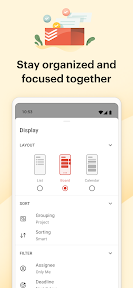


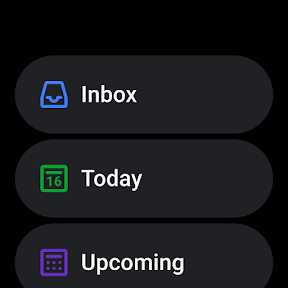
Todoist is a cross-platform task management and habit tracking app for professionals and teams, available on iOS and Android.
The App DNA
What makes this app unique?
Users rely on the app to bridge personal and professional productivity by centralizing notes, reminders, and calendar events into a single planning center.
For Professionals and teams seeking a centralized, cross-platform task management tool that balances personal and professional productivity.
What does it look like?
Key features
Voice or text input automatically parses dates, labels, and project assignments into structured tasks.
Shared space for collaboration, task assignment, and file sharing separate from personal projects.
How much does it cost?
Freemium model anchored by a Business subscription at $96/year, gating advanced project views and team collaboration features.
Velocity
Maintenance developmentperformanceUX improvementsopaqueShow more...
With 5 releases over the observed window and a last update 86 days ago, the development cadence has slowed to a maintenance pace. The publisher consistently provides opaque release notes that focus on general bug squashing and minor visual refinements rather than new feature development. There is no evidence of live-ops or significant feature expansion in the recent history. The development trend is stable but minimal, prioritizing technical upkeep over functional growth.
Who built it?
Doist
3 apps tracked · Productivity
 Todoist: To-Do List & Calendar
 Twist: Organized Messaging
User Sentiment
What do users think recently?
Recent user voice shows a mixed sentiment. Users appreciate natural language task scheduling and intuitive task management features keep long-term users highly productive daily and generous free tier functionality allows users to manage complex projects without immediate subscription pressure, but report recent ui changes removing swipe-to-select functionality force users into tedious two-finger drag interactions.
How are ratings & reviews evolving?
What users say, by theme
- Natural language task scheduling and intuitive task management features keep long-term users highly productive daily
- Generous free tier functionality allows users to manage complex projects without immediate subscription pressure
- Ramble feature provides a helpful stream of consciousness input method that encourages frequent task logging
- Recent UI changes removing swipe-to-select functionality force users into tedious two-finger drag interactions
119 of 186 recent reviews analyzed · high confidence · Mixed overall
Read the full review analysisUnlock 2 more frustration themes and 3 user requests, each backed by review evidence.
Access the full report for freeCompetition
Competitive landscape for Todoist: To Do List & Calendar
How's the Productivity market?
Todoist maintains a strong productivity presence, though its lack of major updates in the last six months creates a vulnerability against rivals like Microsoft To Do. The current maintenance-mode cadence risks ceding the power-user segment to competitors that offer integrated calendar-task views.
Read the market outlookThe rivals identified

By Appest Limited
TickTick targets the same professional and personal productivity audience by offering integrated calendar views and habit tracking, directly addressing Todoist's missing time-blocking capabilities.
- Includes built-in focus tools like a Pomo Timer and habit tracking alongside standard task management.
- Features native integrated calendar and reminders, filling the time-blocking gap users request in Todoist.
 Google Tasks: Get Things DoneContender
 Microsoft To DoContender
 Things 3Contender
 Structured: Daily Planner TodoContender
 Any.do: To do list & PlannerContender
 Tiimo: To-Do List & AI PlannerContender
 Do! - Simple To Do ListContender
 Actions: To Do List OrganizerContender

Unlock the head-to-head verdict: where this rival wins, and where it loses.
Access the full report for freeThe Analyst's Read
Key takeaways for Todoist: To Do List & Calendar
Where is it heading?
Productivity tools are consolidating around unified calendar-task interfaces, and Todoist's maintenance-mode cadence leaves it exposed to rivals shipping integrated time-blocking features. The PM must prioritize UX stability to prevent churn of the core professional segment.
- UI regressions in the latest update erode the daily active habit, which compounds the rating drag already visible on Android.
- The lack of native calendar integration hinders scheduling, pushing power users toward competitors that offer unified time-blocking.
The SWOT
- Natural language processing reduces task creation friction
- Cross-platform sync expands engagement window
- Native iPhone calendar integration would address top user request
Next best moves
Restore swipe-to-select functionality because user complaints flag it as a top navigation regression → reduce churn
+ 1 more prioritized moveThe counter-intuitive read
The lack of major feature releases is not…
Read the full takeFeature gaps
Integrated calendar-task time blocking (available in Any.do but absent here)
Since the last report: Development velocity has slowed to a maintenance pace, marked by a six-month gap in major releases and the emergence of critical navigation and synchronization regressions. This shift leaves the app vulnerable to competitors offering integrated calendar-task workflows.
Bottom line
Restoring navigation fluidity and shipping native calendar integration would stabilize the core professional user base. These moves would directly counter the friction driving users toward integrated calendar-task rivals.
Unlock 2 critical frictions, 1 market threat, 1 more prioritized move and the analyst’s take.
Access the full report for freeFAQ
Is Todoist free to use?
How does Todoist compare to Microsoft To Do?
Does Todoist have a calendar view?
What is a free alternative to Todoist?
Sources
- [1] Play Store listing, source
Report last updated