


eflasoft
For language learners and travelers seeking offline-capable reference tools for vocabulary building.
 Spanish - English


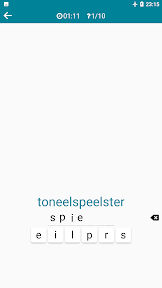
Snapshot
Who is eflasoft?
Providing offline-capable language learning tools for travelers and students. Enabling vocabulary acquisition through gamified exercises and dictionary lookups.
Target audience


Portfolio
Free 122Last updated

Spanish - English
v9.2
6mo ago
Publisher DNA
What defines eflasoft?
Publisher DNA
Primary focus
Bilingual dictionary and language learning tools
Scale
studio
Target audience
Language learners and travelers seeking offline-capable reference tools for vocabulary building.
Signature Patterns
- •Standardized offline dictionary functionality across all titles
- •Gamified testing modules for writing, listening, and speaking
- •Free-to-use monetization model
- •Integration of voice search capabilities
- •High volume of language-pair permutations
Portfolio momentum
Released 10 updates across 52 apps in the last 6 months, indicating a focus on maintaining existing titles rather than new feature innovation.
Portfolio
What does eflasoft ship?
Apps
122 apps analysed

Afrikaans German dictionary, translator, learn words with games, tests and more.


Data import/export functionality creates a switching cost for power users
- 132,000-word offline database provides reliable utility for low-connectivity regions


Analysis in progress


Analysis in progress
Single-market publisher, every app ships only to United States.
Based on 11 of 122 apps with localized market data, more coverage rolling in as scans complete · last scanned .
Americas (1)
- United States11 / 11
Core markets (11/11 apps)
User Sentiment
How do users feel about their apps?
1
Positive apps
0
Neutral / mixed
0
Negative apps
65/100
Avg sentiment score

Rivals
Who does eflasoft compete with?
The rivals identified
Nemeses(1)

This app dominates the reference category by providing a massive, high-utility offline dictionary experience that directly competes with the target's core utility value proposition.
Contenders(4)


Targets advanced language learners who need to understand word pairings, a specific subset of the target's broader dictionary audience.


Competes for the user's time by offering specialized vocabulary insights that the target app's general dictionary may miss.


Directly mirrors the target's 'bilingual dictionary' utility, proving that lightweight, offline-first language tools are a persistent market segment.


Represents a high-quality, education-focused dictionary that sets a standard for how niche language apps should integrate multimedia.
Same space(4)


Directly competes with the target's gamified learning features by focusing on auditory word recognition.


Competes for the same language-learning audience by shifting from static dictionary lookups to active, AI-driven conversation practice.


Shares the target's focus on educational practice, specifically using AI to automate the testing process for students.


Targets the same educational demographic but uses long-form reading content rather than dictionary lookups to teach language.
New entrants(2)


A new entrant that challenges the target's 'speaking' test feature with more advanced, AI-driven speech analysis.


Enters the educational space with a focus on handwriting recognition, a feature that could easily be adapted for other languages.
The Analyst's Read
The bottom line on eflasoft
Bottom line
Eflasoft is a high-volume studio leveraging a standardized template to dominate niche language-pair search queries. Their success is driven by utility-first, offline-capable tools, though the high volume of inactive apps suggests a lack of long-term product support.
Frequently asked questions
How many apps does eflasoft publish?
What kind of apps does eflasoft make?
What is eflasoft's top app?
In how many countries are eflasoft's apps available?
What fed this analysis
- Apps analyzed:
- 52
- With full intel:
- 0
- With overview:
- 52
- Website scraped:
- yes
- Social presence:
- no