
Falling Fruit
For foragers, foresters, and environmental enthusiasts interested in identifying and harvesting local edible species.
 Falling Fruit

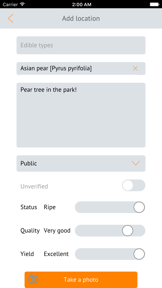
Snapshot
Who is Falling Fruit?
Mapping the urban harvest to connect foragers with local edible plant species through a global crowdsourced database.
Target audience


Portfolio
Last updated

Falling Fruit
v0.2.1
10y ago
Publisher DNA
What defines Falling Fruit?
Publisher DNA
Primary focus
Urban foraging and edible plant mapping
Scale
indie
Target audience
Foragers, foresters, and environmental enthusiasts interested in identifying and harvesting local edible species.
Origin
Established as a nonprofit initiative to catalog the world's urban harvest and facilitate community-led foraging.
Signature Patterns
- •Crowdsourced data aggregation from professional and community sources
- •Monetization via one-time paid app purchase framed as a tax-deductible donation
- •Focus on utility-driven mapping for a highly specific environmental niche
Portfolio momentum
The single portfolio title has not received an update since 2016, indicating the project is in a state of long-term maintenance or abandonment.
Company profile
medium confidence- Founded
- 2010
- Funding
- Nonprofit
Portfolio
What does Falling Fruit ship?
Apps
1 app analysed
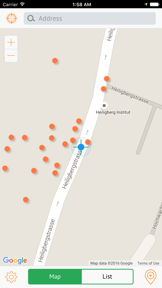

Distributed across 9 markets, strongest in Asia-Pacific.
Based on 1 of 1 app with localized market data · last scanned .
Americas (2)
- Canada1 / 1
- United States1 / 1
Europe (2)
- Turkey1 / 1
- United Kingdom1 / 1
Asia-Pacific (5)
- Australia1 / 1
- India1 / 1
- Indonesia1 / 1
- Singapore1 / 1
- Vietnam1 / 1
Core markets (1/1 apps)
Rivals
Who does Falling Fruit compete with?
The rivals identified
Nemeses(1)

Both applications target the same urban foraging audience by providing interactive maps for locating and registering public fruit trees and edible plants.
Contenders(1)


Both applications provide crowdsourced maps for locating edible plants on public land, targeting the same foraging demographic.
Same space(20)


Turns foraging into a structured expedition by logging finds and seasonal data, complementing the source app's map.


Targets the same gardening audience with a focus on regional viability rather than global foraging maps.


Provides an offline-first journal for tracking wild food locations, solving the connectivity issues often found in remote foraging.


Uses real foraging data to show what is in season, providing a data-driven alternative to the source app's map.


Extends foraging utility by providing recipes and practical uses for identified plants, moving beyond simple location mapping.


Uses crowdsourced mapping for edible plants but adds a Web3 marketplace to facilitate commerce for food products.


Uses machine learning to identify edible plants, acting as a technical alternative to the source app's community-driven data.


Provides a localized foraging field guide that competes for the same user base by offering side-by-side photo comparisons.


Provides a specialized mushroom foraging map that competes for the same outdoor enthusiast demographic.


Offers a regional mushroom map that provides high-precision data for specific tree-mushroom relationships in Michigan.


Uses AI-based identification to assist users in finding edible food, acting as a direct substitute for plant recognition.


Positions itself as a premium, safety-first guide for British foragers, contrasting with the source app's broad crowdsourced model.


Serves as a specialized foraging journal for tracking harvest locations, overlapping with the source app's mapping utility.


Focuses on sustainable food experiences and ethical directories, appealing to the same socially conscious foraging audience.


Offers a portable reference tool for species identification that complements the map-based approach of the source app.


Provides AI-powered identification for wild species, serving as a safety-focused tool for hikers and amateur foragers.


Attempts to build a community-sourced map for mushroom sightings, directly overlapping with the source app's mapping focus.


Serves as a high-scale identification alternative for users who need plant verification before foraging.


Anchors value in expert-curated botanical knowledge, serving as a trust-based alternative to crowdsourced databases.


Focuses on mushroom hunting intelligence, providing a specialized alternative for users interested in specific fungi foraging.
New entrants(2)


Combines a foraging journal with weather-based season prediction, offering a more analytical approach to finding wild food.


Offers a private map for mushroom spots, serving as a personal alternative to the source app's global crowdsourced map.
The Analyst's Read
The bottom line on Falling Fruit
Bottom line
Falling Fruit is a mission-driven data repository rather than a traditional app publisher. While its proprietary dataset is extensive, the lack of technical maintenance suggests the project is currently a legacy resource for a dedicated foraging community.
Frequently asked questions
How many apps does Falling Fruit publish?
What kind of apps does Falling Fruit make?
What is Falling Fruit's top app?
In how many countries are Falling Fruit's apps available?
What fed this analysis
- Apps analyzed:
- 1
- With full intel:
- 0
- With overview:
- 1
- Website scraped:
- yes
- Social presence:
- yes