Justin Guitar
For aspiring guitarists, ranging from beginners following a structured curriculum to intermediate players seeking specific technical drills.
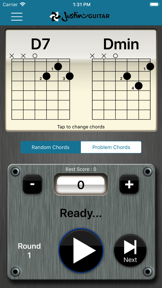
 Guitar Fretboard Note Trainer








Snapshot
Who is Justin Guitar?
Providing structured, pedagogical guitar instruction through gamified tools and curriculum-aligned utilities for students worldwide.
Target audience


Portfolio
Free 1Last updated

Guitar Fretboard Note Trainer
v2.17
6.5y ago
Publisher DNA
What defines Justin Guitar?
Publisher DNA
Primary focus
Music education and guitar practice utilities
Scale
indie
Target audience
Aspiring guitarists, ranging from beginners following a structured curriculum to intermediate players seeking specific technical drills.
Origin
Founded by Justin Sandercoe in 2003 to support private lessons before expanding into a global digital education platform.
Signature Patterns
- •Direct integration with the JustinGuitar web-based curriculum and lesson plans
- •Focus on specific, isolated skill-building such as fretboard memorization and ear training
- •Preference for one-time purchase monetization models over recurring subscriptions
- •Pedagogical approach utilizing gamified exercises and progressive difficulty levels
Portfolio momentum
With zero releases in the last six months and 80% of the portfolio classified as abandoned, the mobile strategy is currently in a legacy maintenance phase.
Company profile
medium confidence- Founded
- 2003
Portfolio
What does Justin Guitar ship?
Apps
6 apps analysed

Learn the notes on the guitar fretboard fast with this easy and fun app


Learn the fretboard in 5 minutes a day. Stop guessing—start knowing your notes.


Analysis in progress

Analysis in progress
Single-market publisher, every app ships only to United States.
Based on 3 of 6 apps with localized market data, more coverage rolling in as scans complete · last scanned .
Americas (1)
- United States3 / 3
Core markets (3/3 apps)
User Sentiment
How do users feel about their apps?
1
Positive apps
0
Neutral / mixed
0
Negative apps
75/100
Avg sentiment score

Rivals
Who does Justin Guitar compete with?
The rivals identified
Nemeses(3)


Both apps target musicians seeking auditory skill improvement, creating direct competition for users evaluating ear training tools on the app store.


Both apps share the same pedagogical authority, Justin Sandercoe, and compete for the same guitar-learning audience by offering distinct paths for beginner versus intermediate skill levels.


Both apps target musicians requiring tempo training, but Smart Metronome & Tuner captures a broader audience through its freemium model and higher technical reliability.
Contenders(24)


Both apps target musicians seeking to improve aural skills through structured interval recognition practice. They compete directly for the same user base by offering playback and identification training modes.


Both apps target the same demographic of serious musicians seeking technical proficiency through structured practice, though they focus on different musical domains of rhythm versus ear training.


Both apps target musicians requiring tempo management, but they diverge between specialized pedagogical training modes and standard utility features.


Both apps target musicians seeking to improve aural skills, with Perfect Ear offering a broader curriculum including rhythm and sight-reading that overlaps with the interval training focus of Interval Ear Trainer.


Both apps target music students and hobbyists seeking ear training, creating direct competition for users looking for interval recognition tools.


Both applications target musicians seeking rhythm practice tools, with direct overlap in tempo tracking and session monitoring functionality.


Both apps target musicians seeking to improve aural skills, creating direct competition for users looking for structured ear training.


Both apps target blues guitarists seeking structured video instruction, creating direct competition for the same instructional time and wallet share.


Both apps target musicians seeking to improve rhythmic proficiency through structured practice, creating direct competition for the same user base despite differing monetization models.


Both apps target guitarists seeking blues improvisation skills, creating direct competition for the same user base despite different pricing models.


Both apps compete for the same user base of guitarists by offering instructional video libraries and tab-based learning tools. They overlap in their core value proposition of providing structured guitar education.


Both apps target musicians requiring rhythm training, but Metronome Pro captures the mass market with a free, actively maintained tool while Time Trainer Metronome relies on niche pedagogical features.


MyMusicTheory competes by offering a broader music theory curriculum, including rhythm and sight-reading, which captures the same musician audience seeking aural and theoretical skill development.


Both apps target musicians seeking structured aural skill development through adaptive interval recognition exercises.


known for Guitar Lick Master - 50+ Licks, Ultimate Trainer with Smart Tabs
Both apps target guitarists seeking to expand their repertoire of licks, competing for the same user base interested in structured technique practice.


Both apps target musicians requiring rhythm training, with Time Trainer Metronome focusing on pedagogical practice modes and Metronome Ϟ emphasizing high-precision timing accuracy.


Both apps target musicians requiring rhythm training, with Pro Metronome offering a freemium alternative to the one-time purchase model of Time Trainer Metronome.


Both apps target musicians seeking to improve aural skills within the ear training category, creating direct competition for the same user base.


Both apps target musicians seeking aural skill development, with Sonofield Ear Trainer competing for the same user base by offering a free alternative to the paid Interval Ear Trainer.


Both apps target musicians seeking rhythm training and practice tools, with Soundbrenner capturing a broad audience through a free, multi-functional toolset that overlaps with the core metronome utility of Time Trainer Metronome.


Both apps target musicians requiring rhythm training, with Metronome Beats Pro providing a free, high-volume alternative to the paid, legacy-focused Time Trainer Metronome.


Both apps target musicians needing rhythm training, but TonalEnergy captures a broader professional audience through its multi-sampled instrument library and Ableton Link integration.


Both apps target guitar players seeking instruction, though they diverge in technical depth and target skill level. Gibson captures beginners through a broad curriculum, while Blues Licks serves intermediate players with specialized blues content.


Both apps compete for the same guitar-learning audience, with Learn Guitar-Guitar Lessons capturing beginners through a free, structured curriculum while Blues Licks targets intermediate players with specialized blues content.
Same space(23)


Expands on the practice utility of Time Trainer Metronome by integrating instrument tuning and session logging.


Tone serves the same ear training audience but captures a larger user base through a freemium model and iCloud-backed progress tracking.


Targets the same gigging musician demographic as Time Trainer Metronome with a focus on stage-ready readability.


Focuses on the same goal of improving rhythmic skills as Time Trainer Metronome but uses interactive tapping exercises.


Extends the practice utility of Time Trainer Metronome by specifically targeting scale-based technical improvement.


Pico competes for the same daily practice habit by using vocal input and gamification to differentiate from static interval drills.


Serves as a rhythm and tempo analyzer for musicians who need to track their performance against a pulse.


Targets the same professional-grade audience as Time Trainer Metronome with a similar one-time purchase model.


Serves the same practice-focused audience as Time Trainer Metronome with added library management features for setlists.


Adds a video-based feedback loop to the metronome experience, serving the same pedagogical needs as Time Trainer Metronome.


Complements the metronome utility of Time Trainer Metronome by providing a structured journal for practice sessions.


Provides a distraction-free practice environment similar to Time Trainer Metronome but with an active development cycle.


Targets the same serious musician audience as Time Trainer Metronome with a focus on advanced rhythm theory.


Focuses on rhythm training for drummers like Time Trainer Metronome but uses a massive sample library for skill building.


Directly competes with the one-time purchase model of Time Trainer Metronome while offering more advanced training features.


Tenuto functions as a direct, higher-priced alternative that targets the same educational niche with a more extensive library of exercises.


Provides a standard, free metronome utility that competes with the core functionality of Time Trainer Metronome.


Provides a similar one-time purchase value proposition as Time Trainer Metronome while adding hardware-specific integrations.


Targets the same beginner demographic as Time Trainer Metronome but removes all pedagogical complexity in favor of a dead-simple interface.


This app provides a broader music theory utility that complements interval training by offering visual chord and scale construction tools.


Acts as a specialized diagnostic companion for Time Trainer Metronome users who need to visualize tempo stability rather than just hear it.


Offers standard metronome utilities similar to Time Trainer Metronome but utilizes a freemium model that creates different user friction points.


Offers multi-sensory feedback mechanisms that serve the same ensemble-focused musicians as Time Trainer Metronome.
New entrants(4)


Voces addresses a more advanced segment of the ear training market by focusing on polyphonic texture rather than simple intervals.


Automates the tempo progression features found in Time Trainer Metronome to allow for hands-free practice.


Sine targets the same ear training demographic but focuses on a minimalist, single-note methodology to build perfect pitch.


Focuses on the same tempo-building practice as Time Trainer Metronome but with a specific emphasis on clean repetition streaks.
The Analyst's Read
The bottom line on Justin Guitar
Bottom line
Justin Guitar is a content-first publisher that uses mobile apps as functional supplements to a dominant web and social presence. While the mobile portfolio is currently stagnant in terms of development, it maintains high user sentiment by solving specific technical hurdles for a dedicated student base.
Frequently asked questions
How many apps does Justin Guitar publish?
What kind of apps does Justin Guitar make?
What is Justin Guitar's top app?
In how many countries are Justin Guitar's apps available?
What fed this analysis
- Apps analyzed:
- 5
- With full intel:
- 1
- With overview:
- 5
- Website scraped:
- yes
- Social presence:
- yes