


Ensemble Education
For musicians, vocalists, and students preparing for music examinations who seek interactive practice tools.
 Chet - Ear Training




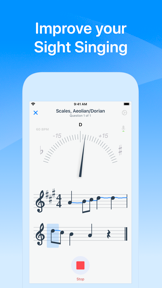


Snapshot
Who is Ensemble Education?
Providing interactive music education and ear-training tools for students and musicians. Gamifying auditory skill development through mobile.
Target audience


Portfolio
Free 6Last updated

Chet - Ear Training
v2026.1
5mo ago
Publisher DNA
What defines Ensemble Education?
Publisher DNA
Primary focus
Music education and ear-training apps
Scale
indie
Target audience
Musicians, vocalists, and students preparing for music examinations who seek interactive practice tools.
Signature Patterns
- •Consistent free-to-play model across all titles
- •Integration of gamified mechanics like leaderboards, strike systems, and unlockable content
- •Technical focus on auditory feedback, including real-time pitch detection and MIDI compatibility
- •Targeting of specific musical skill sets such as sight-singing, ear training, and melodic replication
Portfolio momentum
Released 14 updates across 6 apps in the last 6 months, with the majority of the portfolio receiving updates within the last 30 days.
Portfolio
What does Ensemble Education ship?
Apps
6 apps analysed
Transparent, ad-free model builds user trust
- Contextual ear training exercises using real musical samples keep practice sessions engaging and effective
- Intermittent input registration issues during exercises cause frustration and incorrect scoring for users


- Cohesive visual world-building reduces cognitive load for younger users


User Sentiment
How do users feel about their apps?
1
Positive apps
0
Neutral / mixed
0
Negative apps
92/100
Avg sentiment score
Rivals
Who does Ensemble Education compete with?
The rivals identified
Nemeses(2)


Simply Guitar dominates the music education market by leveraging real-time audio feedback to teach instrument proficiency, directly competing for the same user base seeking structured, gamified music learning.


Zapzapmath serves the exact same K-6 demographic as Ensemble Math, positioning itself as a comprehensive, standards-aligned curriculum platform.
Contenders(8)


Artie competes by using AI-driven feedback to personalize the learning journey, challenging Chet's goal of adaptive music education.


This app targets the same elementary math audience but focuses on high-pressure, competitive mental math scenarios.


BrainFights occupies the same space by offering structured arithmetic training with a focus on progression gates.


Trala competes for the same time-share of serious music students by offering high-quality, instrument-specific curriculum and feedback.


Loog Piano targets the gamified music education space, competing with Chet for users who prefer a fun, game-like approach to theory.


Stick and Split competes by providing a visual, conceptual approach to multiplication and division for young learners.


This app targets the niche classical music education segment, overlapping with Chet's focus on deep musical theory and ear training.


Naukado competes for the same student attention by leveraging AI-driven tutoring to solve math homework problems.
Same space(23)


Tap Music 3D appeals to the same competitive music-gaming segment as PlayBack but emphasizes reflex-based sliding mechanics.


Targets the same casual rhythm market but emphasizes offline accessibility over the progression-based memory training of Note Bubbles.


It serves the math education market by providing advanced step-by-step calculators for higher-level algebra.


Game of Song acts as a broader aggregator for rhythm games, capturing the same casual music-gaming demographic as PlayBack.


MOOZ serves the same music education ecosystem by providing the infrastructure for remote instruction and collaborative practice.


This is a functional math tool that addresses the specific pain point of fraction arithmetic for students.


Music Rhythm Player targets the same casual music-gaming audience as PlayBack but focuses on character-based progression rather than ear training.


Appeals to music fans with a specific interest in indie game soundtracks, contrasting with the general ear-training focus of Note Bubbles.


This app relates to the math category by visualizing complex mathematical fractals through interactive rendering.


Hi Beatz targets the same casual music-gaming audience as PlayBack but shifts the focus from ear training to rhythm-based visual synchronization.


Scale-Master provides utility-focused music theory tools that serve as a reference for the same audience using Chet for training.


BandJam serves the same music-focused competitive audience as PlayBack but prioritizes social league management over individual ear-training drills.


Shares the casual rhythm space but focuses on piano-tile mechanics rather than the ear-training memory puzzles found in Note Bubbles.


Targets the same casual rhythm demographic but relies on global leaderboards to drive retention rather than the melodic replication mechanics of Note Bubbles.


Flashnote Derby focuses on the foundational skill of note reading, which is a direct subset of the ear training curriculum Chet provides.


Tiles Pop targets the same casual music-gaming audience as PlayBack but emphasizes reflex-based tile tapping over auditory skill development.


Directly overlaps with the memory-training aspect of Note Bubbles by requiring users to recognize and pair song segments.


This app occupies the early-childhood music education space, competing for the younger demographic interested in basic musical concepts.


Shares the casual rhythm-game category but focuses on broad genre variety rather than the specific ear-training progression of Note Bubbles.


Offers a more complex collaborative experience through jam sessions, diverging from the solo memory-training path of Note Bubbles.


Provides a similar casual rhythm experience but uses a thematic cat-based aesthetic to differentiate from the educational tone of Note Bubbles.


This app targets the broader math education category by providing utility-focused geometric computation tools.


Voice Through competes for the same music-gaming user base but uses vocal pitch detection rather than auditory note recognition.
New entrants(5)


Born To Rock targets the same music-gaming audience as PlayBack but adds generative content creation to the rhythm genre.


TriadsPro is a direct threat to Chet's theory-focused modules, offering specialized visualization for harmonic structures.


While primarily an exam tool, its entry into the education category signals a shift toward formalizing digital music assessment.


A new entrant providing specialized geometric utility tools that compete for the attention of math-focused students.


This newcomer focuses specifically on the foundational arithmetic skills that Ensemble Math also covers.
The Analyst's Read
The bottom line on Ensemble Education
Bottom line
Ensemble Education is a highly active indie studio successfully bridging the gap between formal music education and casual gaming. Their focus on technical accuracy and competitive progression creates a defensible niche in the music-learning category.
Frequently asked questions
How many apps does Ensemble Education publish?
What kind of apps does Ensemble Education make?
What is Ensemble Education's top app?
What fed this analysis
- Apps analyzed:
- 6
- With full intel:
- 0
- With overview:
- 6
- Website scraped:
- yes
- Social presence:
- no
