


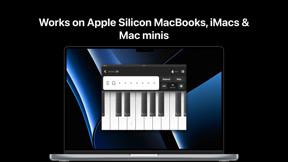
Chet is a music education app for ear training and theory, featuring gamified exercises and global leaderboards on iOS.
The App DNA
What makes this app unique?
Users hire Chet to master foundational musical skills through spaced repetition, filling the gap left by instrument-specific apps that focus solely on performance.
For Music students and hobbyist musicians seeking to improve their ear training, music theory knowledge, and instrument proficiency.
What does it look like?
Key features
Connects external MIDI keyboards for interactive exercises.
Algorithm-driven practice schedules for musical concepts.
Global rankings for challenge games.
How much does it cost?
The app operates on a free model with no identified subscription or IAP, limiting revenue potential.
Velocity
Steady developmentShow more...
Who built it?
Ensemble Education
6 apps tracked · Music
 PlayBack: Music Challenge
 Ella: Sight Singing & Reading
 Ensemble Piano
 Note Bubbles: A Music Game
 Ensemble Math
User Sentiment
What do users think recently?
Review voice lately leans thrilled. Users appreciate contextual ear training exercises using real musical samples keep practice sessions engaging and effective, but report intermittent input registration issues during exercises cause frustration and incorrect scoring for users.
How are ratings & reviews evolving?
What users say, by theme
- Contextual ear training exercises using real musical samples keep practice sessions engaging and effective
- Intermittent input registration issues during exercises cause frustration and incorrect scoring for users
60 of 61 recent reviews analyzed · high confidence · Thrilled overall
Read the full review analysisUnlock 1 user request, each backed by review evidence.
Access the full report for freeCompetition
Competitive landscape for Chet - Ear Training
How's the Music market?
Chet maintains a 4.8-star rating across 2,342 total ratings, positioning it as a high-quality niche tool. Its recent entry into the NZ market at #96 Free signals a nascent global expansion phase.
Read the market outlookThe rivals identified

By Simply Ltd
Simply Guitar dominates the music education market by leveraging real-time audio feedback to teach instrument proficiency, directly competing for the same user base seeking structured, gamified music learning.
- Proprietary real-time audio recognition engine provides instant, accurate feedback on every note played by users.
- Massive library of licensed popular songs keeps users engaged far longer than generic ear training exercises.
- High-production value video curriculum creates a premium, guided experience that feels like a professional music school.
 Raga Melody Classical MusicContender
 Trala: Learn ViolinContender
 Loog PianoContender
 Artie: Learn Piano with AIContender
Unlock the head-to-head verdict: where this rival wins, and where it loses.
Access the full report for freeThe Analyst's Read
Key takeaways for Chet - Ear Training
Where is it heading?
The music education market is consolidating around apps that provide real-time instrument feedback, leaving Chet's theory-only focus exposed. The app must transition to a sustainable revenue model to fund the content depth necessary to remain relevant against instrument-specific competitors.
- Intermittent input registration failures in the latest version erode the daily habit, which compounds the rating drag visible on Android.
- High user loyalty driven by the ad-free experience provides a stable base for introducing a premium tier.
The SWOT
- High-quality musical samples drive engagement
- Transparent, ad-free model builds user trust
- Implement tiered subscription for advanced content
- Expand localization to Spanish and Chinese markets
Next best moves
Audit input registration logic because intermittent failures are the top complaint → reduce churn risk
+ 1 more prioritized moveThe counter-intuitive read
The lack of monetization is not a strength but a terminal risk…
Read the full takeFeature gaps
Real-time instrument feedback (available in Simply Guitar but absent here) +1
Since the last report: The app has refined its competitive positioning toward ear training but faces significant headwinds from technical input failures and a lack of monetization infrastructure.
Bottom line
Chet provides high-value ear training, but its free-only model prevents the content scaling needed to compete with instrument-specific giants, so the PM must prioritize monetization to fund the content depth power users demand.
Unlock 2 critical frictions, 2 market threats, 1 more prioritized move and the analyst’s take.
Access the full report for freeReport last updated